



Jeremy from Denver writes, “What’s driving you crazy? As a semi truck driver I run a lot in Denver. I don’t think people really know how to use the roundabouts. It surprises me how many just run through them which makes me have to wait until I can get an opening to go. It’s every roundabout that a truck may travel on. Why don’t people know the proper procedures for it?”
It is the same reason why drivers don’t know how to use a continuous lane or do the zipper merge or how to turn into the proper lane — general lack of basic traffic rules and unwritten courtesies that leads to chaos and crashes.
There are roundabouts in many Colorado cities. They aren’t that complicated if you remember to yield to the vehicles in the circle and follow the lines on the pavement. There is, however, a delicate dance when it comes to getting in one when there is a bunch of traffic. Sometimes you will see some drivers dart into the brief opening that presents itself. As long as it is done safely, traffic should keep flowing freely.
Much of the confusion comes from two-lane roundabouts and from ones where you must turn right at the next street. There are several in Denver’s Lowry neighborhood that are like that. The roundabout in Denver that I receive the most complaints about are the pair of them on Pecos at Interstate 70. It is a unique design, with two roundabouts on either side of the Pecos Street bridge over I-70. Having 48th Ave. on the north side of I-70 as part of the mix contributes to driver confusion. For many drivers, it is a tricky roundabout to work through.
MORE: Read more traffic issues driving people crazy
Roundabouts are generally safer than intersections with traffic signals or stop signs. The tight circle forces drivers to slow down. They improve traffic flow and are arguably better for the environment as they reduce idling, vehicle emissions and fuel consumption. Wen Hu, a senior research transportation engineer at the Insurance Institute for Highway Safety, has authored multiple studies on roundabouts and their effect on safety. Hu says drivers may be skeptical of or even opposed to roundabouts. However, her research shows that opinions quickly change when drivers become familiar with them.
There is a small section on Page 13 of the Colorado Drivers Handbook that talks about roundabouts. In part it reads, “Before entering the roundabout, you must yield to approaching traffic on the left. Do not stop completely unless existing traffic prevents you from merging. As you enter or leave a roundabout, you must yield to pedestrians or bicyclists in any crosswalk and to any traffic already inside the roundabout. Drive to the right and watch for directional signs and signals. Once you are clear to proceed, merge into the roundabout lane. To alert traffic of your intentions, please use your turn signals when changing lanes and exiting the roundabout.”
That last part about using a turn signal is somewhat controversial. In an August, 2020 story published in the Montrose Daily Press, reporter Mckenzie Moore wrote, “Thanks to a case against Timothy Robert McBride in 2017, the state of Colorado now has clarification on the use of turn signals in roundabouts. The Colorado Court of Appeals ruled on July 23 that using a turn signal is not required when entering or exiting a roundabout.”
The article also stated that the three-judge panel argued that using a roundabout is more like following a curve in the road rather than making a right turn and thus does not need a turn signal. Colorado law states that, “A signal of intention to turn right or left shall be given continuously during not less than the last one-hundred-feet traveled by the vehicle before turning in urban or metropolitan areas.”
The Colorado Department of Transportation has an instructional video from August 2020 designed to explain how to use a roundabout.
Considering your frustration, Jeremy, about how difficult it is for truck drivers to get in a roundabout, a law was passed in 2023 that requires drivers to yield the right-of-way to a driver of a truck, bus, emergency vehicle or recreational vehicle when entering, exiting, or driving in the circulatory lanes in a roundabout. The law also requires that when two drivers of large vehicles enter, exit or drive in the circulatory lanes in a roundabout at the same time, the driver on the right must yield the right-of-way to the driver on the left. A person who fails to yield commits a Class A traffic infraction and is subject to a fine of $70 with an $11 surcharge.
There is a town in northern Indiana that is all about roundabouts. I talked to former Mayor James Brainard of Carmel, Indiana, who installed over 140 roundabouts in his town transforming the way his citizens get around. I, also as part of the episode, talked to Colorado State Representative Andrew Boesenecker about his bill that is now law that requires drivers to yield to large trucks in a roundabout. You can listen to my conversation from this link to learn more about how roundabouts work and can transform city traffic.
Denver7 Traffic Expert Jayson Luber says he has been covering Denver-metro traffic since Ben-Hur was driving a chariot. (We believe the actual number is over 25 years.) He's obsessed with letting viewers know what's happening on their drive and the best way to avoid the problems that spring up. Follow him on Facebook, Twitter or Instagram or listen to his award winning Driving You Crazy podcast on any podcast app including iTunes, iHeartRadio, Spotify, Podbean, or YouTube.
WHAT'S DRIVING YOU CRAZY? DENVER7'S JAYSON LUBER ANSWERS YOUR QUESTIONS.
-
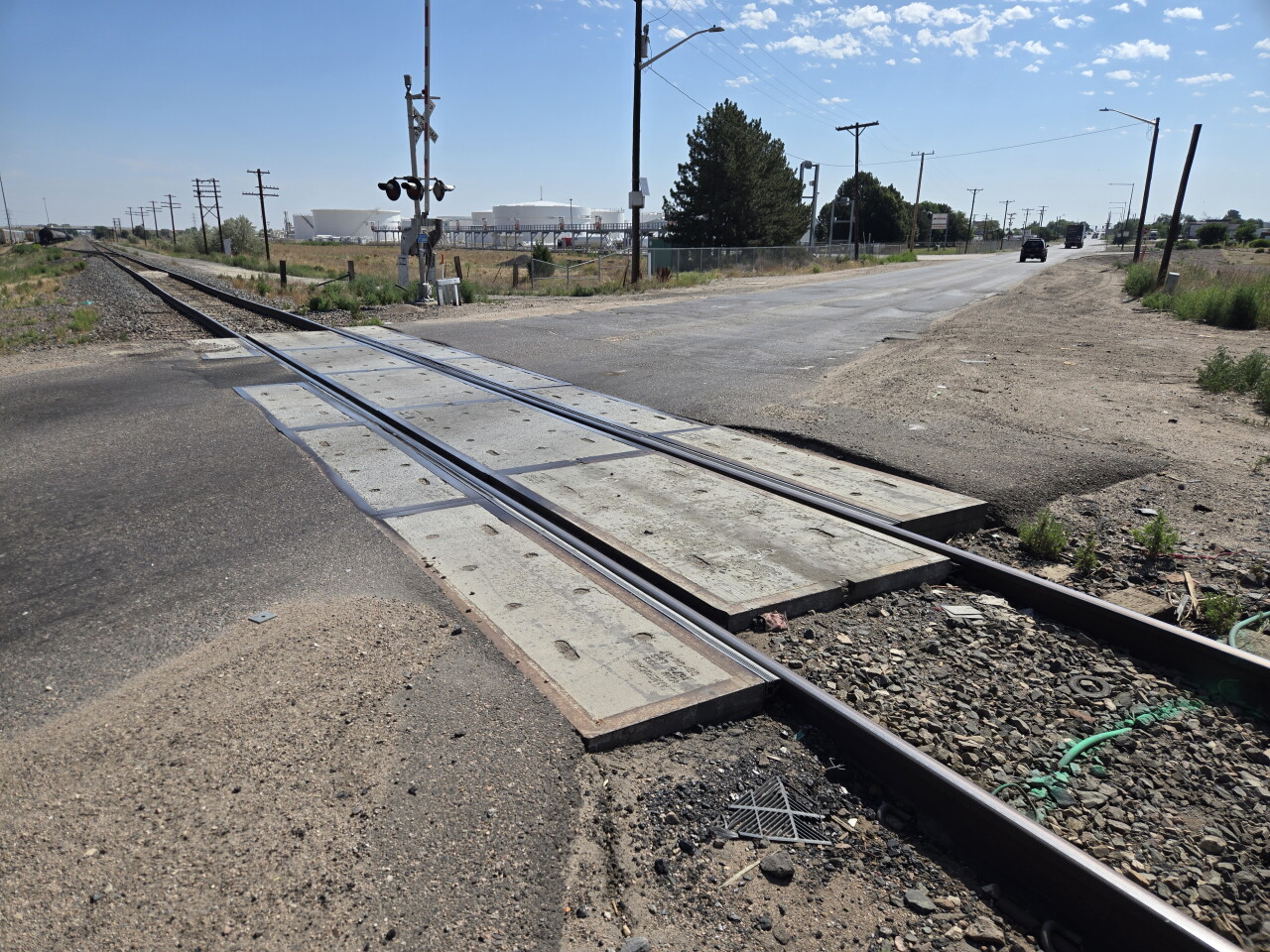
Why is the rail crossing on 96th in Commerce City still so car-damaging rough?
-

Can you explain why the red and yellow arrow lights were on at the same time?
-

Could we get a green arrow light at 120th and Tower to get through quicker?
-
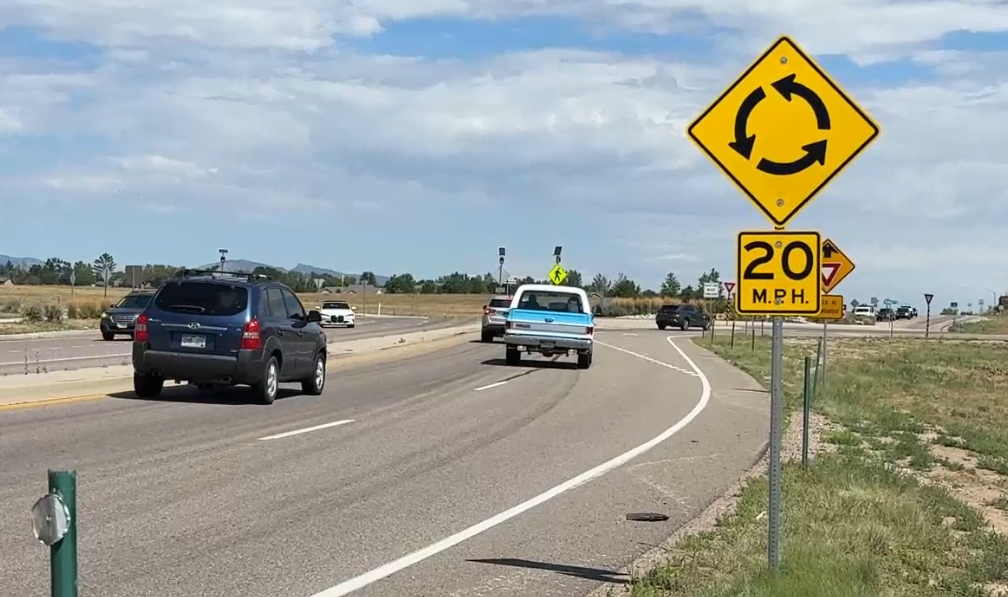
I hate the constant fight to very quickly merge left on Berthoud Pkwy from 287!
-

Driving You Crazy: What are the yellow poles for at 29th and Depew?


