

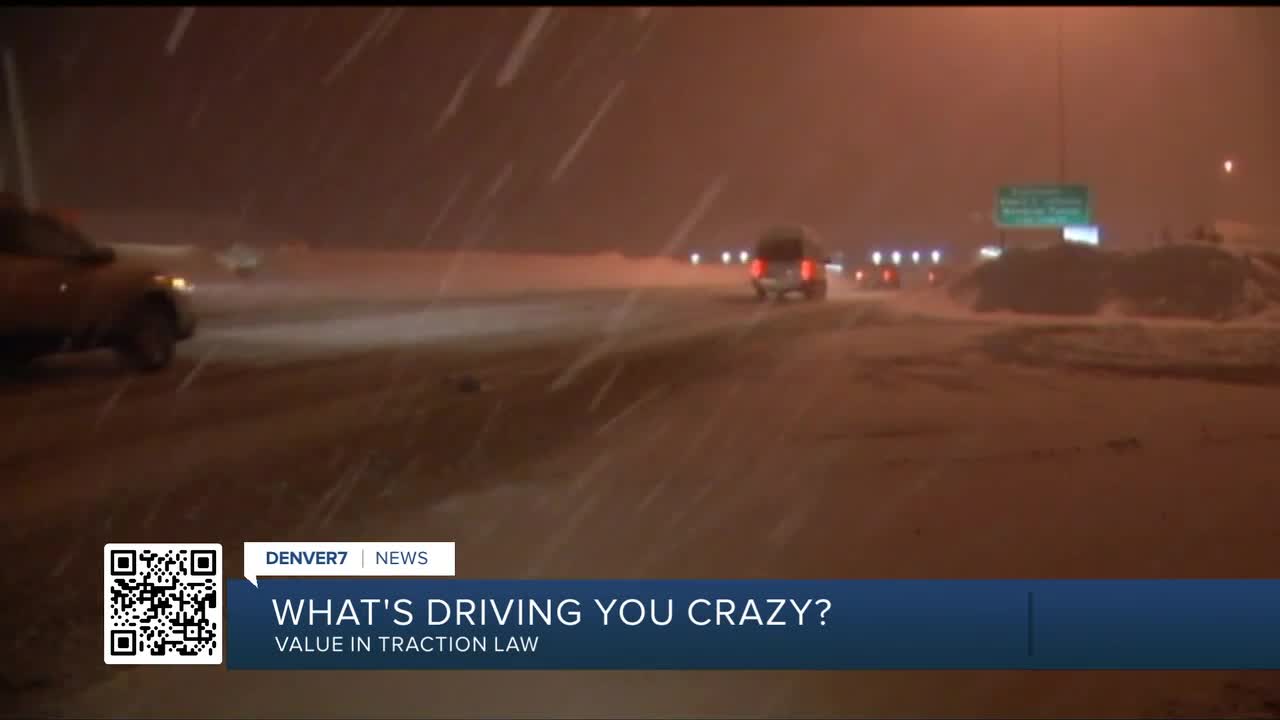


Richard from Colorado writes, “What’s driving you crazy? Since it is not enforced, does the traction law have any value?”
According to the Colorado Department of Transportation (CDOT) and the Colorado State Patrol (CSP), the traction law has significant value in improving safety, lowering the potential number of crashes, and keeping — most notably I-70 — open. But you do have a point, Richard. I would guess that there are very few drivers of two-wheel drive vehicles who comply with the traction requirements, especially that they need to have chains or traction devices in the car with them during the winter season.
During winter storms, or when conditions require, CDOT will activate the Passenger Vehicle Traction law. CDOT can activate the traction law on any state highway but the highway most drivers are concerned about is I-70. The way the state put it is all motor vehicles that weigh less than 16,001 pounds traveling on any portion of I-70 between Dotsero and Morrison from September 1 through May 31 must comply with the Passenger Vehicle Traction Law.
What is the Passenger Vehicle Traction law? Basically, any two-wheel drive vehicle must have either tire chains or an approved alternate traction device in the car and must deploy the devices, actually physically affix them on two or more tires, when the requirement is activated. There is no tire-only option for two-wheel drive under the updated law.
MORE: Read more traffic issues driving people crazy
Four-wheel or all-wheel drive vehicles can comply with just winter-rated tires if they meet the three-sixteenths of an inch tread requirement and the appropriate manufacturer rating, but chains or traction devices are still recommended during severe storms.
I put the entire traction law requirements at the end of this story.
I asked Sergeant Alvarado with the Colorado State Patrol your question.
“The Colorado State Patrol has taken1722 enforcement actions this traction law season from 09/01/25 to mid-February. Some of these are proactive citations and others are when troopers encounter a vehicle blocking traffic due to non-compliance with the traction law,” Sgt. Alvarado said.
Sgt. Alvarado noted,this has obviously has not been a very heavy winter season until recently, and so the number of enforcement actions could have been much higher.
Interestingly, CSP reports that a large number of drivers cited for not complying with the law are people in rental cars. Rental car companies that operate in Colorado are required to either verbally notify renters about the state traction law, provide a clear display on mobile apps during online check-ins and/or have an informational placard inside the vehicle. However, these companies are not legally required to provide the chains or alternate traction device in the vehicle.
The penalty for not following the traction law includes a $100 fine and $33 surcharge. That includes not having the proper traction devices in the car if on I-70 during the traction law season or on the car along any highway when the traction law has been activated. If you fail to comply with the law and that results in the closure of a travel lane, that leads to a $500 fine with a $157 surcharge.
The state can go one step beyond the traction law and implement the passenger vehicle chain law. It is the final safety measure before a highway is closed. When the passenger vehicle chain law is in effect, every vehicle, including 4-wheel drive, must have chains or an approved alternative traction device. There are a number of these State approved alternate traction devices including the Alpha Trax, AutoSock, EasySox and the ISSE Tire Sock.
I did a story about the AutoSock when they first were looking for state approval to be used in Colorado. Here is a link to the story from 18 years ago. Covering this beat sure has aged me as you can see from that old video.
Denver's Ramos Law firm said drivers who are involved in crashes while violating the traction law may face legal consequences beyond traffic fines. “Proceeding without required equipment when a restriction is in effect demonstrates a failure to exercise reasonable care. In personal injury cases arising from winter weather crashes, evidence that a driver lacked proper traction equipment can support claims of negligence.”
They add that conversely, drivers injured by others who were non-compliant with the traction law may have stronger claims for compensation.
As I mentioned earlier, there are specific rules for vehicles based on the type of drivetrain like if the vehicle is two-wheel or four-wheel drive. Below are the requirements based on the type of drivetrain:
Under SB25-069, two-wheel drive vehicles must carry tire chains or an approved alternate-traction device (ATD) from September 1–May 31, regardless of which tires they have. When the Passenger Vehicle Traction Law is activated, two-wheel drive vehicles must have one of the following:
- Tire chains installed on two or more drive tires; or
- An approved ATD installed on two or more drive tires.
Important:
- Upgrading to M+S, all-season, or mountain-snowflake tires does not bring a 2WD vehicle into compliance.
- There is no tire-only option for 2WD under the updated law.
- Chains/ATDs must be physically affixed to the tires when CDOT activates the overhead signs indicating the law is in effect.
Four-wheel drive and all-wheel drive vehicles may comply using specific winter tires or by using chains/ATDs.
When the Passenger Vehicle Traction Law is in effect, four-wheel drive/all-wheel drive vehicles must have one of the following:
- Tire chains for two or more drive tires; or
- An approved ATD for two or more drive tires; or
- Tires with at least 3/16 inch of tread depth that are rated by the manufacturer as:
- Mountain-snowflake (3PMSF); or
- M&S / M+S / M/S; or
- All-weather
Four-wheel drive/all-wheel drive vehicles can comply with winter-rated tires alone if the tires meet the 3/16-inch tread requirement and the appropriate manufacturer rating. Chains/ATDs are still recommended during severe storms.
Denver7 Traffic Expert Jayson Luber says he has been covering Denver-metro traffic since Ben-Hur was driving a chariot. (We believe the actual number is over 25 years.) He's obsessed with letting viewers know what's happening on their drive and the best way to avoid the problems that spring up. Follow him on Facebook, Twitter or Instagram or listen to his award winning Driving You Crazy podcast on any podcast app including iTunes, iHeartRadio, Spotify, Podbean, or YouTube.
WHAT'S DRIVING YOU CRAZY? DENVER7'S JAYSON LUBER ANSWERS YOUR QUESTIONS.
-
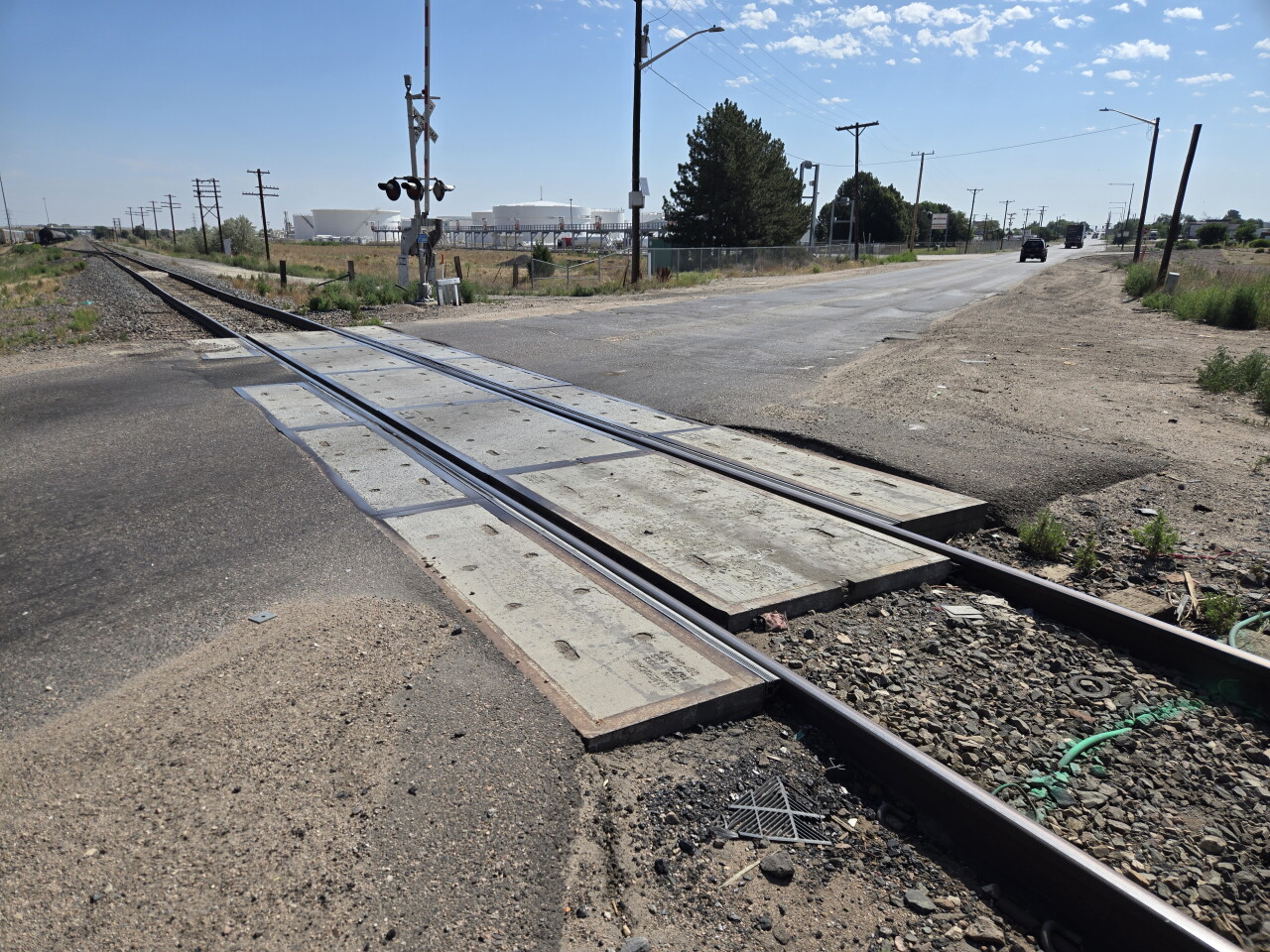
Why is the rail crossing on 96th in Commerce City still so car-damaging rough?
-

Can you explain why the red and yellow arrow lights were on at the same time?
-

Could we get a green arrow light at 120th and Tower to get through quicker?
-
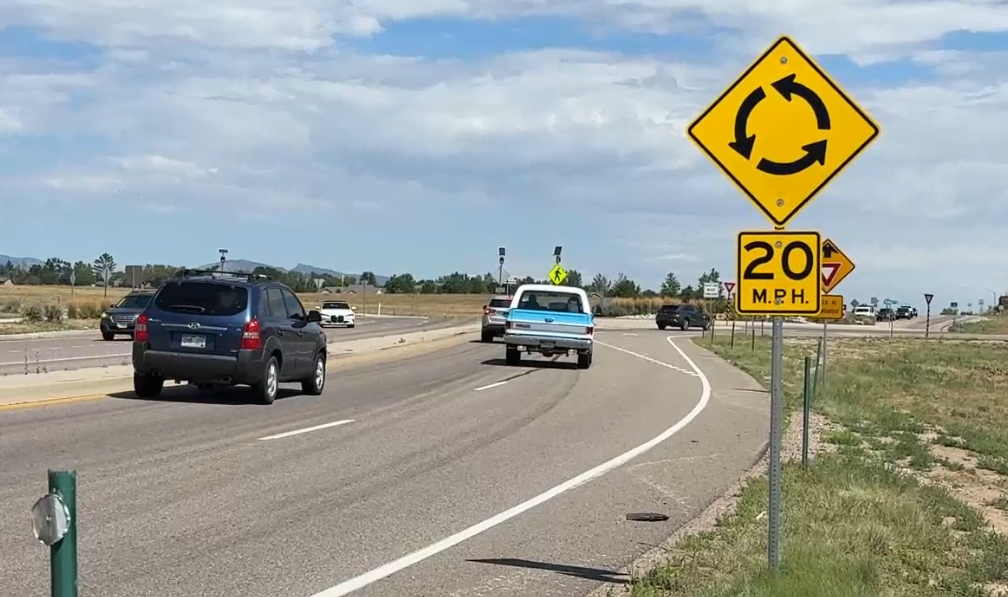
I hate the constant fight to very quickly merge left on Berthoud Pkwy from 287!
-

Driving You Crazy: What are the yellow poles for at 29th and Depew?


