




JACKSON COUNTY — Colorado voters approved the reintroduction of gray wolves in the 2020 election and since then, the impact of that decision has rippled throughout rural parts of the state.
Denver7 has extensively covered the reality of wolf depredations, which Colorado Parks and Wildlife (CPW) defines as physical trauma that either injures or kills livestock.
Many of those accounts involve cattle, which Coy Meyring said his property in Jackson County has experienced as well.
According to Meyring, two of his cows and one calf were killed by wolves, with two other cows attacked.
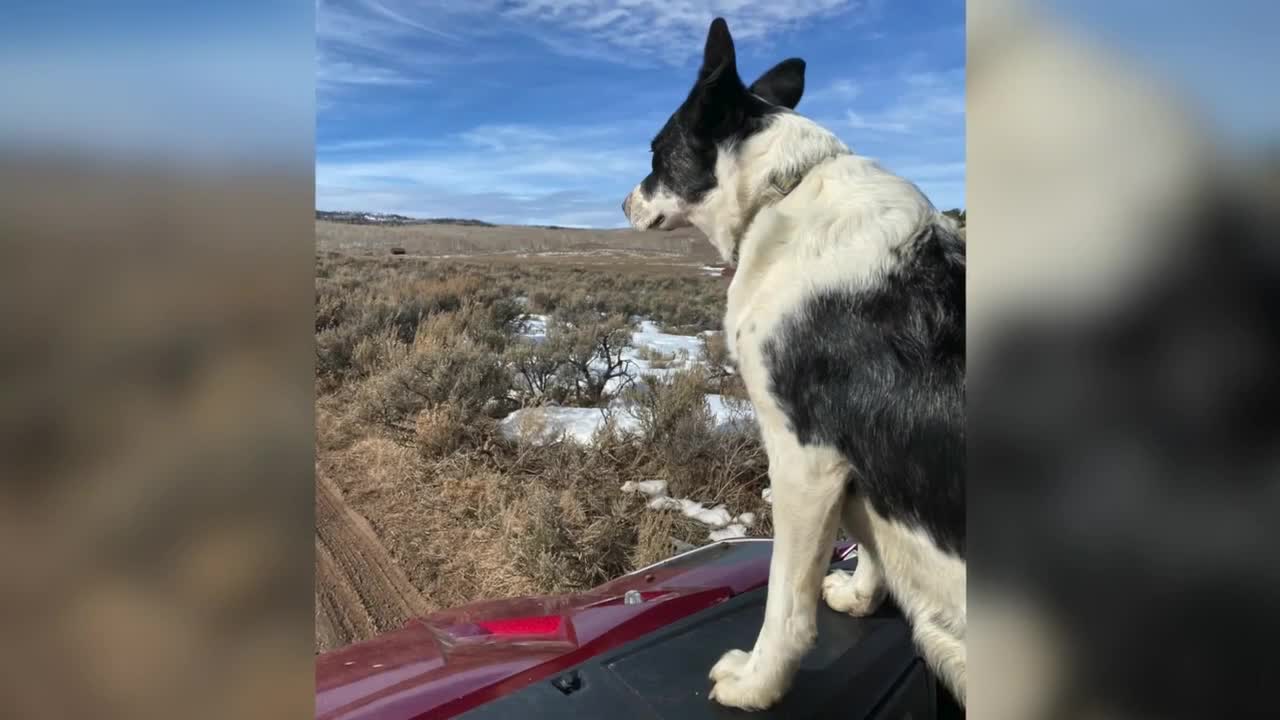
But nothing prepared Meyring for the morning of Feb. 7, when he went looking for his trusty working dog, Scout.
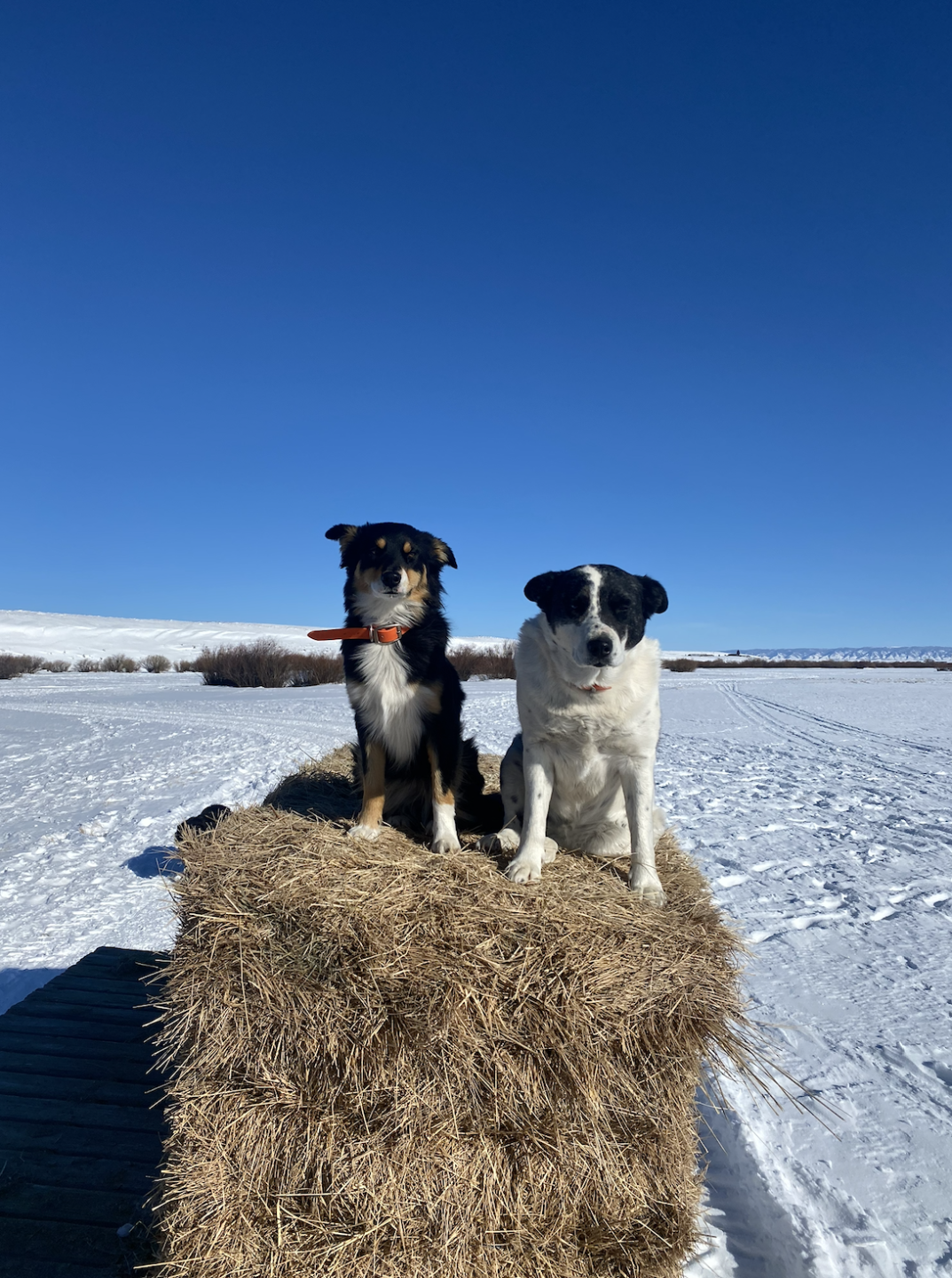
Meyring said the family adopted Scout when she was a puppy, and was amazed by the instinct and enthusiasm she brought to the ranch.
"She just always wanted to be with us, always wanted to be with me, and always wanted to try to help," Meyring said. "Just sweet as she could be, but absolutely loved her job... It's hard to describe how loyal they are. I don't know that we'll replace her."
Scout was a working dog for nine years, and normally waited for Meyring in the morning on the porch with her fellow pup, Millie.
"I knew a week ago, instantly, when she wasn't right there at the front door. When I came out that morning, I knew I had a problem," Meyring said. "When it's cold, I put them up, but it's been so warm, I didn't put them up. And that's a regret, obviously, I'm going to have to live with forever."
Meyring's fear mounted that morning, before finding Scout a short distance from the family home.
"How can we continue to operate when you can never turn your back anymore? I would have never dreamed they would have come right here to the buildings," said Meyring.
The beloved working dog had been killed, and the snow around her helped explain what happened.
"She was trying to protect us. You know, she was trying to protect this place. She had never encountered wolves before, and so she probably didn't know what she was getting herself into," Meyring said. "She was a working dog, but she was... she was a friend, she was a pet. And it's very hard."
Meyring, who said he has done a site assessment with CPW and tried certain hazing methods, is wary of what the future holds.
"We have to try, but I'm not sure what to do, because there's nothing that's just really ensures that we're going to be okay," Meyring said.
Despite the loss of a pet and friend, Meyring called wolves a "fascinating animal."
"In one minute, you're kind of in awe of the animal itself, but the next minute, you're scared to death because you're dealing with something that you've never seen," Meyring said. "I don't hate the wolves. I hate what's being done to them."
14 wolves — 12 that were reintroduced and 2 of their pups — have died since the state's reintroduction started.
"We have to be conscious of what we're doing to the wolves. And I don't know what the future of that program looks like, but I think so far, it hasn't gone very good," said Meyring. "The death, the loss of the number of wolves that have been brought here, should tell the story that we better think hard about what we're doing moving forward."
Meyring plans to file a claim for Scout, but said there is no amount of money that will ever bring her back.
"I don't want Scout to die in vain. I want people to know how dangerous this is, how difficult it is," Meyring said, when asked why he agreed to share their story. "I want to express how hard it's been for me and I think as we move forward in this state and with wildlife management, we have to understand the implications... As cattle producers, land managers, we've always had and will continue to always have challenges. And this is yet another one, and it's a big one, and we'll figure out how to survive."

Scout is not the first working dog killed or seriously injured by wolves in Colorado, according to data published by CPW. Since the first round of wolves were reintroduced in the state at the end of 2023, one other working dog has been marked as a confirmed depredation, with three working dog depredations recorded prior to then.
In January, CPW announced there will not be a third round of gray wolves reintroduced to the state this year.
The announcement came a month after the federal government sent a letter to CPW, in which they said the U.S. Fish and Wildlife Service (USFWS) would take over Colorado’s wolf reintroduction program unless the state addressed what the feds described as “compliance issues.”
CPW officials told Denver7 they cooperated with that request.
A spokesperson with CPW said the decision to halt reintroduction for the remainder of the season came after Colorado struggled to find sources to secure enough wolves for the season.
Under a previous agreement between CPW and the Biden administration, Colorado would secure 10-15 wolves from Canada each winter for reintroduction. But USFWS officials under the Trump administration told Colorado in October to stop reintroducing from wolves from Canada and instead rely on northern Rocky Mountain states for the reintroduction effort.
Most of those states — including the Yellowstone region states of Idaho, Montana and Wyoming, where wolves from Canada were reintroduced in the 1990s — have said they don't want to be part of Colorado's reintroduction.
Laura Clellan, the CPW’s acting director, said in a statement her agency will continue to meet with producers and other stakeholders, including the USFWS, to “explore how to maximize the restoration effort” next winter while protecting both livestock and wolves.


Denver7 has been following Colorado's wolf reintroduction program since the very beginning, and you can explore all of that reporting in the timeline below. The timeline starts with our most recent story.
Editor's Note: Denver7 is no longer updating this list, and the final change was made on Aug. 31, 2026.
Denver7 in-depth wolf coverage
The below list outlines an overview of the known wolf population in Colorado:
- Four wolves surviving from the original 10 that were released in December 2023 (one died of a likely mountain lion attack, a second died from injuries sustained prior to his capture as part of the Copper Creek Pack relocation effort, a third wolf became sickly and died, a fourth died in Wyoming, a fifth died during a re-collaring operation in February 2026, and a sixth died in northwest Colorado the following month)
- Three wolves surviving of the five wolf pups born in the spring of 2024 (one male was killed by CPW after multiple depredations in Pitkin County and a second male was shot for the same reasons in September 2025, which it survived, and again in June, when it was killed)
- Eight wolves surviving from the 15 that were released in January 2025 (one was shot and killed by Wildlife Services in Wyoming, a second died of unknown causes in Wyoming, a third died in Rocky Mountain National Park, a fourth died in northwest Colorado, the fifth died in northwest Colorado after it was likely hit by a car, a sixth died in southwestern Colorado, and a seventh died in northwest Colorado)
- At least 14 pups born in four packs in 2025: Two in the Copper Creek Pack, four in the King Mountain Pack, five in the One Ear Pack and three in the Three Creeks Pack
- One of the pups born into the One Ear Pack was lethally removed by CPW on Aug. 4, 2026 after multiple depredations on calves in Jackson and Grand counties
- Two wolves that moved south from Wyoming several years ago have been collared and are now members of the One Ear Pack