


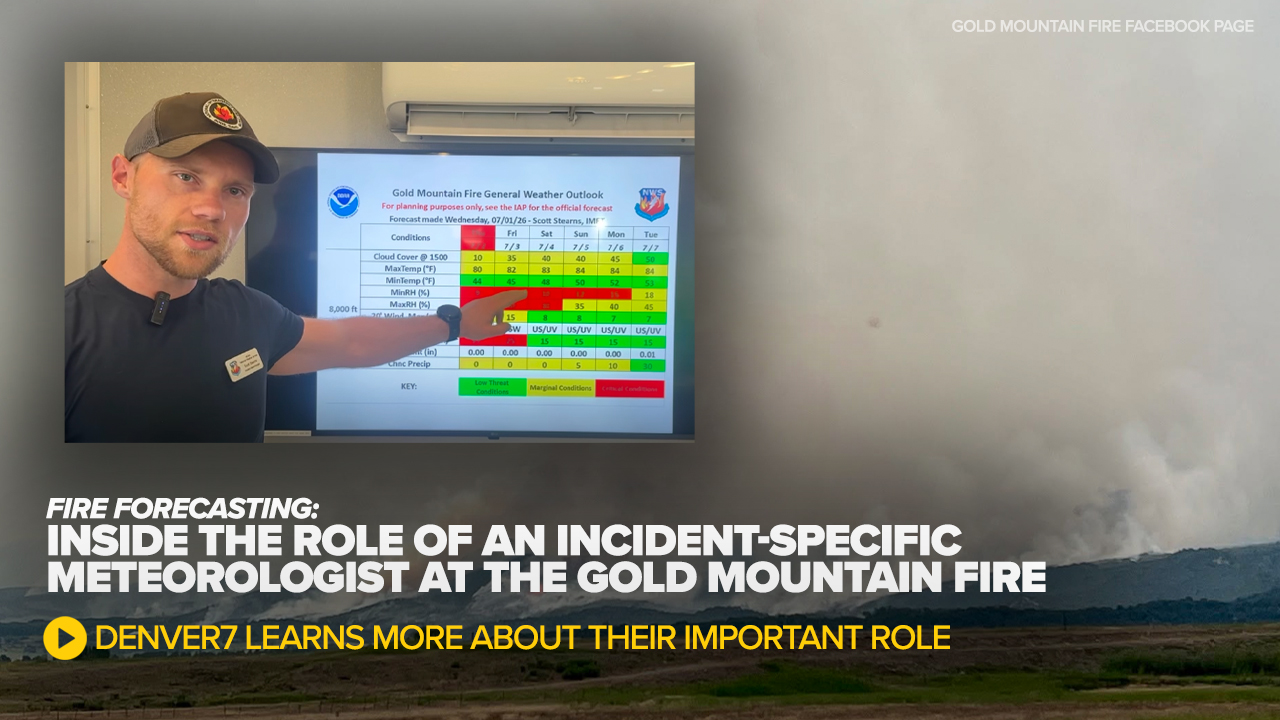


OURAY COUNTY, Colo. — Most of the time, Scott Stearns is responsible for forecasting large storms as they move across the United States. But for the past week, he has significantly narrowed down his focus — to one region, one state, one county, one incident.
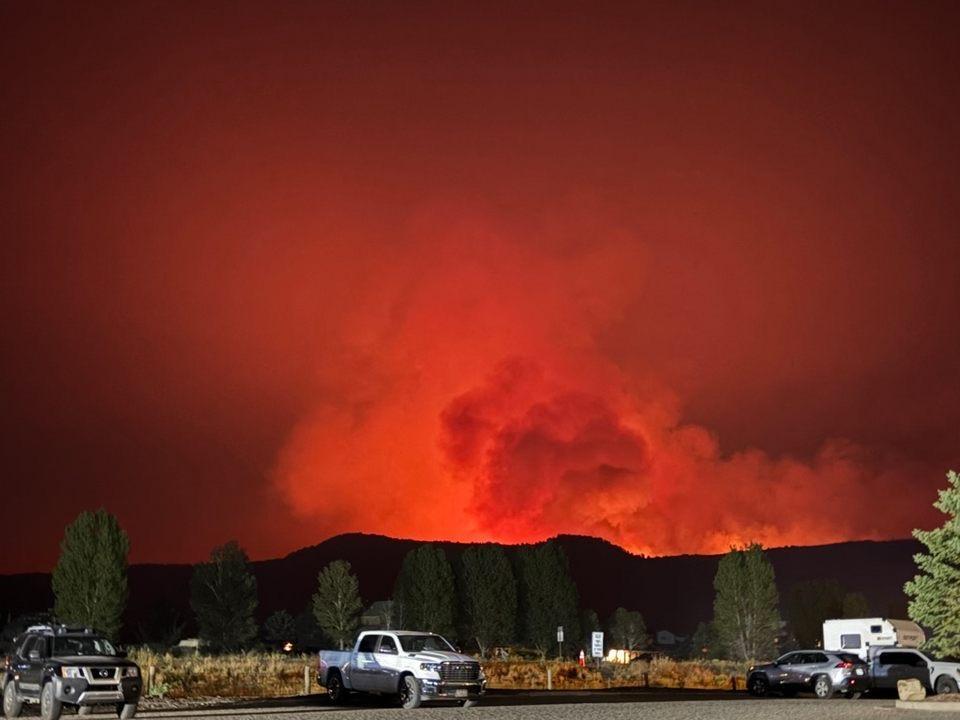
The Gold Mountain Fire.
▶️ WATCH: Denver7's Stephanie Butzer spoke with Scott Stearns with NWS about the unique and important role of being an incident meteorologist at a wildfire.
Stearns works for the National Weather Service's (NWS) Storm Prediction Center and after the Gold Mountain Fire sparked just north of Ouray on June 27, he was assigned the role of incident meteorologist for the blaze.
That means he is responsible for specific forecasting of everything within the perimeter of the 31,000-acre Gold Mountain Fire, as well as the surrounding areas. Like fire managers, he is focused on the safety of firefighters and the general public as the blaze continues to grow and evacuations remain in place.

Incident meteorologists are typically called to a wildfire after an incident management team takes control. Once that team is in place, it's not unusual for them to request a meteorologist from the NWS, within the National Oceanic and Atmospheric Administration (NOAA), Stearns explained.
A standard shift lasts about two weeks.
There are about 100 of these incident meteorologists within the NWS, including nine currently in Colorado:
- Two at the Aspen Acres Fire, in Custer and Pueblo counties
- Two at the Willow Fire, west of Leadville in Park County
- Three at Gold Mountain Fire, including a trainee, north of Ouray
- Two at the Ferris Fire, including a trainee, in Dolores and Montezuma counties
Stearns, from Boise, arrived at the incident command post at the Ouray County Fairgrounds on June 30. Since then, he has briefed fire personnel multiple times each day on expected conditions.
"Make sure they're making the best decisions with the best weather information available," he said.
That process starts around 5 a.m. each day, when Stearns checks the previous day's forecasting models for that morning to ensure they are still accurate. He then reviews what happened overnight, humidity levels and chances of precipitation. An hour later, he attends the Gold Mountain Fire's operational crew briefing.

"That's when all the firefighters and their leadership are together at one meeting, and we go through the different elements of concern," he said. "Obviously, weather is one of those primary driving factors. So we're one of the first people that typically speak to those firefighters in the morning."
On Tuesday, he said he shared the latest on potential thunderstorms in the afternoon, which may linger on Wednesday too. While the rain is welcome, the accompanying wind and lightning can create hazardous conditions for firefighters.
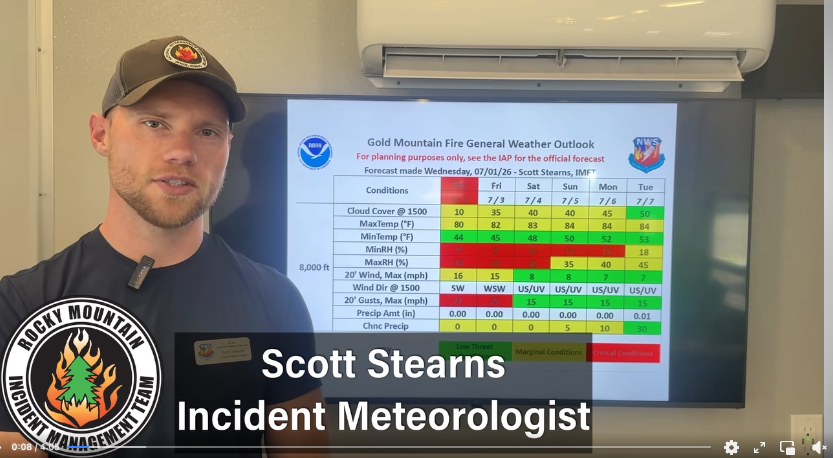
"There's specialized software that we can use to, for example, fit anticipated winds to terrain," he explained. "It's very complex terrain down here on the north side of the San Juan Mountains. So, we have specialized computer models that aren't used by regular forecasters at the weather forecast offices very often on a day-to-day basis. They help us figure out exactly what the wind is going to do in a particular drainage or on one aspect of a canyon, different elevations across the fire area — that kind of level detail."
He is part of meetings throughout the day to keep fire managers informed on the latest weather developments, while also forecasting what's to come that afternoon, that evening, overnight and beyond.
"So, it's fairly busy," Stearns said.
But it's fulfilling work.
"I think almost every incident meteorologist that I've known has told me that this was the most rewarding part of their career," he said. "Oftentimes, they will say it is because of the immediate feedback."
That's not always the case when he forecasts for large, multi-state regions.
"It's not very often that we have that direct one-to-one contact with the folks that we are serving. And so that I think is what makes it most rewarding," he explained. "We're actually making a difference."
