


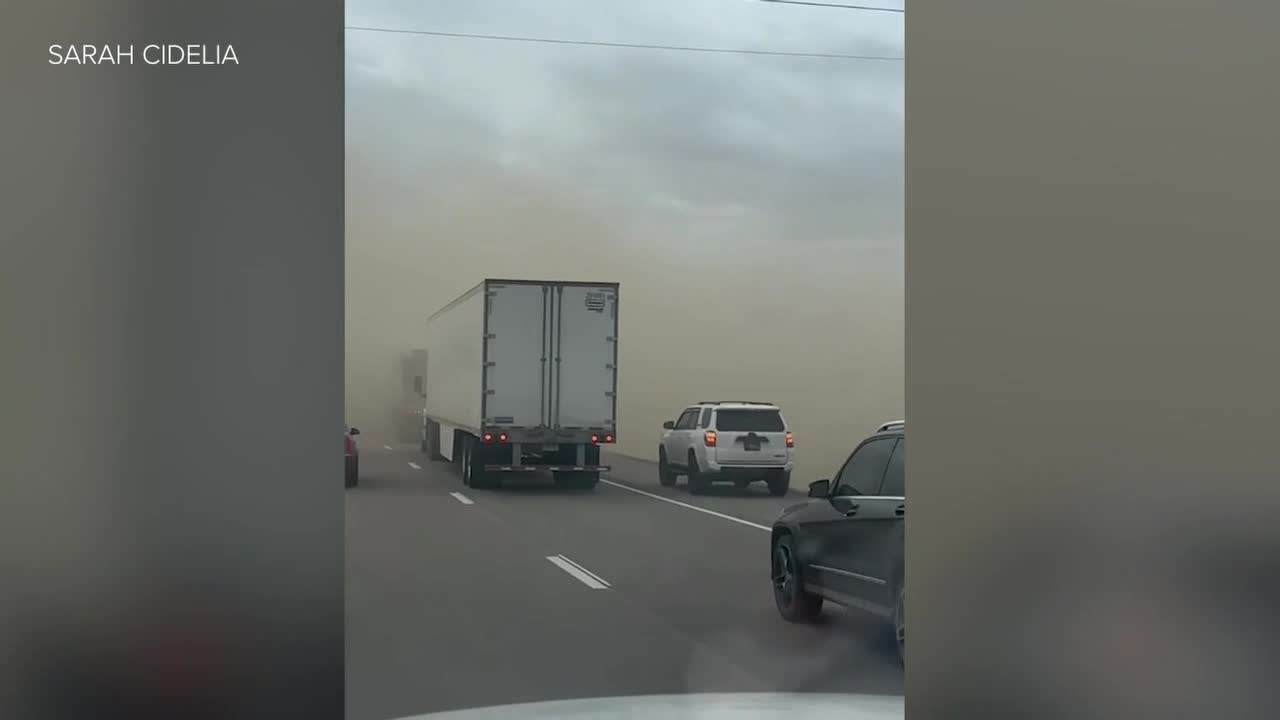


PUEBLO — A deadly 36-vehicle pileup on I-25 near Pueblo has prompted questions about when and how state agencies decide to close major roads during dangerous weather conditions.
Colorado State Patrol said five people died in the crash on Tuesday morning when wind-blown dust reduced visibility to near-zero conditions on the interstate. Troopers said seven semis were involved in the crash. Video sent to Denver7 by drivers show the "brownout" conditions along the road.
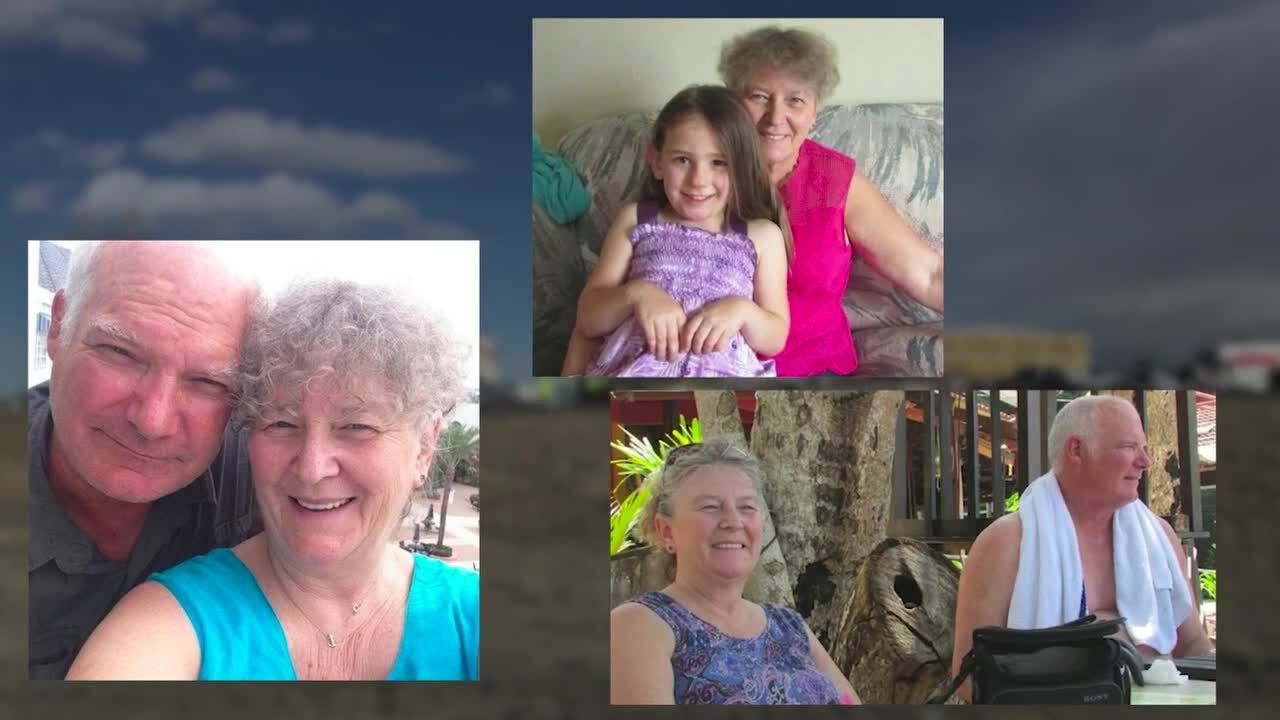
The Pueblo County Coroner said the five victims were David Kirscht and his son Scott Kirscht from Walsenburg, Mary Sue Thayer and her husband Thomas Thayer from Rye, and Karen Ann Marsh from Pueblo.
Wilbur Thayer, whose grandparents died in the crash, questioned why the Colorado Department of Transportation (CDOT) did not close the interstate during the high wind event.

"It sounds like they [his grandparents] had been trapped underneath one of the semis," said Thayer. "Honestly, I wish they would have closed the road or at least kept the semis from driving on there. They're high profile vehicles, as is they're top heavy. They tip easily and if anyone gets into a crash with a semi, there's going to be fatalities, or at least very bad injuries."
Denver7 reached out to CDOT to understand more about when the department decides to shut down highways due to extreme weather, what conditions they take into account, and who is involved in safety closure decisions.
▶️ In the video player below, Denver7's Maggie Bryan works to get answers.
A CDOT spokesperson said the department works with the Colorado State Patrol (CSP) to make road closure decisions. The spokesperson said 60 mph wind gusts or sustained winds are a threshold used to help make closure determinations. The spokesperson sent Denver7 the following statement:
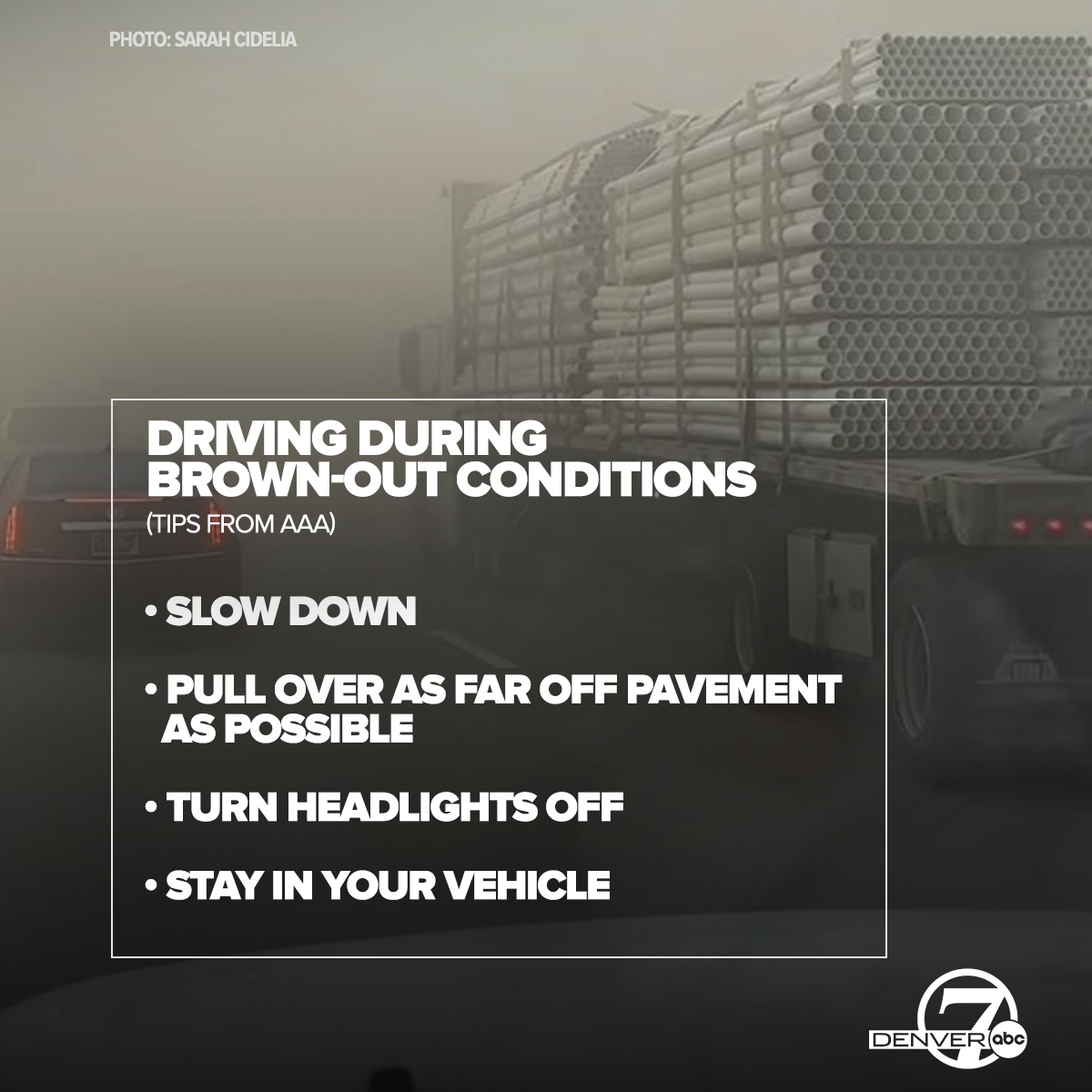
Similar to a blizzard, brownouts reduce visibility significantly. Motorists should avoid driving through a dust storm if possible. When that’s not possible, motorists should not stop in a travel lane but should exit the roadway, park, turn off headlights and use the emergency brake.
CDOT works with State Patrol to determine whether and when wind-related restrictions or closures need to be put into place; typically, 60 mph gusts or sustained winds are a threshold we use to help make this determination.
If CDOT, in coordination with the Colorado State Patrol, determines that high winds - typically 60 mph+ - could compromise traveler safety, a High Wind Restriction will be issued for a particular segment of highway. High profile vehicles such as semi-trucks, loaded or with an empty load, will be required to park and shelter in place or turn around until it is determined winds have subsided and it is safe for such vehicles to resume travel. The restriction helps prevent a truck, trailer or light-weighing vehicles from suddenly entering into another lane or causing a rollover.
During a press conference on Tuesday, CSP Major Brian Lyons said conditions worsened quickly along the interstate.
"We had the advisories that the wind was going to pick up this morning, there was no closures. This was one of those storms that came through, and the wind picked up very quickly," said Lyons. "By the time we got those notifications, the crash had already occurred."
Denver7's Weather Team recorded wind gusts of 59 mph in the area at the time of the crash.
Skyler McKinley with AAA said drivers who find themselves in similar situations should slow down, pull over and turn their headlights off so other cars do not follow their lights and potentially crash into them.
Denver7
"If you're noticing the winds start to pick up in ways that make you uncomfortable as a driver, that's the time to pull off where visibility is still good," said McKinley.
When asked whether the interstate should have been closed because of high winds on Tuesday morning, McKinley said it's not a simple decision.
"It's not hard and fast. A simple checklist of this wind is moving in this direction doesn't guarantee that it's going to lead to these brownout conditions, and that's the tough balance that CDOT is trying to maneuver here," he said.
McKinley said the act of closing major roads is not simple, either.
"It's not just a gate that swings down, because, remember, you're going to have vehicles traveling at high speeds, and if there's a sudden road closure at a certain point, that creates a real danger zone there," he said. "The system for closing roads in Colorado on the basis of weather or other danger works really well a lot of the time, and it prevents a ton of tragedies, so that you never notice how well it works, because things keep operating as they should."
Related video: 'Wish I could give them a hug:' Grandson mourns family members lost in I-25 tragedy
