

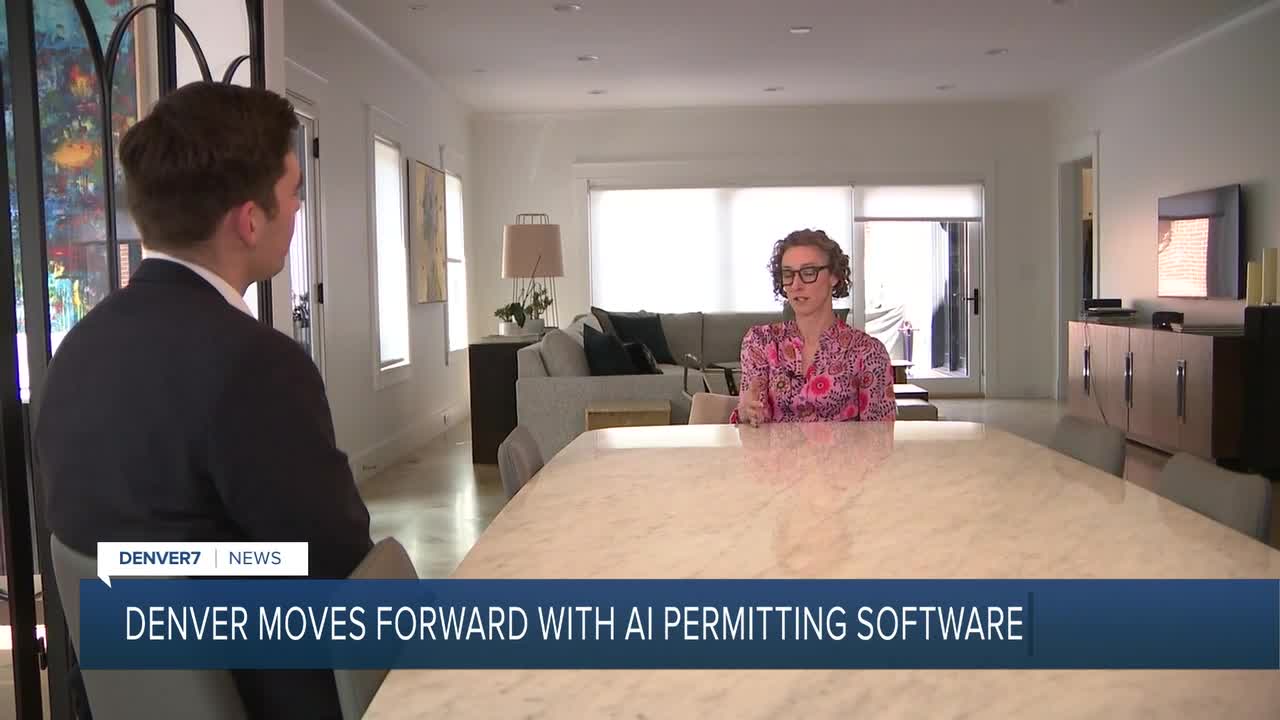


DENVER — Denver is moving forward with an artificial intelligence software the city says will make reviewing construction permits more efficient.
Denver7 has previously heard from builders that the city’s permitting process has been a “huge pain,” before covering this potential solution back in February.
Denver City Council then approved a five-year, $4.6 million contract with vendor CivCheck in March.
PREVIOUS COVERAGE:
- Denver could turn to artificial intelligence for faster building permitting
- Will Denver's permitting overhaul give builders a streamlined solution?
While humans will still review all the permits, the CivCheck tool will automatically flag issues or missing information from uploaded materials so applicants can quickly fix them, with the goal of avoiding extra back-and-forth with city staff.
Julia Richman, VP of Government Relations for Clariti — the company that acquired CivCheck — said the tool will also help city staff sort through documents faster.
- Watch the full story in the video player below.
“Helping the applicant get more complete information into the city to begin with is going to be super helpful,” she told Denver7. “And then, of course, we're in this time where the city has just made a lot of staffing cuts as a result of the budget deficit. And so you have a department who has tons and tons of work, a lot of pressure on them, and also, you know, not more teammates, right? And so our tool actually helps to automate the really low-value, high-time tasks.”
Richman said the CivCheck tool offers different modules to handle different kinds of applications — from residential to commercial. The $4.6 million deal represents the city’s total spending authority over time, Richman said, noting the city’s financial concerns.
“I think it's really smart of the city to take bite-sized pieces,” she said. “They're making a smaller investment, seeing what happens and what results we deliver, and then can add more over time.”
Richman also lives in Denver and endured a months-long wait on a building permit on her own home. She said in 2022, her plan for a gut renovation of her house took seven months for someone at the city to even look at her submitted permit.
“There were a lot of departures from the department coming out of COVID, plus the sort of a glut of applications, and we just got stuck at a very bad time,” she explained.
Richman called that experience “painful” and “expensive,” saying during that wait, the cost of her renovation project went up 20% while she also continued to pay both her mortgage and rent on a place to stay.
When she later joined Clariti, she was part of the effort to introduce Denver to the AI tool for more efficient permitting. The software is also being piloted in Mesa County and CivCheck has also partnered with other cities like Honolulu. Richman said the tool has previously cut review times by 60-70%.
She understands the skepticism around AI, but said this use of the technology can be beneficial without major drawbacks.
“We're using what eventually becomes public information, in general, information from the plan sets, the municipal code, and we compare the two,” she said. “In a world where lots of different things are going to have AI, I would say that this is a really excellent application of pretty modern technology. And I'll be interested to hear, you know, people's experience with it, and welcome the feedback from the community.”
The city previously told Denver7, its goal is to accept 80% of permit submissions on the first round. Last year, that number was only 37%.
April 15 also marked one year since Denver’s executive order to establish a new permitting office for better efficiency. Since then, the city said on-time permit reviews —defined as 180 days or less — have increased from 77% in 2025 to 88% so far this year.
-
Click here for more stories Denver7 revisited

-

The Follow Up
Denver nightclub tied to sexual assault accusation to reopen under new name
-

The Follow Up
Denver accelerates Aztlan Pool rebuild after leak forced summer closure
-

The Follow Up
Father of cyclist killed in hit-and-run crash fighting for safer Aurora roads


