



GRAND JUNCTION, Colo. — After the severe winter of 2022-2023 devastated two of the state's largest elk herds in northwest Colorado, the population of those iconic herds has turned a corner, Colorado Parks and Wildlife says.
And as a result, licensing for elk hunting in northwest Colorado is well on its way to full strength, thanks to community support and license limitations.
"I’m here today to tell you, it’s working," said Andy Holland, Colorado Park and Wildlife's big game manager, during a CPW Commission meeting Wednesday. "We’ve been adding licenses back for two years. ... Following these three mild winters, in this severe winter zone, elk populations are back at, or above, population objective."
That includes the Bears Ears Herd (E-2) and White River Herd (E-6), which call northwest Colorado home. It's an area of the state known for the largest elk herds in the nation, attracting hunters from around the globe.
The below map shows the "severe winter zone" in Colorado for 2022-2023.
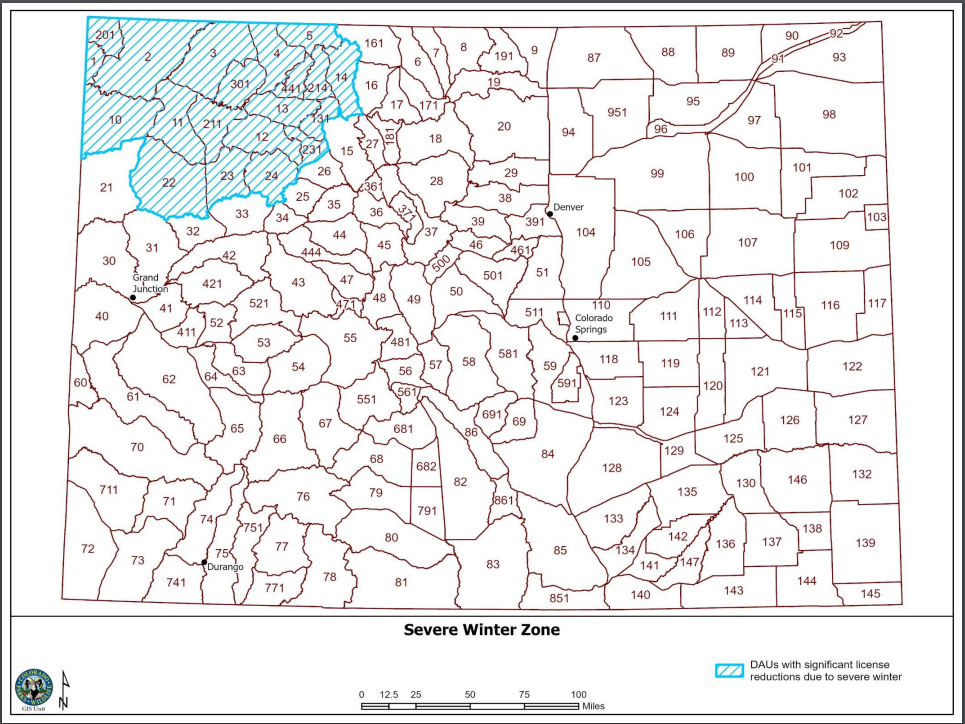
About 32,000 hunting licenses for elk, deer and pronghorn were cut in that part of the state in 2023 to allow the herds to recover.
That work, paired with hunter and landowner support, record-low snowpack and several back-to-back mild winters, led to the updated recommendations that CPW presented on Wednesday.
“Excluding licenses converted to and from over-the-counter in the severe winter zone in Gunnison based on new regulation changes this year, we are recommending an increase on all previously existing limited elk licenses of 6,600, or 5%," Holland said.
Nearly all of those additional licenses, about 6,400, are antlerless.
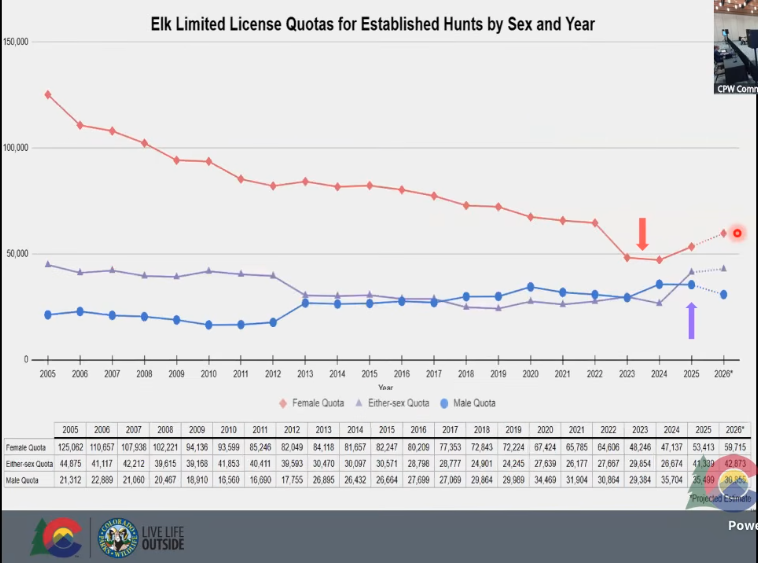
Specific to northwest Colorado, Holland said he had "fantastic news" to share from the severe winter zone.
"If you listened back to my presentation three years ago, it was — it was rough. That was bad," he said. "I’m pretty happy to be here today talking about all the fantastic news as it relates to population recovery.”
Holland said the Bears Ears Herd is back within population objectives after experiencing "the worst survival out of everywhere that winter.” The White River Herd is above the population objective range, he said.
CPW gathered that data from surveys via helicopter. They classified about 120,000 elk — a number they use to determine an estimated statewide population. In the White River Herd alone, CPW classified more than 20,000 elk for the second year in a row, Holland said.
As such, substantial increases for cow elk license quotas were recommended for both of those herds, which amounted to 2,000 more licenses in the Bears Ears Herd, or a 76% increase, and 4,400 more licenses in the White River Herd, or a 60% increase. It's not quite back to 2022 licensing levels, but it is "most of the way back," Holland told Denver7.
In total, CPW received more than 270,000 applicants to hunt elk in the state — the most out of any species. At Wednesday's meeting, they recommended 133,000 limited licenses.

A deeper look at the historic impacts of the 2022-2023 winter on Colorado's elk
A winter of historic magnitude slammed into the northwest corner of Colorado through the 2022-2023 season, breaking records for storm severity and duration.
The region that saw the harshest conditions — Steamboat Springs west to Rangely and north to the Wyoming state line, mostly in Moffat and Rio Blanco counties — overlapped with the home for large numbers of elk, deer and pronghorn.
Storm after storm pummeled the region from late October through the spring, covering foliage that the ungulates would typically rely on under as many as 30 inches of packed-down snow. As the winter continued, many elk died, whether from the elements, starvation, or after becoming caught in fencing or hit by vehicles.
The Bears Ears and White River elk herds, which are among the largest in the state and make up 25% of the elk population in Colorado, were heavily affected. CPW terrestrial biologist Darby Finley told Denver7 that the Bears Ears herd lost about 30-40% of its population, with the White River herd nearly the same.

Recreation
Cautious optimism surrounding elk herd recovery in NW Colo. after deadly winter
As a result, CPW greatly reduced the number of hunting licenses in the aftermath. CPW staff recommended massive reductions in antlerless elk hunting licenses for the following hunting season, including an 89% reduction for the Bears Ears herd, a 63% reduction for the White River herd and a 60% reduction for the Rangely herd. This was ultimately approved, resulting in a statewide reduction of 15,400 elk hunting licenses, or about 12%.

The spring after that winter, vegetation flourished after staying protected through the winter under the snowpack. Once that snow did melt, revealing the new green growth and flowers, there were fewer hungry animals to eat it. Those survivors, fueled with plenty of good nutrition, gave birth to healthy calves.
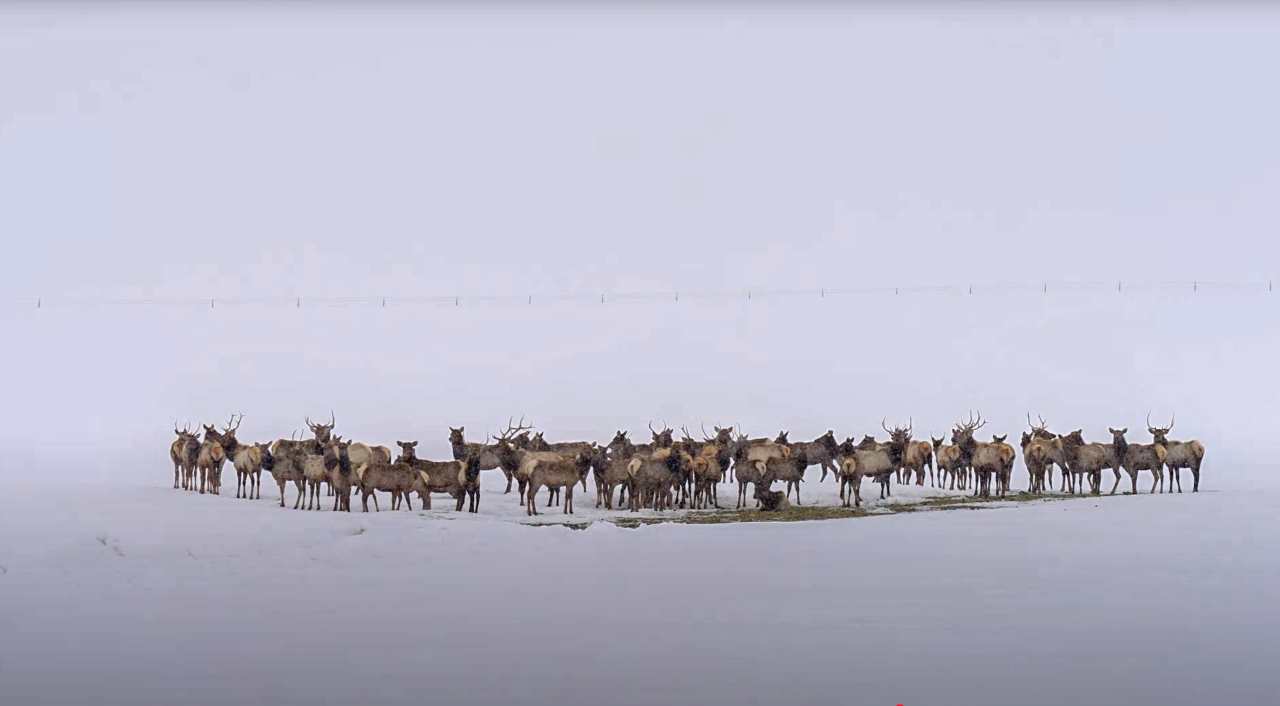
Skip ahead to the fall of 2025, and Denver7 began hearing from community members in northwestern Colorado that the large elk herds up there were making a remarkable recovery.
As of the time we published our in-depth story in early October, the White River Herd had returned to the middle of its long-term objective range, and Finely said it was likely going to "shoot right through the top end of it, just because of how resilient elk are." Plus, the Bears Ears Herd was on the cusp of the lower end of their population objective range.
Watch our full report on the cautious optimism the state and local hunters had as elk in northwest Colorado began to recover as of last fall in the video below.
CPW told Denver7 that at the time, it wasn't ready to call it "mission accomplished" just yet, but the herds were approaching normal population estimates much faster than anticipated.
In addition to favorable weather for an elk population rebound, CPW and community members also credited patient hunters who were supportive of sitting out a few seasons to allow the herds to recover, and the help of local landowners.
What CPW's latest data shows
CPW completed its annual classification flights — where staff analyzed elk herd numbers, survival rates and health — just a few months after Denver7's in-depth report from October.
They shared the results in a March 18 press release: The Bears Ears and White River elk herds in northwest Colorado were indeed rebounding enough that CPW was planning on proposing an increase in hunting licenses for the 2026 Big Game Hunting season.
According to their findings, CPW staff saw the population of the Bears Ears herd and White River herd returning to the desired population range for the first time since the winter of 2022-2023.
The flights over the White River Herd found a slight increase from the previous year, CPW said.
“Spike bulls [young bulls with antler beams with no tines] serve as important indicators of the previous year's calf survival,” Finley said. “As we have seen, calf ratios continue to be trending in a positive direction with excellent spike bull ratios in the past two years, indicating high survival and recruitment of calves into the yearling age class.”
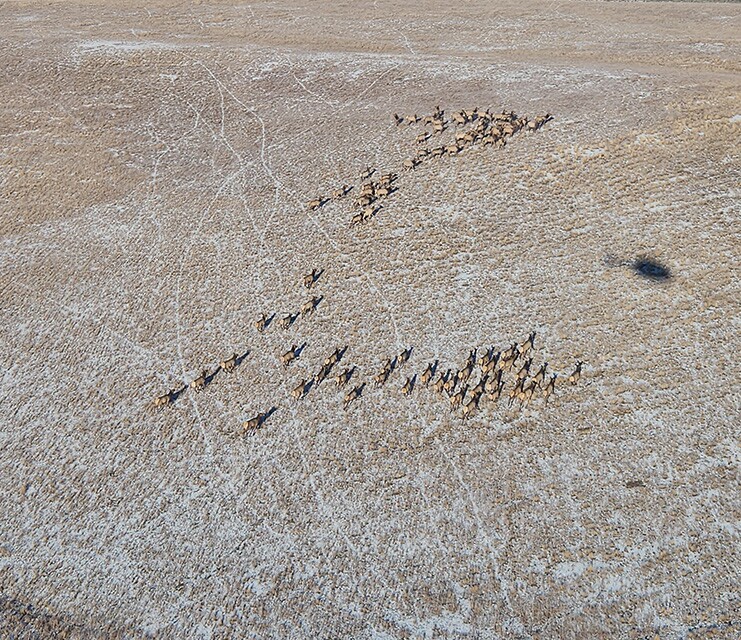
Looking at the landscape this past March, he said it was hard to believe that just three years earlier, northwest Colorado experienced its worst winter in seven decades and some of the lowest elk survival rates ever recorded by CPW biologists.
"Today, we are seeing a much different picture with elk population numbers," he said.
All big game hunting license recommendations from CPW is approved
- 6% increase in deer licenses
- 6% increase in moose licenses
- 1% decrease in pronghorn licenses
- 3% decrease in black bear licenses Data courtesy CPW
Each year, CPW's regional staff and biologists meet with district wildlife managers to review recommendations for that hunting season's licenses. In the wake of this, the agency shares its recommendations with the CPW Commission to vote on.
CPW has recommended increases in elk, deer and moose hunting licenses, as well as a reduction for pronghorn, for 2026.
Pronghorn have been the slowest to recover from the 2022-2023 severe winter, Holland said, as the herds in northwest Colorado were "pretty much decimated" that season.
For a full breakdown of the approved hunting licenses for 2026, watch the CPW Commission's Wednesday meeting here, or check CPW's website.
