



DENVER — UPDATE: On Tuesday afternoon, House Bill 26-1318 passed out of the House Transportation, Housing, and Local Government Committee with a 7-4 vote. The bill heads to the Committee of the Whole for consideration next.
PREVIOUS: How far school zones stretch in Colorado is at the heart of a new proposal being considered inside the State Capitol — one that stems from a day that scarred the Littleton community in 2023.
House Bill 26-1318 requires school zones in Colorado to include roadways within 1,000 feet of school property. The change would only apply to new schools or school zones that are less than 200 feet in size.
With an anticipated amendment, state highway corridors that come near school boundaries would not automatically become part of a school zone.
“That is making school zones safe," said State Representative Kenny Nguyen, D — District 33, who is one of the prime sponsors of the legislation.
The bill is backed by The White Line, Bicycle Colorado, and AAA Colorado, which estimate that it takes a driver going 20 miles per hour only 34 seconds to pass through a 1,000-foot school zone.
"We're asking commuters to give 34 seconds of their time on their commute so that kids can go to school," said Nguyen.
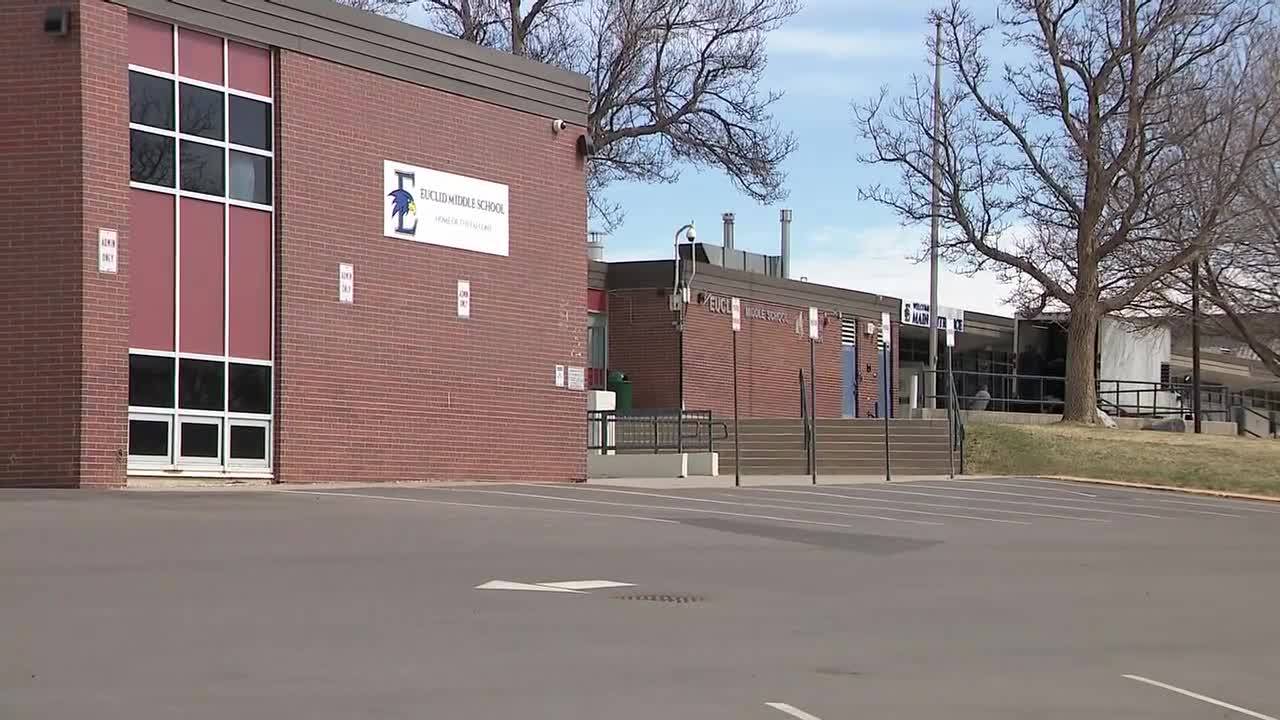
The idea came directly from Josh Stewart, the father of 13-year-old Liam Stewart, who was hit and killed by a driver while riding his bicycle to school on October 17, 2023. Liam Stewart was only minutes away from Euclid Middle School when he was struck in a roundabout.
The woman who killed Liam Stewart took a plea deal and was sentenced to two years of probation in April of 2024.
Now, Josh Stewart is fighting for change in the name of his son and every other Colorado student at the Capitol. He plans to testify in strong support of HB26-1318 on Tuesday.
“You'll often see signs that say 'School zone ahead. Speeding fines doubled.' We had those up and down this street, and they removed all of them," Josh Stewart said, gesturing at the road where his son was killed.
But what happened to those school zone signs, and why? That's the question that led to this legislation.


Josh Stewart met with Denver7 on Monday morning, wearing a red flannel shirt, shoes with red stripes, and red bracelets — one with beads that spelled his son's name.
Red was Liam Stewart's favorite color.
“Liam was just the best," Josh Stewart said. “He's the one who made me a dad. He's my oldest of three boys. And just, there aren't words to describe him. He was so sweet, so kind, and loved others. I really believe if one of his friends had died instead of him, he'd be running a lot of the things that I'm doing now. He really just cared, and we miss him a lot. I wish he were still here.”
Josh Stewart was proud of his son's independent spirit, one that was exemplified every morning when he put on his helmet and rode his bicycle to school.
"I rode the street myself, and I worked with him on — here are the challenges you could face — but I was kind of approaching it from what I grew up learning," Josh Stewart said. “The world has changed so much. Cars have changed so much, traffic has changed so much, that I actually wasn't a good enough teacher to understand what's wrong with these streets. Now I know after Liam's death. I've gone really deep into research and am trying to understand as much as I possibly can about how these streets work. What I know is eye-opening, and it's scary, and I think any parent would just be shocked to learn how dangerous our streets truly are. More dangerous than they were when we were kids."
Josh Stewart and other members of the community have already been working to increase the safety of the streets surrounding Euclid Middle School. He said those changes include a project widening the sidewalks directly in front of the school, a more controlled traffic pattern for parents dropping off their kids, and temporary bollards along the bike lane.
However, Josh Stewart realized school zone signs were disappearing — and found that they moved closer to Euclid Middle School.
"One day, I was driving down the street and noticed that all of the school zone signs were gone. I didn't know that could happen," Josh Stewart recalled. “Where Liam had been killed, within a school zone, there were signs warning people of a school zone. This consultant decided that 'We'll just remove that data point from the school zone itself.' And so now, Liam died outside of a school zone."
Denver7 asked the City of Littleton to explain why the school zone boundaries were reduced. A spokesperson said the change was made as part of the Safer Streets Littleton program, which was launched after Liam Stewart's death in February 2024.
A School Zone Safety Evaluation was conducted on a dozen area schools through a third-party, where consultants and staff considered "national best practices and guidance," the spokesperson said. As a result, "it was determined that standardizing the distance of all school zones fosters increased driver awareness, thereby improving overall safety for drivers and students."
Josh Stewart does not believe that making the school zone smaller has made the road safer.
“The reason why I'm in support of this bill is that after Liam's death, the city hired a consultant to evaluate this very dangerous street to see what they can do, as far as making it safer for children. And that consultant just dropped in cookie-cutter ideas that they've done all over the country, and they actually shrunk the school zone to one sixth of the size, and put Liam's crash outside of the school zone," Stewart said. "So, they've removed the ability for police officers to enforce speeding on this thoroughfare, and have shrunk the school zone to just a few hundred feet.”
The Mayor of Littleton, Kyle Schlachter, told Denver7 via email that the Littleton City Council was "not involved in the decision to modify the school zone boundaries near Euclid Middle School." Schlachter said that the decision happened at the "staff level" and was based on "established traffic engineering standards and processes."
"The council understands and shares the community’s concerns about safety near our schools, and all across the city, and we remain committed to working with staff and partners to ensure our school zones are as safe as possible," Schlachter wrote.

Politics
Magnus' Law advances, seeking voluntary breathalyzers at serious crash scenes
Josh Stewart wants to ensure that school zones stretch at least 1,000 feet from a school in the future, while working with local governments to meet their own specific needs.
"In Colorado, we have drug-free zones that are 1,000 feet from a school. We have nationwide gun-free zones that are defined as 1,000 feet from a school. Currently, the school zone around my son's school is half of that. I'm just saying that traffic enforcement should be, at minimum, the same as a drug-free zone and a gun-free zone," Josh Stewart said.
Under HB26-1318, local jurisdictions would have the opportunity to reduce their school zone size to a minimum of 200 feet surrounding a campus, but only after a public hearing. Any existing school zone boundaries greater than 200 feet would not be impacted by the change in the law, which would only affect new schools or boundaries that are less than 200 feet in size.
The legislation is intended to apply to primary and secondary education, not college campuses.
Changing Colorado law is something Josh Stewart wants to see in honor of his son, and every other student who walks or bikes to school.
"I'm not trying to solve what killed Liam. I'm not hyperfixated on what could have been differently in that one intersection, that one situation," Josh Stewart explained. "We're going to protect all kids."
A voluntary program called Colorado Safe Routes to School (SRTS) can help identify the safest way for children to get to school, and HB26-1318 would allow local jurisdictions to create specific corridors where automated enforcement can be used for speeding violations or running red lights. Currently, AAA Colorado said that such automated enforcement within school zones and along some neighboring routes does not always account for every area that may be risky for students.
"It gives an additional level of protection, not just to the area immediately around a school, but to the areas that children use to get to that school," Josh Stewart said. "Our hope with this bill is to extend some of those protections to children along those Safe Routes to School. So, that would take it past that 1,000-foot zone. If they decided to go through the process of designing that and building that network, then they would also have a structural reason where police can enforce speeding in those areas.”
The targeted, automated enforcement would be optional for local jurisdictions to use along roadways not necessarily within a school zone, but that have been identified as high-traffic areas for cyclists and pedestrians.
According to the Colorado Secretary of State's lobbyist search engine, only one group is registered as opposing the bill. Denver7 reached out to the Colorado Association of School Executives to learn more about their position on Monday morning, but did not receive a response before publication.
HB26-1318 is scheduled for its first committee hearing on Tuesday. An amendment is expected that will eliminate any cost the proposal would have on Colorado, in addition to creating an exception for state highways.
Denver7 will update this article to reflect how the House Transportation, Housing, and Local Government committee votes on the legislation.
◼️ Previous coverage
'Inspired by Liam': Littleton father reflects two years after his son was killed riding to school
Ride for Liam: Littleton community honors seventh grade student who was killed while riding his bike to school
Ride for Liam: A push for change one year after Littleton teen cyclist killed by driver
Woman pleads guilty in connection with crash that killed student bicyclist outside Euclid Middle
Littleton residents call for safer streets after 7th grader killed while biking to school
Driver accused of hitting, killing student biking to Euclid Middle School now faces charge of careless driving
Littleton middle school student fatally struck by vehicle while biking to school
Denver7 is committed to shining a light on the dangers vulnerable road users face in Colorado.
In 'On Two Wheels presents: Love, Loss and the Safer Road Ahead', Digital Journalist Jeff Anastasio worked with Josh Stewart and the parents of 17-year-old Magnus White, illuminating how they are working to change the conversation around safer roads in Colorado and beyond.


