



Maybe heat isn't the first weather emergency people think of when they think of Denver, but it's top of mind for many this weekend and early next week when temperatures could jump into the triple digits.
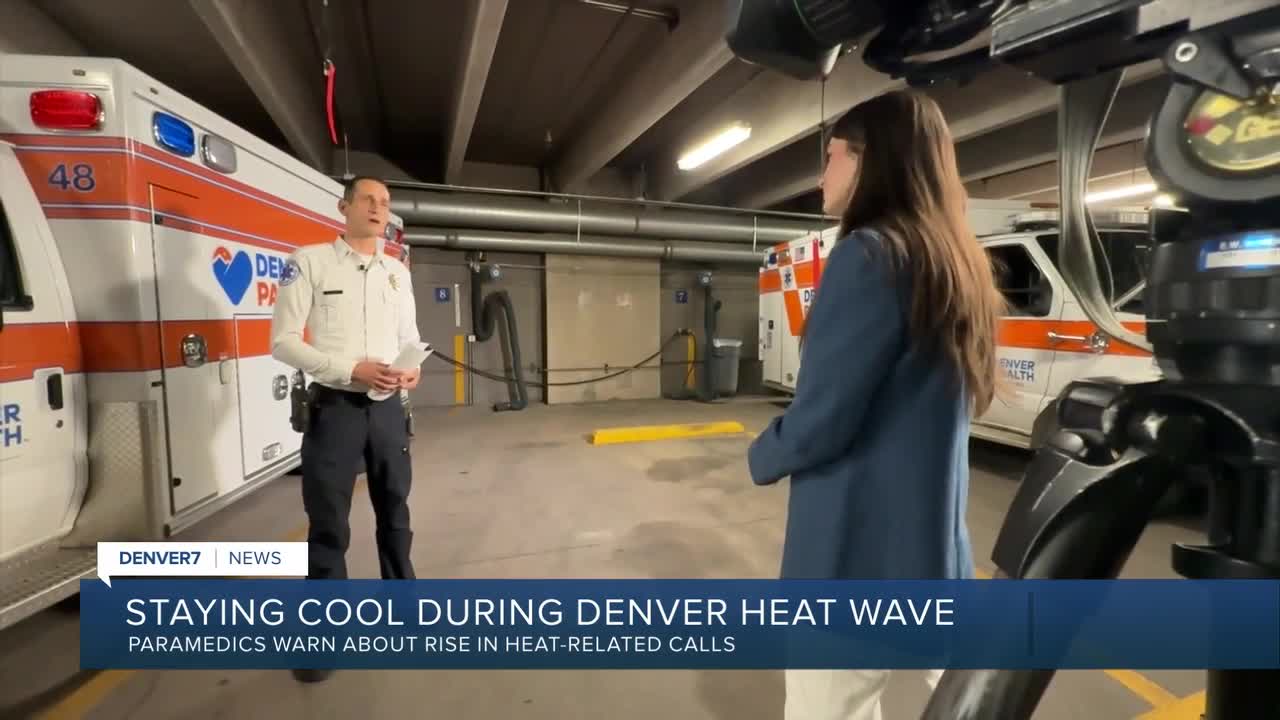
Paramedics like Lt. Jesse Wright from Denver Health are preparing for what could be a busy weekend.
"As it gets warmer outside, our call volume tends to go up,” he said.
It's a trend that started earlier this year than normal. He said calls for heat-related illness and injury picked up in March. Since then, Denver Health paramedics have treated 10 heat emergencies.
Wright described heat emergencies as when someone "crossed that threshold from heat exhaustion into heat stroke, and they need to be kind of actively and aggressively cooled at our ER."

Heat exhaustion happens when a body overheats and loses excessive water and salt, causing symptoms like nausea, exhaustion, confusion, headache and dizziness. Heat stroke is when the body stops regulating its own temperature. Extreme cases can lead to death.
"The nice part about being in an urban system is that, generally, help isn't very far away," Wright said. "So, when somebody has crossed that threshold into heat stroke, that means that it's pretty significant heat outside, and they've also been suffering from it for quite a bit of time. Most of the time, we run into these patients in that heat exhaustion state. So, it is notable to have any patient fall into heat stroke."
It's not just people feeling the heat — the trees are too.
Arborist Adam Davis spoke to Denver7 while doing a "systemic injection for emerald ash borer."

The emerald ash borer, he explained, is a "boring insect, which doesn't mean it's not interesting. It means it actually makes a giant hole into the tree and burrows inside of it."
It's a big problem for trees across the state. The Colorado State Forest Service calls it the "most destructive tree pest ever introduced in North America."
Davis said the affected trees are more susceptible to heat. While the emerald ash borer seeks shelter from heat inside the trees, he seeks shelter under them.
"The shade is essential to me not losing my mind every single day," Davis said. "If I didn't have the shade from the trees, I'd be nuts."
Despite high temperatures, the City of Denver cooling centers aren't expected to open this weekend since the National Weather Service did not issue a heat advisory for the Denver metro area.
To activate those advisories, the National Weather Service looks at how unusual the heat is for this time of year, how long it will stick around and if there are any incoming cold fronts or cloud cover.
City officials told Denver7 that they won't turn away people looking to cool down at city facilities, like libraries and rec centers, during normal business hours.
Wright is encouraging people to stay hydrated and out of the sun and to look out for neighbors who may be more vulnerable to heat.
“If you have elderly neighbors, young children playing outside, just make sure that you're paying attention to them," he said. "And if you notice any sort of signs of that heat exhaustion and stroke, please just call 911.”



