




DENVER — If it feels hotter than what you remember it being in 1971 this time of year – you’re not wrong, Denver.
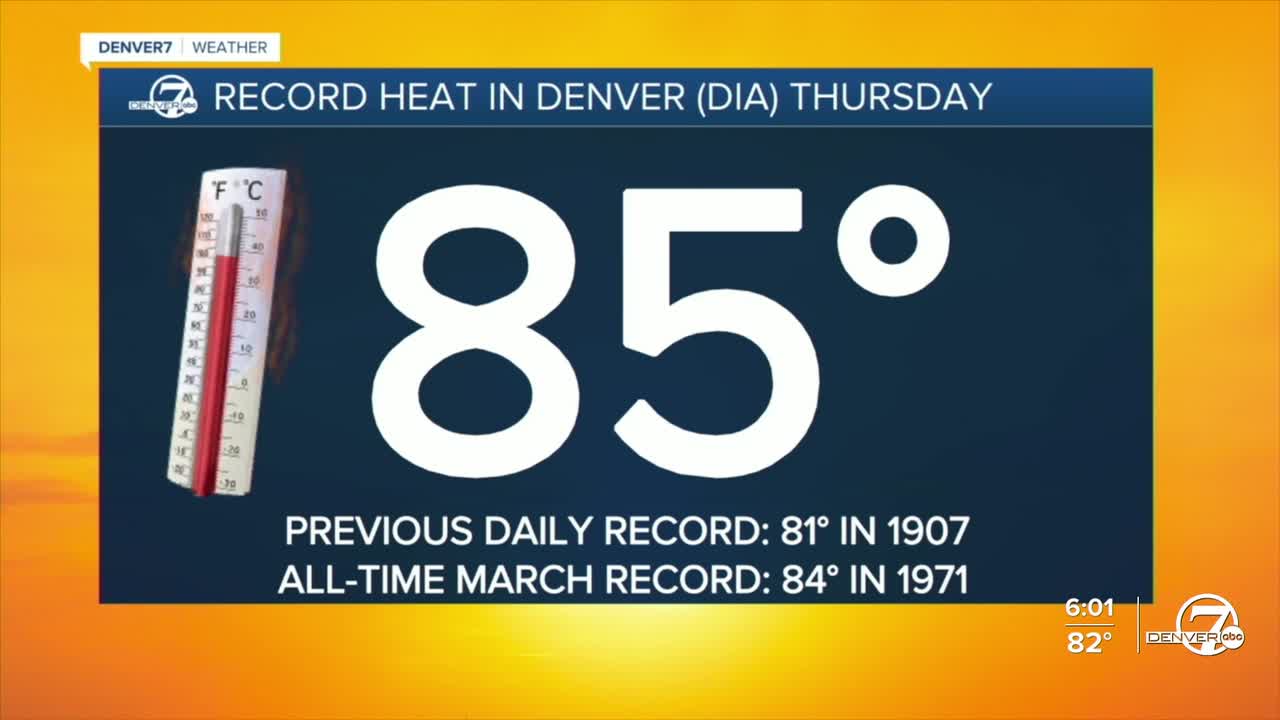
The Mile High City recorded a temperature high of 85º at Denver International Airport Thursday, officially shattering the previous record for the highest temperature ever recorded in the month of March.
By how much, you ask? Just a degree. The previous highest temperature on record for March was 84º on March 26, 1971, according to historical weather data from the National Weather Service in Boulder.
To give you an idea of just how bonkers those stats are, Denver typically sees an average temperature of 42º this time of year and an average temperature of 57º for March 19, according to the NWS.
The last time March 19 saw a temperature in the 80s? 1907 – the year Colorado officially decided to start celebrating its birthday as a state, even though 31 years had already passed.
Denver International Airport recorded a temperature of 85° this afternoon. This is a new, all-time record high temperature for the month of March... breaking the previous record of 84° set on March 26, 1971. #cowx pic.twitter.com/1BoujnKaTp
— NWS Boulder (@NWSBoulder) March 19, 2026
Denver has seen an unusual stretch of warm weather due to La Niña and a high-pressure system that has driven temperatures above normal for much of the winter.
It’s been so warm, in fact, that Colorado as a whole experienced its warmest winter on record.
The statewide average temperature for meteorological winter, spanning from December through February, was 33.6º, surpassing the previous record of 32º set during the 1980-81 season, according to data from NOAA.

It may seem like a 1.6º increase is small, but that’s a major increase in the world of climate statistics, according to Denver7’s Clara Faith.
Per NOAA, this winter was defined by staggering departures from the norm:
- A record-breaking 7.9ºspike: The state averaged nearly 8º above the 20th-century mean
- No. 1 rank: This winter is the warmest out of 132 years of data (1895–2026)
- State vs. city: In Denver specifically, the winter averaged 39.6º, falling just short of the 40.1º record set in 1933-34
Faith explained the reason we’ve seen such warm temperatures is due to La Niña, which helped keep cold storms away from Colorado, as the Earth’s overall warming trend made the warm days even warmer.
At the same time, a persistent high-pressure ridge has remained over the western United States, steering arctic air away from the state and leaving Colorado under clear and above-average temperatures.
Warmer conditions have also meant a lack of snowfall for the season.
More record-breaking temperatures are on the way
“Daily records are almost a sure thing through the end of the work week, and it’ll feel more like early summer than late winter,” Denver7 meteorologist Stacey Donaldson said earlier Thursday.
Friday could see Denver reaching a high of 86º, but Saturday’s the real scorcher (for now).
“Saturday is shaping up to be the hottest and most concerning day overall,” Donaldson said, with highs forecast to reach 92º in Denver, according to the NWS.
“At the same time, winds will pick up, and humidity will drop into the single digits in some areas. That combination will likely bring widespread critical fire weather conditions, making any outdoor burning or sparks especially dangerous,” Donaldson said.
If you are hoping for a bit of a break from this hellish temperatures, a weak cold front arriving late Saturday into Sunday will bringing a bit of relief, dropping temperatures back closer to normal, mainly into the 60s, and there could be a few light showers, especially in the mountains.
But the reprieve doesn’t last long.
Monday’s high will jump back into the upper 70s and temperatures are expected to climb possibly into the 80s again by Tuesday and Wednesday.