



DENVER — Colorado may have experienced its warmest winter since record-keeping began 132 years ago, according to data from the National Oceanic and Atmospheric Administration (NOAA).
The statewide average temperature for meteorological winter, spanning from December through February, was 33.6 degrees Fahrenheit. This surpassed the previous record of 32 degrees set during the 1980-81 season.
This breaks a statewide record by 1.6 degrees, which is a major increase in the world of climate statistics.

According to NOAA, this winter was defined by staggering departures from the norm:
- A record-breaking 7.9-degree spike: The state averaged nearly 8 degrees above the 20th-century mean
- No. 1 rank: This winter is the warmest out of 132 years of data (1895–2026)
- State vs. city: In Denver specifically, the winter averaged 39.6 degrees, falling just short of the 40.1-degree record set in 1933-34

The reason is that a natural weather pattern called La Niña helped keep cold storms away from Colorado, as the Earth’s overall warming trend made the warm days even warmer.
At the same time, a persistent high-pressure ridge remained over the western United States, steering arctic air away from the state and leaving Colorado under clear and above-average temperatures.
Warmer conditions has also meant a lack of snowfall for the season.
The City of Denver tied the record for its driest meteorological winter, recording only 13.4 inches of snow by the end of February, which is well below the average of roughly 35 inches for that period.
As a result, Colorado’s snowpack is currently struggling, and temperatures remain fairly warm.
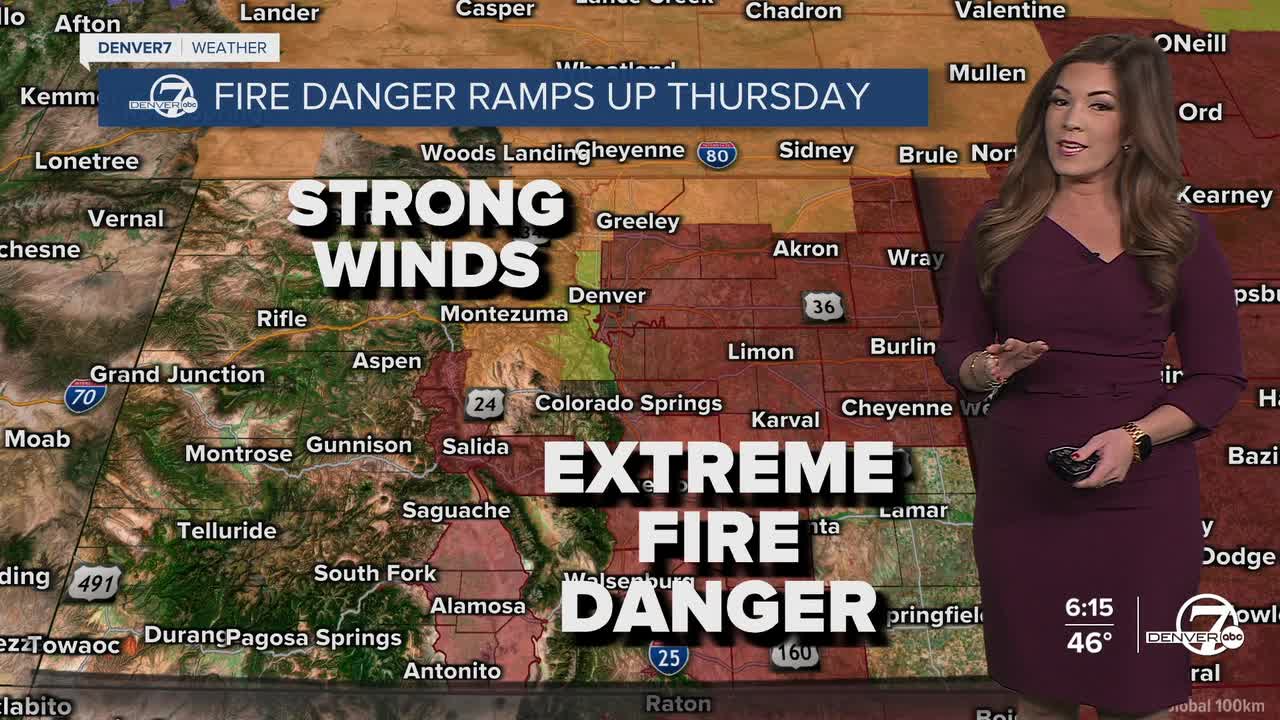
Fire officials are monitoring for a potential early start to the 2026 wildfire season.
DENVER WEATHER LINKS: Hourly forecast | Radars | Traffic | Weather Page | 24/7 Weather Stream
Click here to watch the Denver7 live weather stream.
