



Chris from northeastern Colorado writes, “What’s driving you crazy? When are they going to fix Interstate 76 from Julesburg to Sterling? The road is so bad trucks go to Cheyenne and down 25 which adds traffic to the already congested 25, especially through construction zone. The road is so bad it can’t be safe to travel at the 75 mph as posted. You can’t stay in the right lane it’s so rough.”
- Watch the full story in the video player below.
“This road is rattling my insides!” That is what my 14-year-old daughter said from the back seat on that exact section of I-76 west of Julesburg during a recent road trip back from Nebraska. Both of my daughters had to stop doing their road trip projects. One had to stop reading as the bumps were too distracting.
We all noticed the bumpy condition of the interstate shortly after crossing the Nebraska state line into Colorado. At times the car was shaking like we were in an airplane during extreme turbulence that lasted for nearly 50 miles until just east of Sterling. The concrete surface was littered with nearly constant lines of tar that is used to fill cracks in the pavement but that didn’t account for why the road was as bumpy as it was.
I asked Colorado Department of Transportation (CDOT) engineers why they think the roadway is so bumpy and if there is any quick or long-term fix. CDOT region 4 traffic engineers told me the issues they are seeing, mostly between Sedgwick and Sterling, is due to concrete slabs that have shifted or faulted over time due to a now obsolete way of constructing a concrete road.
“Typically, concrete roadways are designed for a 30-year life and as you noticed on your drive, that older concrete construction no longer works when you approach the end of the designed life,” CDOT said.
MORE: Read more traffic issues driving people crazy
This rough stretch of I-76 was newly built in 1992, the same year CDOT changed its standard for concrete roadway construction. What builders do now is add an 18-inch steel dowel bar into wet concrete to connect two concrete slabs together so they won’t shift and fault like the current ones on I-76. See the graphic below showing how the dowel is used and why it works better than other techniques.
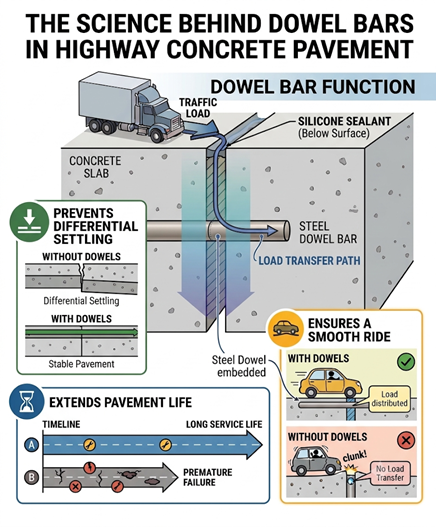
CDOT said multiple techniques like random joint spacing, skewed joints and aggregate interlock — where rough aggregate in the concrete at the joints would lock together to impede the bumps from forming — were tried over the years to try to keep bumps like this from happening, but none worked better than the dowel method.
The engineers explained to me that there are also many other factors which can affect one’s interpretation of a roadway’s smoothness.
“For instance, concrete slabs tend to warp and curl at their edges depending on ambient temperature, which can affect day-to-day perception or even day-to-night perception of a roadway’s smoothness. Also, the type of vehicle and the wheel base of the vehicle can affect this perception. Pickup trucks tend to feel it the worst because the wheel base lines up nearer to the joints. So, the road can be rougher or smoother from day-to-day, morning to night, and based on the vehicle being driven,” CDOT said.
I was driving a rented 2025 Chevy Trax just before noon on a mostly overcast, cool day and I can’t imagine the bumpy ride being any worse than what we felt.
I asked CDOT engineers what would be the long-term solution to smoothing out the interstate. I was told that a full rebuild would be very costly, would take at least six years to complete and is not always the most efficient solution to this kind of problem.
“One of the things we do to preserve the roads is a diamond grind. Diamond grinding involves removing a thin layer at the surface of hardened concrete at the transverse joints of the pavement, which typically have the offending fault/bump. The sawblades level out this bump by grinding it down to be smooth with the surrounding pavement. In addition, these saw blades also minimize any potential surface bumps between these transverse joints, enhancing the overall smoothness of the roadway. The end result is a pavement that is smoother, safer, potentially quieter and pleasing to travel on,” CDOT said.
Another treatment I noticed on my drive was squiggly black lines all over the pavement from previous treatments of crack filler. The CDOT engineers told me they fill cracks that develop in the concrete surface to make sure moisture doesn’t get into the cracks and make the situation worse.
“On concrete, it, admittedly, doesn't look good, but it doesn’t overly affect the ride. It is safe to drive regular speeds while adjusting for any typical or weather-related roadway hazards,” CDOT said.
Looking down the bumpy road, there is a major improvement project already planned in one of the worst areas of I-76 between Atwood and Crook where the concrete slabs would be replaced. That $30 million project wouldn’t start until 2029.
There are other I-76 improvement projects scheduled:
- A $65 million reconstruction of four structures near Brush, scheduled to start this September and last to December 2028.
- A $16 million slab replacement and diamond grinding project between Wiggins and Fort Morgan, scheduled to start summer 2027.
- A $35 million asphalt overlay project near Keenensburg that is likely to happen through two separate projects over next 3-5 years.
Denver7 Traffic Expert Jayson Luber says he has been covering Denver-metro traffic since Ben-Hur was driving a chariot. (We believe the actual number is over 25 years.) He's obsessed with letting viewers know what's happening on their drive and the best way to avoid the problems that spring up. Follow him on Facebook, Twitter or Instagram or listen to his award winning Driving You Crazy podcast on any podcast app including iTunes, iHeartRadio, Spotify, Podbean, or YouTube.
WHAT'S DRIVING YOU CRAZY? DENVER7'S JAYSON LUBER ANSWERS YOUR QUESTIONS.
-

CDOT needs to look into extending the merge from Sheridan to Highway 285
-

Why is there a single traffic light in a shopping center off Lowell at Midway?
-

The left turn at Madison & Highway 34 in Loveland is the most illogical design
-
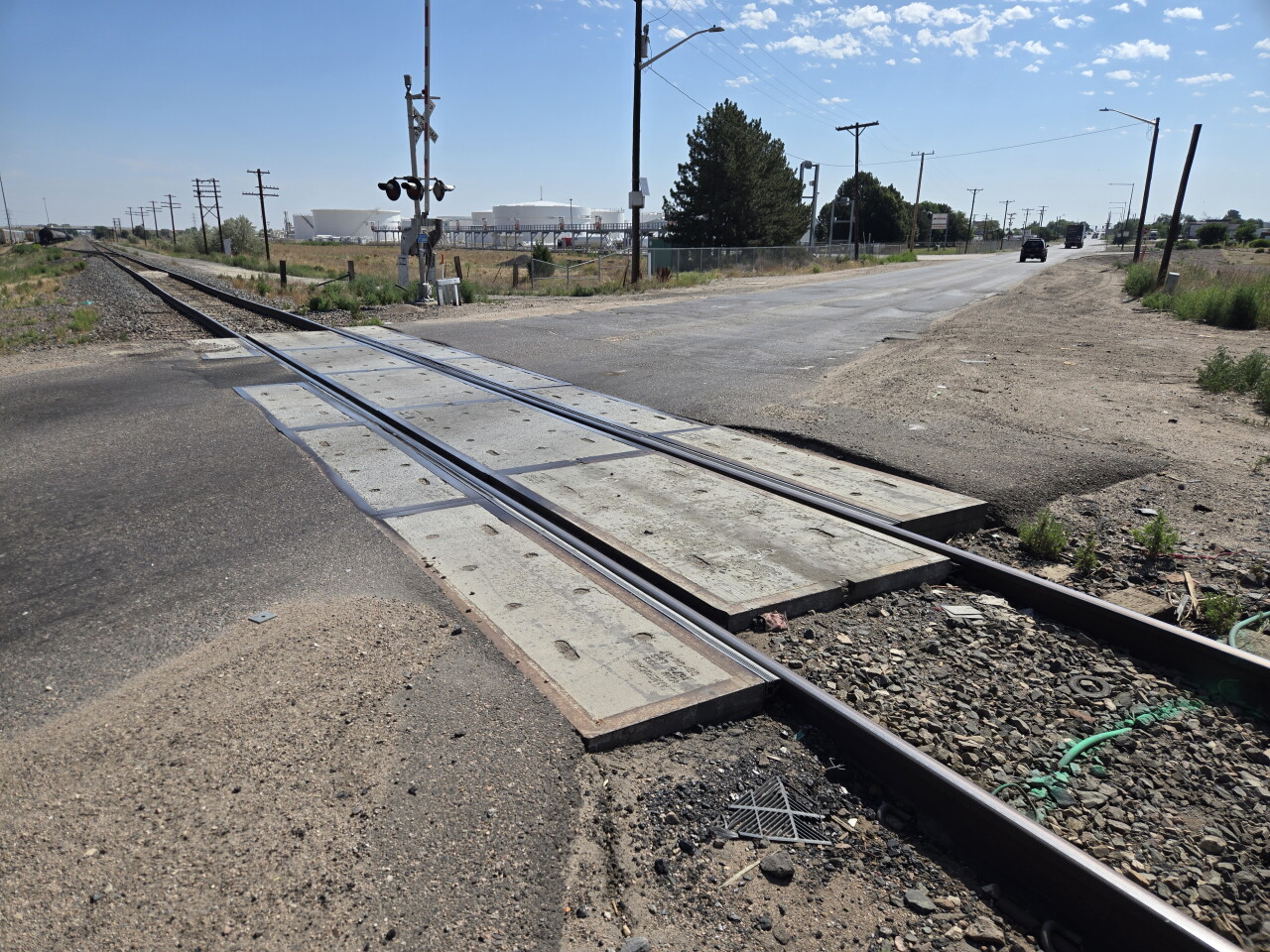
Why is the rail crossing on 96th in Commerce City still so car-damaging rough?
-

Can you explain why the red and yellow arrow lights were on at the same time?


