

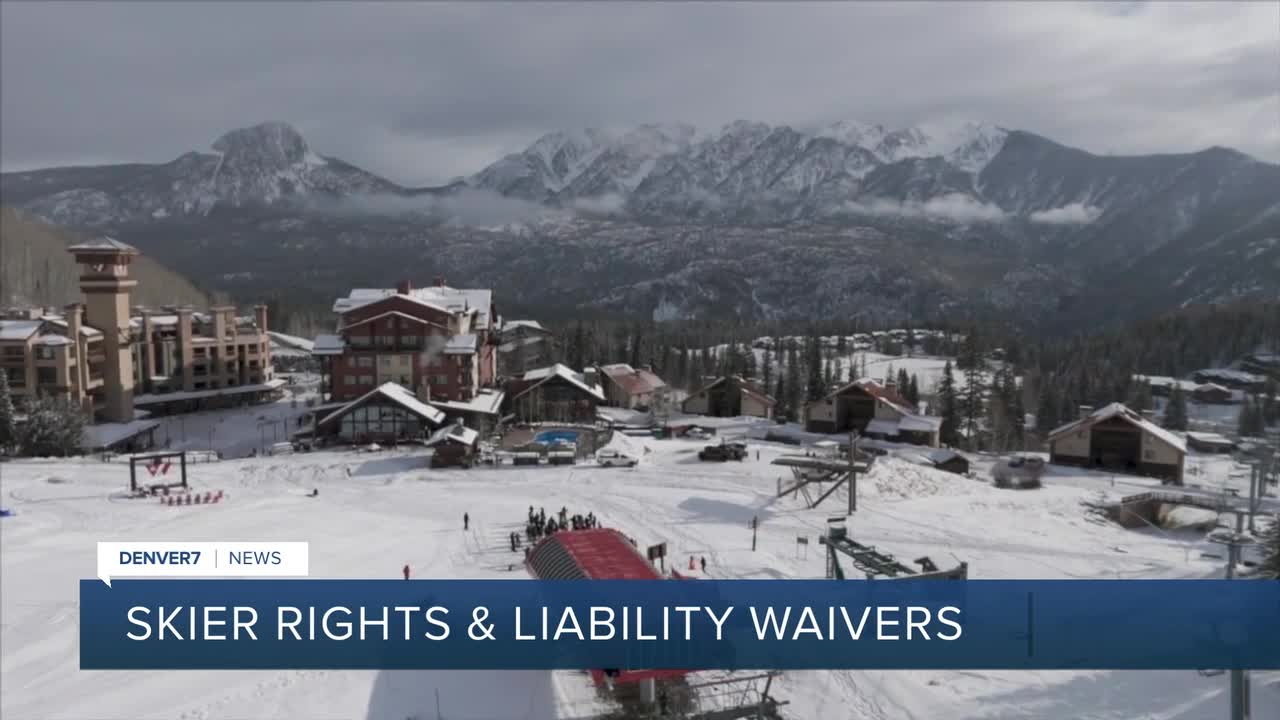


BROOMFIELD, Colo. — Ski season is in full swing and the holiday rush is right around the corner. This will be the first full ski season since a huge verdict came down following a Colorado Supreme Court ruling, impacting resorts like Vail.
The verdict focused on the liability waivers skiers and snowboarders have to sign when they purchase a pass.
The waiver used to clear resorts from all responsibility if a skier got injured. That's why a Colorado district court ruled against Annie Miller, then 16 years old, when she was left paralyzed in 2022 after falling from a ski lift in Crested Butte.
The court said she had signed away her rights to pursue claims of negligence when she purchased a season pass that included waivers of liability for the resort.
But her legal team challenged that ruling to the Colorado Supreme Court.
In 2024, that court ruled in a 5-2 decision the "district court erred in dismissing that claim" and that "Crested Butte may not absolve itself, by way of private release agreements of liability of statutory and regulatory duties."
In September of this year, a jury awarded Miller $21 million.
With the first ski season underway since that award was given, Denver7 reached out to a ski attorney to learn more about the risks skiers take when they hit the slopes and the rights they have if something happens.
"The main rule of the road is that the uphill skier has to be aware of the skiers below," ski attorney Joseph Bloch said. "There's a couple exceptions, but the presumption is the uphill skier has to watch out for downhill skiers and saying, 'Well, that person cut me off and I hit them', they're going to be still be responsible..
Bloch said, just like in a highway crash, you have to stay at the scene and wait for ski patrol to arrive.
"You have to know the Colorado changed the law in the last couple of years, which indicates that if you hit someone or there's a collision on the mountain between two skiers, you have to wait there until an employee of the ski area comes before you can leave or be considered a hit and run," Bloch explained.
He also reminded skiers and snowboarders about the importance of having insurance before you go out.
"There are some tragic, tragic cases that there is no insurance and there's nothing we could do. We'd just be victimizing the victim twice, because if there's no recovery, there's no reason to drag them to a lawsuit," Bloch said. "But homeowner's insurance does cover ski injuries, and even if you're underage, a child or an adolescent that hits someone, and you live in the home of your parents, they can be held responsible for the injuries caused."
Denver7 did reach out to Vail Resorts, PWDR and Alterra Mountain Company to ask if the legal battle resulted in any changes to waivers this year or new training requirements for ski lift operators.
Only Vail got back to us, but did not directly answer our questions.

