



BOULDER COUNTY, Colo. — New homes stand tall in many of the neighborhoods that were burnt in the aftermath of the historic Marshall Fire, which damaged or destroyed more than 1,000 homes and businesses in Superior, Louisville and Boulder County amid hurricane-force winds and extreme drought conditions.
The Coal Creek Ranch neighborhood in Louisville has gone through one of those dramatic transformations, with new residences dotted along the streets and a handful of homes still under construction.
On Tuesday afternoon, the Kleinschmidts were unloading snacks and drinks into their brand new home — on their old plot of land — in preparation for a gathering with their neighbors. The family plans to move into the home over the weekend, but wanted to celebrate the milestone first.
"We lost our house in the fire four years ago today, and we weren't going to rebuild a house. And then we changed our mind and decided to rebuild, and we just got the keys last week," said Kate Kleinschmidt, while unpacking items to make spiced nuts for the party that night. “Just kind of slowly and surely getting things over from our current abode over to the new place.”

“It feels weird moving into a house where we used to live, and we lived here for a couple years before we didn't, and all of our neighbors have been back for a while," said Nick Kleinschmidt.
One of the reasons the Kleinschmidts decided to rebuild was the community they are surrounded by within the Coal Creek Ranch neighborhood.
“We've just had a lot in the last six months coming out and visiting with them, seeing everybody getting back into their houses. It really feels like we're getting back into the community where we used to live," Kate said. “It's exciting to be close to the people that we've gotten to know so well over the past few years through the journey too."
It was a journey the family never wanted, but they are no longer defined by the destruction of the fire and instead said they have discovered the recipe for resiliency throughout the process.
“How do you make lemons out of lemonade? And you have this lot, and you own it, you can build the house of your dreams on it. Why don't we? Why not? Let’s do it," Kate said with a smile.
Kate remembered the sky filled with smoke on Dec. 30, 2021. She and the young children left the home without any idea they would never come back.

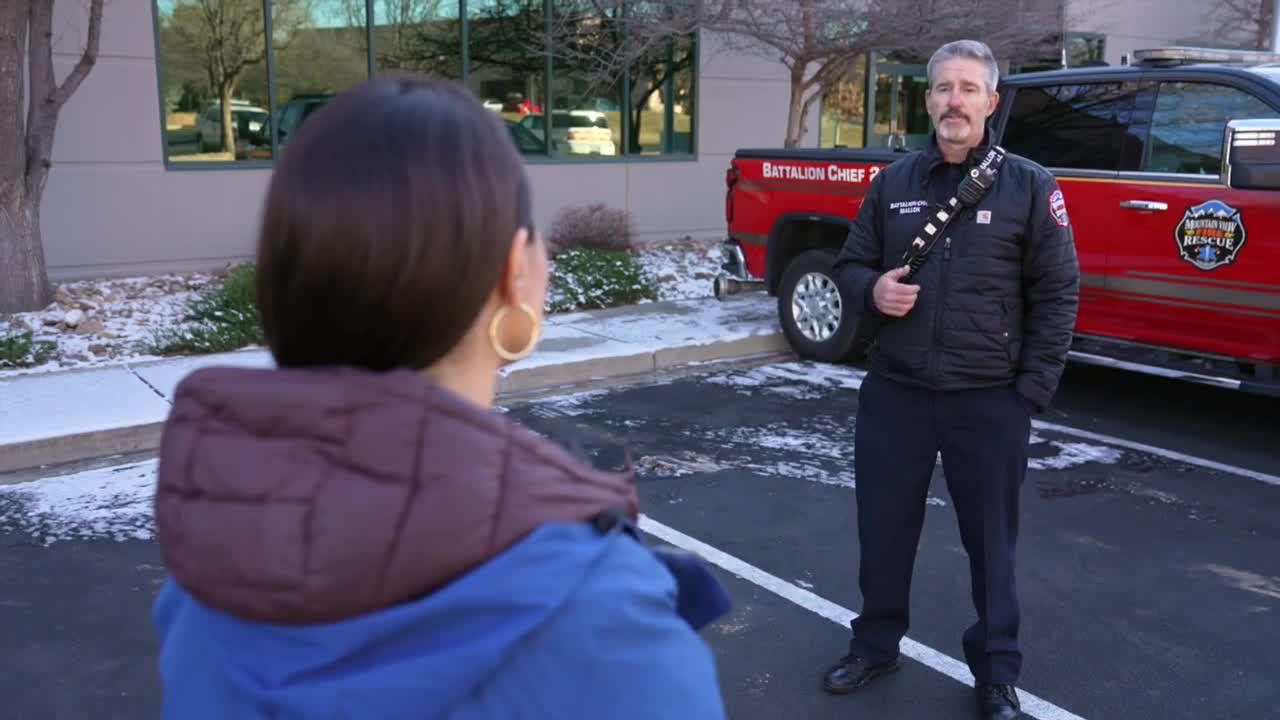
Meanwhile, Battalion Chief Tim Mallon with Mountain View Fire Rescue was a captain at the time of the Marshall Fire. He was one of the first crews fighting the blaze, which the Boulder County sheriff believes was sparked by two separate fires. According to the sheriff's investigation, the first fire was likely sparked by a resident's buried fire from about a week prior and the second likely began as a result of a disconnected Xcel Energy power line. Xcel Energy has disagreed with the investigation's findings in the past.
No matter the cause, the conditions of that dramatic day cannot be disputed.
"It was like a blowtorch, really," Mallon said, explaining how the wind and dry fuels fed the fire. “When I say it was blowing hard, I mean, the vast majority of the firefighters lost their helmets during this.”

With grit and ash filling his eyes, Mallon said his body went into work mode.
“Fortunately or unfortunately, I've been on a lot of those [similar] fires in California, Montana, and I've seen events like this. It wasn't in my backyard, so it wasn't as emotional, but I felt like I had some experience in that," Mallon said. “We all recognized from the get-go that this was going to be very challenging, very difficult to contain.”
For Mallon, the fire feels like it was yesterday. The fight was more about saving lives than structures, and it was the most extreme event in Mallon's 22-year career.
“You can look at all the national data, but we're starting to see larger and larger fires, and they're starting to hit communities," said Mallon. "They're not restricted to the forests anymore, and a lot of that is our choices as human beings, where we're building our properties... The dryness, the location of our housing, and the wind — those things don't play well together.”
Anxiety connected to powerful winds is a reality that plagues Boulder County. That fear reared its head again just before the Christmas holiday, when powerful hurricane force winds swept throughout the state. Thousands of Colorado Xcel Energy customers were intentionally without power as part of Public Safety Power Shutoffs (PSPS), which are intended to mitigate wildfire risk from damaged lines.

Research Physical Scientist Eric James, who works at the U.S. National Oceanic and Atmospheric Administration (NOAA), said accurate forecasting makes a decision like a PSPS possible.
“We just have had such a dry autumn. We had that one snowstorm earlier in December. But other than that, it's been very, very dry for the last few months, and the weather service was on top of that with red flag warnings and strongly worded warnings days in advance of this, even talking about potentially shutting off power, which they — Xcel — ended up doing," James said. "I think the forecasts haven't been good enough until recently to be able to take a step like that. It's a very drastic step. You know, you have to have confidence, because it's got major risks. (If) something doesn't happen, people are going to be really upset. The forecasts are now accurate enough to be able to do that.”
James believes the power shutoffs were likely the right decision, given the high winds and dry conditions. Mallon agreed that the response was a proactive approach.
"You see what Xcel decided to do — shut down the power — and I know that's a huge interruption, but it's possibly saved fires (from happening) and therefore people's houses and lives," said Mallon. "I think the hardest thing for us is to be diligent. I think the further we get away from the event, the less we're going to be noticing it or caring about potential consequences. What I would hope is that we remember this for what it was, and it was life-altering for a lot of people, and that we stay on guard and continue to fund the agencies and the programs that are trying to do the right things, and we keep a focus on it.”

Dr. Andy Hoell, research meteorologist at NOAA, leads a team on the early warnings of drought and its compounding and cascading effects, which includes fire.
"I'm not going to give my impression of the power shutoffs, because that's probably a little bit outside of my zone, but I will say this: It was exceptional," Hoell said. "It was actually very regionally specific... And it really speaks to the complexity of our weather, of our climate, especially in this area — the Front Range.”
According to Hoell, fire is likely one of the more understudied phenomena within the meteorology and Earth sciences community. However, he said the understanding of the conditions that create a fire is growing through technologies like monitoring and forecasting conditions, and through events like the Marshall Fire.
“We learn a lot through the extreme events that we live through, and every extreme event is an opportunity for us to be able to apply that information to a future situation, a forecast, using that forecast to inform a decision, and ultimately to protect lives and property," said Hoell.
Hoell said a combination of factors are to blame for such catastrophic natural disasters, such as the Marshall Fire.
"Events like the Marshall Fire and fires like it, whether it's here in Colorado or elsewhere, they're caused by sequences of unfortunate events that happened over the course of several months," Hoell explained. “You think about the Marshall Fire. We had a very wet spring, and because of that, we had a lot of vegetation grow. But then we had a very warm summer, a very warm fall, and a very dry fall, and that vegetation became very dry, and all it took on a given day in December was some sparks, some extreme winds, and there we go.”
The Kleinschmidts believe any proactive measures that can prevent a fire are worth it in the long run.
“To me, it seems like the right direction. I don't want anybody else's house to burn down because of a power line," said Kate. "I'd rather take a small inconvenience of losing power for a day or two rather than having to have anybody else go through what we went through.”
According to data recorded by Boulder County, roughly 800 homes have been completely rebuilt after the Marshall Fire.
For the Kleinschmidts, moving into their new home feels like an ending to this long process.
"It starts to feel like a little bit of a bookend on the end of this journey and story," said Kate. "It's felt continuously unfinished for the past four years. It's like, well, we still own the lot. Well, the house is still being rebuilt. Well, we still have to move. And hopefully in a couple weeks, we'll be moved and we'll be able to kind of restart.”

