



BOULDER COUNTY, Colo. — For Dave Clabots, a trip to the Louisville Recreation and Senior Center means catching up with friends in the heart of the neighborhood.
“It’s a very large community environment here,” the longtime Louisville resident said. “A lot of things going on here.”
But when the winds start howling in Boulder County, that heartbeat comes to a stop.
"They'll close the rec center because there's no power," Clabots said. "[And] when you lose power, you lose a lot of community.”
Watch Denver7's Adria Iraheta's report in the video below:
Those winds fueled the massive flames that unleashed devastation in the community during the Marshall Fire. In total, it destroyed more than 1,000 homes — becoming the costliest wildfire in Colorado’s history.
A lot has changed in Colorado since then to prevent another disaster of this magnitude.
In recent years, Xcel Energy began implementing Public Safety Power Shutoffs (PSPS) to prevent wildfires during extreme or critical wildfire risk conditions.
But not everyone is happy with those measures. Denver7 has extensively covered the frustration felt by homeowners and business owners when some of the planned outages left thousands in the dark for days.
"We want Xcel to bury the power lines," Kate Malkinson told Denver7 in March. "We understand that it's a significant cost and it's a lot of time and a lot of money, but I think it's the best thing for our infrastructure, and it's a vital investment for our city.”

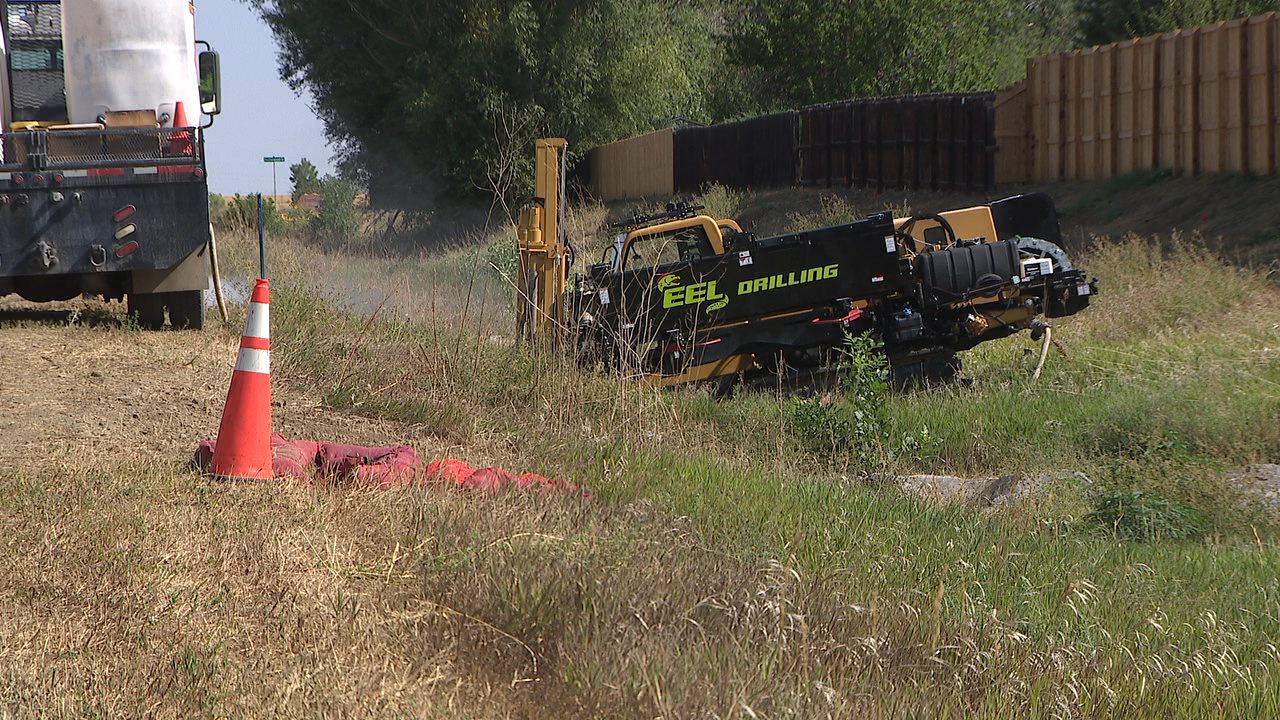
Now, Xcel Energy is putting about 50 miles of power lines underground by 2027, removing them from overhead to reduce the risk of those wires starting a wildfire.
"We're responding to the things that we've heard from our customers and our communities, and we're doing everything that we can to keep them safe," said Xcel Energy Colorado president Robert Kenney.
A 1.7-mile stretch of 75th Street in Boulder County is just the beginning of the three-year wildfire mitigation plan, approved by the Colorado Public Utilities Commission (PUC), and represents a $1.9 billion investment.
According to the company, the costs are incorporated into its overall infrastructure investments for its wildfire mitigation program — recovered through rates approved by the PUC.
"We're identifying specific locations where we think the risk is highest of a wildfire, and where the environmental conditions are most amenable to placing those lines underground," Kenney said.
So far, that list includes more than a dozen locations across the state.
Xcel Energy likely plans on filing another multi-year wildfire mitigation plan with the PUC in 2027, according to Kenney.
The work also includes vegetation management and installing more weather and artificial intelligence cameras to detect fires before it's too late.
"We want to take all the efforts that we can to mitigate the risk of our equipment starting a wildfire," Kenney said.
Kenney said long-term plans for expanding the scope of the project are being hindered by red tape.
"On the one hand, our customers are asking us to do this, and then at the same time, we're seeing some delays in being able to get permits," he said. "One of the things that I think would be useful and helpful to us to be able to move as quickly as possible is if our county partners are able to issue those permits as expeditiously as possible."
Years later, the threat of another wildfire is not far from Clabots’ mind.
“It's the violent windstorms — they’re not going away,” he said.
The undergrounding projects bring some peace of mind.
“Xcel really needs to stay focused on these really high wind risk areas,” he continued. "We used to get a lot more moisture in May, June and July. We're just not seeing that anymore."

