



DENVER — Denver City Council delayed a vote on a new license plate reader contract Monday night, leaving the city days away from its Flock agreement expiring.
Denver Mayor Mike Johnston previously said he decided to end the contract with Flock after community concerns about privacy and data sharing. The mayor chose to award the city's new automatic license plate recognition contract to Axon, a public safety technology company that already supplies Denver Police with body-worn cameras and tasers.
During Monday's meeting, several council members felt rushed to decide on the Axon contract, though questions about data storage and sharing remained.
Dozens of people spoke against the technology during the public comment portion of the hearing. Katie Leonard, with the Denver Party for Socialism and Liberation, said she opposes any license plate readers in Denver.

"If we normalize these types of technologies, and if we keep making the conversation about singular technologies and singular contracts, we're going to mistake the forest for the trees, right? We're going to fast-track ourselves into, really, what would turn out to be an AI-powered police state facilitated by multi-billion-dollar private corporations, which is just absolutely unnecessary and dystopian," said Leonard.
Dana Miller, co-leader of Denver's Immigrant Partnership Team, raised doubts about mass surveillance and whether Axon's contract would improve on Flock's.
"This is just one other way in which our data is not private, and we really don't know how it's going to be used. Of course, the companies say it's going to be used in certain ways, but there's really no proof," said Miller.
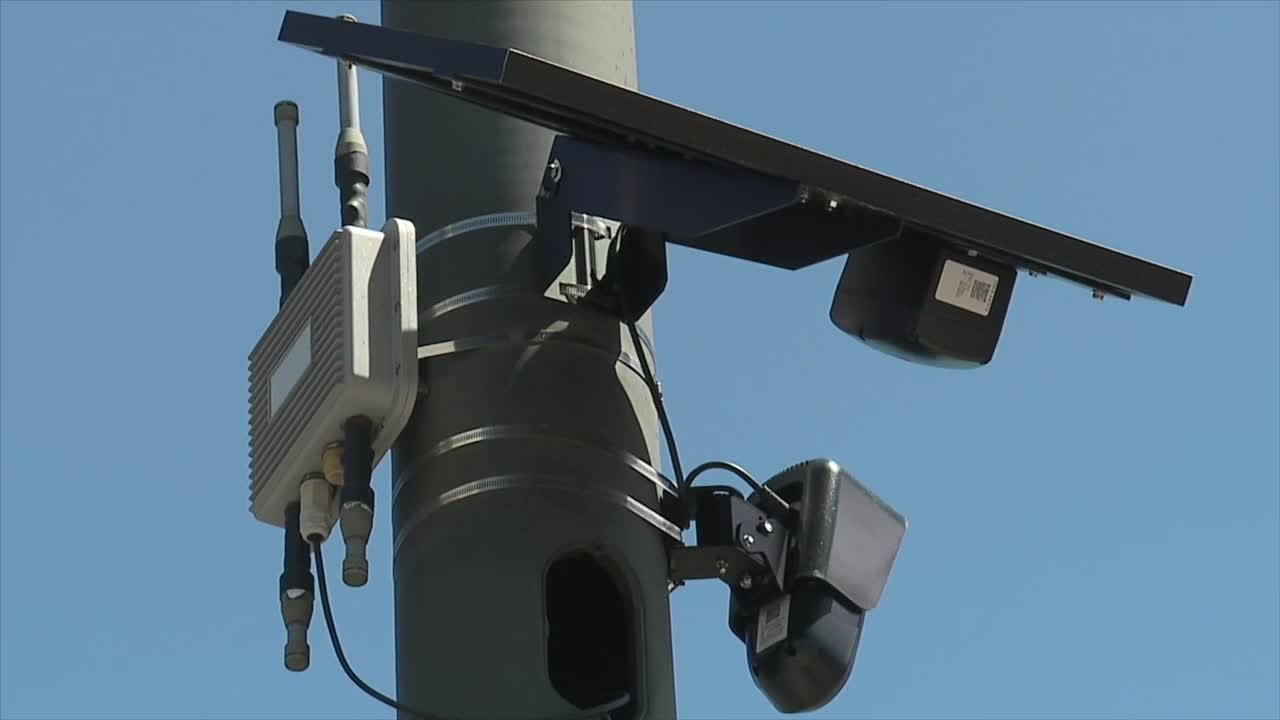
The city's proposed one-year contract with Axon would cost $150,000 and allow the company to install 50 license plate readers across the city on poles, trailers, or buildings. The contract limits database access to Denver Safety personnel and requires a 21-day retention policy, rather than Flock's 30-day data retention agreement.
City officials said Denver would own its own data and that Axon does not pool data into a sharing network or sell data to any third party.
Tim Hoffman, the mayor's director of policy, said that since the summer of 2024, Flock cameras have helped Denver Police recover 446 stolen vehicles, make 528 arrests, and take 63 firearms off the streets. He said in 2025, license plate reader information was used in more than 40% of the city's homicide investigations and 23% of non-fatal shooting investigations.
Denver resident David Howard said these statistics show why license plate recognition is important for public safety and police.

"Whatever technology they can use as a force multiplier to give them more options generally benefits the regular citizen," said Howard, who spoke during public comment in favor of the Axon contract. "I believe that the mayor has tamped down the access to the data used in the new contract, where it was a little bit loosey goosey before."
Several members of the Denver Surveillance Task Force sent a letter to Denver City Council members ahead of the vote, urging them to vote no on the contract with Axon. The letter cited concerns about "rushing into another contract with a new vendor for risky, untested ALPR surveillance technology absent any statutory regulation."
Council members postponed the vote on the Axon contract until Tuesday, March 31.
◼️ Previous coverage
Denver mulls replacing Flock system, begins accepting bids from other providers
Ring and Flock cancel camera partnership amid outcry over Super Bowl camera ad
Coloradans sound off on data sharing from flock cameras; how new law could fix some issues
Denver is done with Flock, plans to hire Axon as new license plate reader system provider
Colorado bill would require law enforcement obtain a warrant to search Flock database in some investigations

