



DENVER — The City and County of Denver intends to hire a new company for license plate readers, Mayor Mike Johnston's Office announced Tuesday, after receiving significant pushback from the community over privacy concerns associated with current Flock Safety cameras.
The mayor's office will present a proposed contract to Denver City Council for Axon to take over license plate reader services before the contract with Flock expires at the end of March. Flock cameras were installed in Denver in May of 2024, and there are now more than 100 cameras in 70 intersections across the city.
The change comes after Flock reportedly shared Denver data with other cities and immigration enforcement through its national database, sparking concerns for some residents.
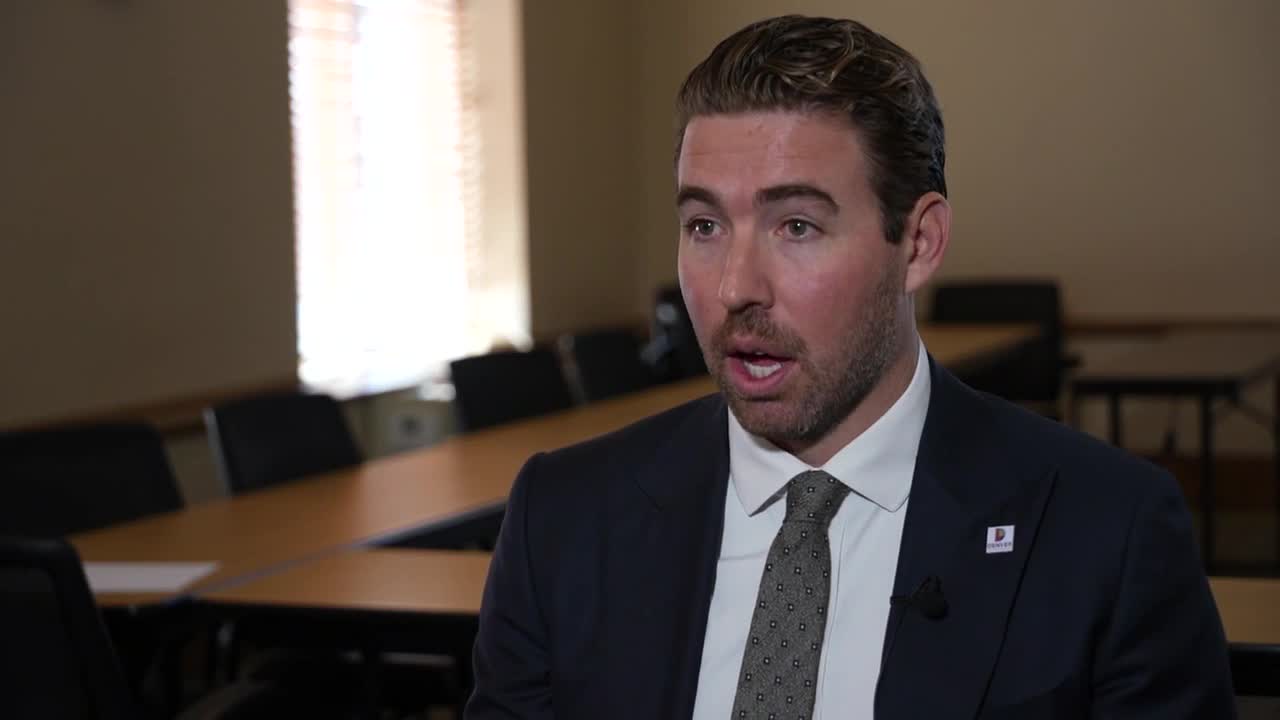
“The concerns that we heard were around privacy considerations," Tim Hoffman, Mayor Johnston’s Director of Policy said. "Who has access to data that is collected in Denver, things like that or concerns about ICE or other federal immigration authorities being given access to some of our data.“
Hoffman said as the city and county went through the proposal process, Axon had "the highest rated security for data storage that exists."
"It's the same type of security level that we use to store highly sensitive healthcare information," he said. "So we felt good about their ability to keep our data secure.”
Watch: Denver7's Micah Smith talks with Tim Hoffman about the switch
The mayor's office said there will be regular reviews, an auditing function and an agreement to only retain data for 21 days, unless required as part of an active investigation.
“We have really, really robust provisions built into these contracts to make sure that the compliance is happening and that it's ongoing, and so it's auditing processes to make sure that there's regular check ins to see who's accessing the data," he said. "We can do kind of spot security checks to make sure that even though they do have highest level security of the data, that we can at any time, do a little test to make sure that that that they're in compliance with those kind of things.
"We also do have opt-out provisions in the event that there was a breach or that we were concerned that they weren't living up to the very high standards," Hoffman added. He said they are still working on the specifics for how often these checks will be performed.
Axon must also agree to adhere to state law. The company can't provide Denver data for civil immigration enforcement, abortion-related investigations or any purpose not explicitly in its city license plate reader contract. Axon can be held in breach of contract if it doesn't comply and be subject to penalties.
“We’ve heard the community loud and clear and it is time to make a change," Johnston said in Tuesday's announcement. “Axon is among our most reliable partners and will collaborate with us on strong safeguards that protect immigrants, women seeking reproductive healthcare, and the Constitutional rights of Denverites."
Axon already works with Denver on collecting, protecting and storing video from police body-worn cameras, according to the mayor's office. The proposed contract with the company for license plate readers will stipulate that Denver's data can't be accessed by federal authorities or used for any purposes other than those set out by the city.
“The fact that we have the familiarity with this system, that we have the confidence in the system, has been really, really important, and it was a factor that was considered in the RFP process,” Hoffman said.
The contract would be in effect for one year and cost $150,000.
Hoffman also said discussions are ongoing concerning where the cameras will be placed following concerns from members of underserved communities who have stated they feel unfairly targeted for surveillance.
“It's something that the task force has been looking at, that our law enforcement agencies have been soliciting feedback on as well," Hoffman said. "So that's an ongoing thing that we're looking at as it relates to where these cameras go and how they're going to be impactful to certain communities."
Last week, Denver Auditor Timothy M. O'Brien announced he would not sign a new contract with Flock, citing liability concerns.
Hoffman said to his knowledge, no discussions have been had with O'Brien regarding the contract with Axon yet.
The contract technically does not need city council approval, but Johnston told the Denver Post his team is seeking that approval to be transparent and collaborative.
Denver citizens and activists have raised concerns about over-surveillance and potential misuse of data gathered by license plate reader cameras. Law enforcement, on the other hand, points to the benefits of license plate readers for crime and safety across the city.
“License plate readers are among the most critical tools we have to develop investigative leads, solve crimes more quickly, and serve justice more efficiently,” Denver Police Chief Ron Thomas said. “LPRs have helped us track down violent offenders before they hurt anyone else, aided the city in dropping auto theft to levels not seen in years, and solved serious crimes in which there was otherwise little to no evidence that would allow us to identify the offender and make an arrest.”
The mayor's office said license plate readers were used to recover more than 400 stolen cars, get more than 60 firearms off the streets, help solve 16 homicide investigations and 32 non-fatal shooting investigations in 2025.
After advocates sounded the alarm, Mayor Johnston asked Flock to sign a new agreement as part of a contract extension in October, dictating license plate reader data couldn't be shared with the federal government.
Flock doesn’t own the data its cameras collect, and before October's agreement, data in Denver could be accessed by the city’s police department as well as more than 80 law enforcement agencies and four FBI agents in Colorado. Flock had also participated in pilot programs with the Department of Homeland Security, according to the Associated Press, sounding the alarm for some Coloradans.
In addition to Flock, Motorola, SoundThinking and Packetalk were also considered for the new city contract. The mayor's office said the final decision to choose Axon was based on past performance, cost, effectiveness and the ability to comply with Denver privacy guidelines.
Prior coverage:
- Bipartisan bill requiring warrants for license plate reader searches moves forward in Colorado
- Denver neighborhood groups host community meeting on license plate readers
- Denver bans sharing of license plate reader data with the feds as part of five-month Flock contract extension
- Denver citizens, advocates speak out against automated license plate readers, call for changes
- Denverites demand removal, bagging of license plate readers after mayor's contract extension
- License plate reader remains hot-button issue in Denver | Denver7 Investigates



Denver7 is committed to making a difference in our community by standing up for what's right, listening, lending a helping hand and following through on promises. See that work in action, in the videos above.
