



DENVER — A new report from Common Sense Institute (CSI) finds that Colorado ranks among the highest states in the country for homelessness and that it's not housing affordability that's driving it, it's illicit drug use, crime rates, and policing levels.
The report examines 2024 homelessness data across all 50 states and the nation’s largest metro areas.
The CSI reports finds that Colorado ranks:
- 9th nationally in total homelessness rate
- 7th in chronic homelessness
- 10th in unsheltered homelessness
- 7th in homelessness involving severe mental illness
- 7th in homelessness involving chronic substance abuse
Among the nation’s 50 largest metro areas, metropolitan Denver ranks:
- 5th in total homeless population
- 6th in chronically homeless individuals
- 4th in homeless individuals with severe mental illness
- 4th in homeless individuals with chronic substance abuse
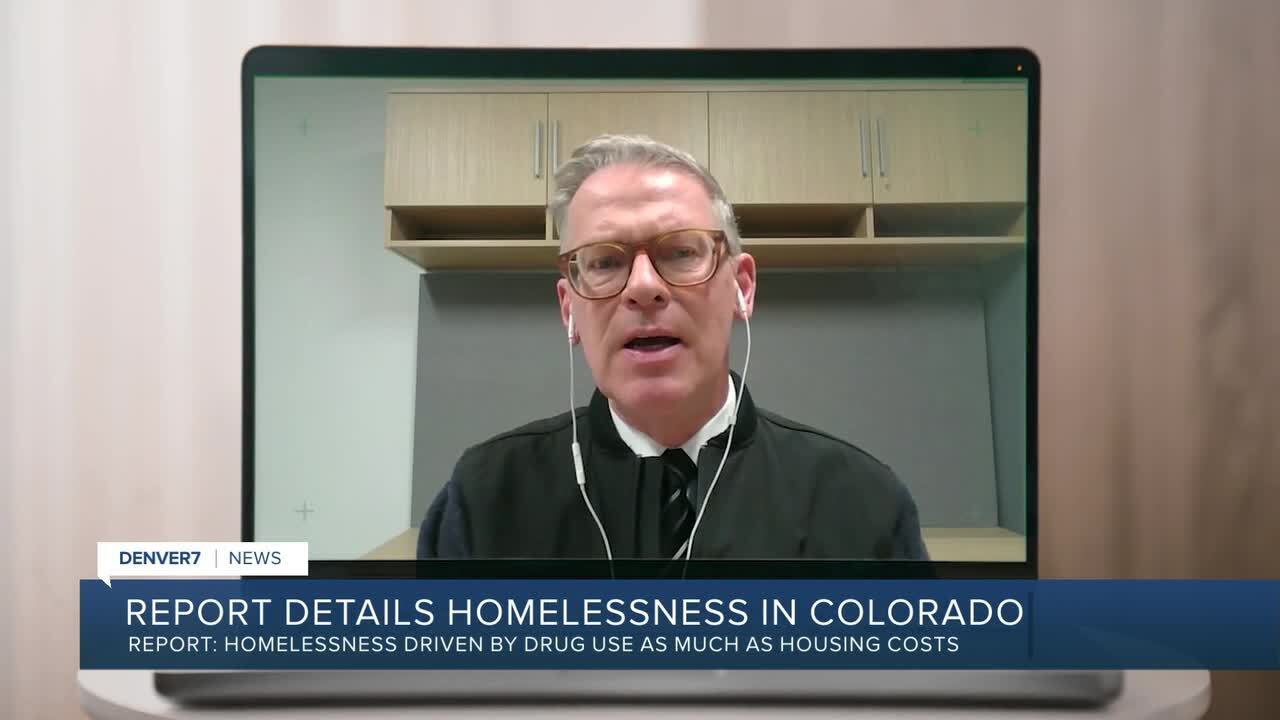
Denver7 anchor Shannon Ogden spoke with the lead on the report, Dustin Zvonek, CSI Homelessness Fellow, and former Aurora city councilman.
Zvonek says the analysis found drug use rates show a stronger statistical relationship with homelessness than rent affordability, states with higher crime rates and fewer police per capita experience higher levels of homelessness and that high state spending alone does not correlate with improvement in homelessness.
"There are strong correlations especially drugs, substance abuse, and mental health challenges, crime rate, lots of other factors that are seen as drivers to homelessness," said Zvonek.
"This is the one that a lot of people don't like to acknowledge, they'll often conflate significant use of synthetic opioids that are just turning people's minds to mush and so these people are being categorized as having mental health or schizophrenia, when frankly they haven't been sober in so long that they probably present that way," added Zvonek.
Common Sense Institute is a non-partisan research organization dedicated to the protection and promotion of Colorado’s economy.
The report includes recommendations for reducing homelessness in Colorado and nationwide. Zvonek says much could be improved if the federal government shifted from making housing first a priority to treatment first.
He says for the last 20 years, the federal government through the Dept. of Housing and Urban Development (HUD), distributes funding for homelessness programs primarily for those that offer unconditional housing with so-called wrap-around services offered. Meaning, there is no requirement to make use of the services like addiction treatment or job training.
CSI recommends a treatment first approach.That offers housing with the requirement that those being houses must also take part in the supportive services.
"The difference the housing first versus treatment first is that you still would have emergency shelters but to continue to stay in the housing - transitional housing - and everybody's path to self-sufficiency is different - some people need three months, some six months, some 18 months - but key is they have to continually work with a case managers somebody who's going to help individuals through a process of whether it's job training, mental health support or drug addiction support, to help them achieve self-sufficiency," said Zvonek.
Click here for full report

