

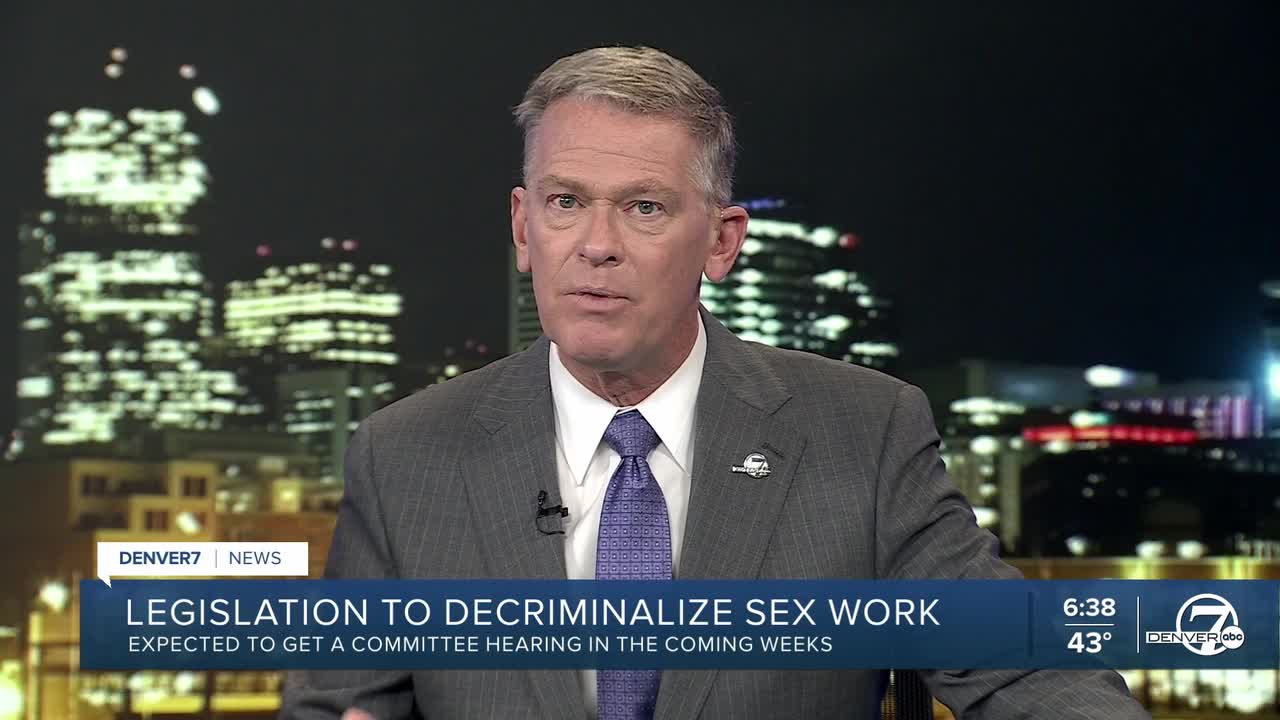


An explosive bill is in the pipeline for this state legislative session. Senate Bill 97 would decriminalize sex work among consenting adults in Colorado.
SB 97 would repeal the state's criminal offenses of prostitution, soliciting prostitution, keeping a place of prostitution and patronizing a prostitute. It would maintain current criminal penalties for pandering that involves menacing or criminal intimidation and for pimping, but it changes terminology in those offenses by replacing "prostitution" with "commercial sexual activity."
Bill Summary:
The bill requires the statewide decriminalization of commercial sexual activity among consenting adults. It declares that decriminalizing commercial sexual activity among consenting adults is a matter of statewide concern and expressly preempts statutory or home rule city, town, city and county, or county ordinances, resolutions, regulations, or codes criminalizing commercial sexual activity. The bill repeals the state criminal offenses of prostitution, soliciting for prostitution, keeping a place of prostitution, patronizing a prostitute, and prostitute making display. It also repeals the offense of pandering when it involves knowingly arranging or offering to arrange a situation that permits a person to practice prostitution. The bill maintains current state criminal penalties for pandering that involves menacing or criminal intimidation and for pimping, but it changes terminology in those offenses by replacing "prostitution" with "commercial sexual activity". The bill makes various conforming amendments, including those related to: Reporting requirements, immunity, affirmative defenses, and criminal conviction records in human trafficking cases; public nuisances; certification by the peace officers standards and training board; and the regulation of escort bureaus and massage parlors. The bill eliminates a court program for persons charged with certain prostitution-related offenses.
Denver7 anchor Shannon Ogden spoke with one of the bill's co-sponsors, Sen. Lisa Cutter, a Democrat representing Jefferson County. Cutter acknowledges the uphill battles this legislation faces, but says it has proven to provide protections and improve safety of sex workers in parts of Australia, New Zealand and Belgium, which have also decriminalized sex work.
"These people that are involved in sex work need to have some protections," Cutter said. Sen. Nick Hinrichsen, D-District 3, Rep. Lorena Garcia, D-District 35 and Rep. Rebekah Stewart, D-District 30, are also sponsoring the bill.
Nevada has legalized prostitution at licensed brothels in certain rural counties, and Maine has decriminalized selling sexual services, while keeping criminal penalties in place for buyers. If passed, Colorado would be the first state to fully decriminalize prostitution, which is notably different than legalization.
"Legalizing would require regulatory structure, and that's not what we're doing, and that's per the request of sex workers," Cutter said. "This is what they feel would be the best path for them, and it's what's proven in other countries to be effective."
Cutter added that the discussion surrounding this bill should not be about whether sex work is right or wrong, and that she does not believe it will cause in uptick in sex work. She says the reality is, it happens and will always happen, but there are ways to make everyone safer.
"People involved in sex work often have a difficult time leaving," Cutter said. "They get caught in that cycle because it's on their record and maybe they can't buy or rent a house. And maybe they can't get another job. It's definitely an impediment."
She also said removing legal penalties can help sex workers feel safer to seek health care and ask questions of their purchasers.
"We think there's better outcomes in terms of sex trafficking and violence; it's proven to reduce these things," Cutter said. "If I thought the outcomes weren't good, weren't all the things I'm saying, I would never sponsor this bill."
But not everyone sees it that way. Safe Places for Women, a faith-based nonprofit in Englewood that provides transitional housing for victims of sexual trafficking, said in a release that it disagrees with that framework, arguing that the proposed legislation "addresses the symptoms of exploitation rather than the root causes."
"Over the years, we’ve encountered hundreds of women whose participation in commercial sex was driven not by choice but by survival — trying to keep food on the table and a roof over their children’s heads," the organization's founder Ked Frank said in the release. "This is not about working conditions; it’s about the harm inherent in the industry itself.”
The Colorado District Attorney's Council has formally opposed the bill as well, while the ACLU of Colorado has formally supported it, according to Secretary of State filings.
SB 97 has been assigned to the Senate Judiciary Committee but is expected to be several more weeks before its first hearing. It is unclear how much support it has in these early days.


