


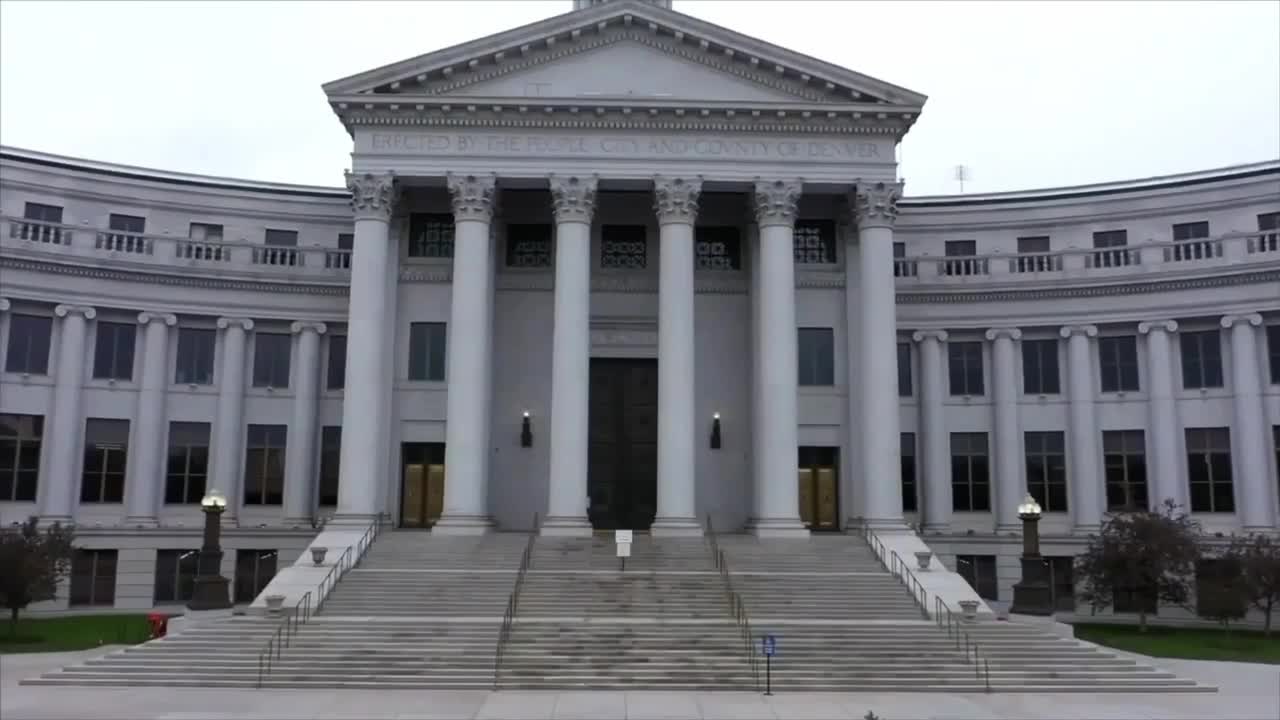


DENVER — Denver City Council on Monday unanimously approved a new law that will ban federal immigration and other law enforcement officers from wearing masks while working within city limits, though its enforcement remains a question council members have been reluctant to address.
The law, which Denver7 has been covering for weeks, would also require federal agents to clearly identify themselves with a visible ID from at least 25 feet away when operating in Denver.
Under the new law, federal agents who do not comply could be cited — or even arrested — by Denver police.
The measure, which includes exemptions for things like undercover operations, as well as SWAT, tactical, and emergency responses, applies to local, state, and federal officers operating in Denver.
It was not immediately clear when Mayor Mike Johnston was expected to sign the measure into law and when it will go into effect.
During Monday's meeting, council members said the ordinance comes after nationwide concerns about ICE and Border Patrol agents conducting operations with their faces covered. Council member Flor Alvidrez, one of the sponsors of the ordinance, said she received calls from constituents who had concerns about how to distinguish law enforcement officers from bad actors.
"I think this is critical. When someone is in their home and someone's knocking on their door and they have a mask and a gun, who's going to answer the door? Why would you?" said Alvidrez. "This is literally trying to find the bare minimum that we can do to help people have some sense of safety and security in our city."
The vote from city council comes just days after Johnston signed an executive order banning U.S. Immigration and Customs Enforcement from city-owned or city-controlled property while laying out protections for protesters against excessive use of force by federal agents.

Denver
Denver mayor signs order that bans ICE from city property, protects protesters
At a news conference last week, Johnston said these two measures “make for a combined strategy” to protect Denverites from federal overreach.
With Monday’s vote banning masks for all law enforcement officers, Denver joins a handful of other Democrat-led cities like Los Angeles, New York, Chicago, Boston, Oakland and Seattle that are trying to restrict the kind of aggressive immigration crackdown that upended Minneapolis earlier this winter.
Denver police chief fields questions about enforcement
When asked about how officers would enforce the city's ordinance banning law enforcement facial coverings, Denver Police Chief Ron Thomas said "a lot of that remains to be seen." He said officers will use their own discretion when enforcing the ordinance.
"I do think that it's really more about the principle than anything else, and so certainly, you know, we have to figure out, how do we, you know, conduct that enforcement, and then who is going to ultimately hold those individuals accountable?" said Thomas in an interview with Denver7 minutes after the ordinance was passed. "We really want to move forward carefully, you know, taking de-escalation as a significant value as we move forward, and then recognizing that we do have the discretion to enforce and not to enforce, depending on what we think is the most appropriate action in those situations."
Thomas said he supports the ordinance and said when federal agents wear masks during operations, it can lead to fear in communities.
"I think that anything that instills fear in community and you know, looks and seems unlike what they have become accustomed to, I think, certainly impacts community trust," said Thomas.
Denver7 has repeatedly brought concerns about how the city would go about enforcing the new law, given the U.S. Constitution enshrines the federal government with a Supremacy Clause, which dictates that federal law takes precedent when it conflicts with local or state laws.
In response, Council member Alvidrez said the city has authority over public safety and the use of city resources, even if it can’t change federal law itself.
She told Denver7 previously that the law is not meant to target ICE agents, but aims instead to reduce the risk of residents or other officers from encountering someone who may not be who they say they are.
Brian Pacelko, the president of the Denver Police Protection Association, told Denver7 last month there are still many questions about enforcement the law does not address.
"What will happen if an officer does take enforcement action, and a federal agent then tries to arrest that officer for impeding their operation? What happens to them if they're charged with a crime? Is there an internal affairs process? Are they sent home? Are they suspended without pay?" asked Pacelko. "These are our main concerns with how these things are going to affect our officers and their well-being."
When Denver7 took these questions to Alvidrez last month, she was hesitant to provide a definitive answer.
"It will have to be a lot of investigation... what my conversations have been with police, is that they will be on scene if there is an imminent threat," Alvidrez said. "They will not be on scene if everything is being followed by the law. Their goal is never to interfere with federal supremacy. It's just holding bad actors accountable."
After Monday's vote, Denver7 reached out to the Denver Police Department to see what enforcement would look like. A spokesperson said they were still ironing out those details with the city attorney and council members.
"Of utmost importance is discretion and prioritizing de-escalation when encountering these situations," the DPD spokesperson said in a statement. "Our goal is to apply this ordinance in a way that builds trust and transparency without putting officers, deputies, or the public at risk."
In a statement, DHS Deputy Assistant Secretary Lauren Bis called the law "despicable and a flagrant attempt to endanger our officers." Her full statement is below:
Sanctuary politicians attempting to ban our federal law enforcement from wearing masks is despicable and a flagrant attempt to endanger our officers. To be crystal clear: we will not abide by unconstitutional bans. The Supremacy Clause makes it clear that state politicians do not control federal law enforcement.
Our officers wear masks to protect themselves from being doxxed and targeted by known and suspected terrorist sympathizers. Not only is ICE law enforcement facing a more than 1,300 percent increase in assaults against them, but we’ve also seen thugs launch websites to reveal officers’ identity.
The men and women at CBP, ICE, and all of our federal law enforcement agencies put their lives on the line every day to arrest violent criminal illegal aliens to protect and defend the lives of American citizens. Make no mistake, this type of demonization is contributing to the surge in assaults of law enforcement officers.
While the number of assaults on ICE agents have increased since Trump took office, our partners at CPR News report there is no public evidence that they have spiked as dramatically as the federal government has repeatedly claimed.
A search of federal court records for charges of assault on a federal officer over the past five years by CPR News found that while the number of assaults on federal officers has risen, there was no evidence for a rise in assaults on the scale the White House claims.
In their reporting from October of last year, CPR News found that assaults on all officers nationwide jumped 74% from the previous quarter — a notable difference to the "more than 1,300 percent" rise the Trump administration has claimed over the past several months.
It remains to be seen whether the federal government will take Denver to court over this new law. A similar law was struck down by a federal judge last month in California after the Trump administration argued it discriminated against federal agents.


Denver7 is committed to making a difference in our community by standing up for what's right, listening, lending a helping hand and following through on promises. See that work in action, in the videos above.