

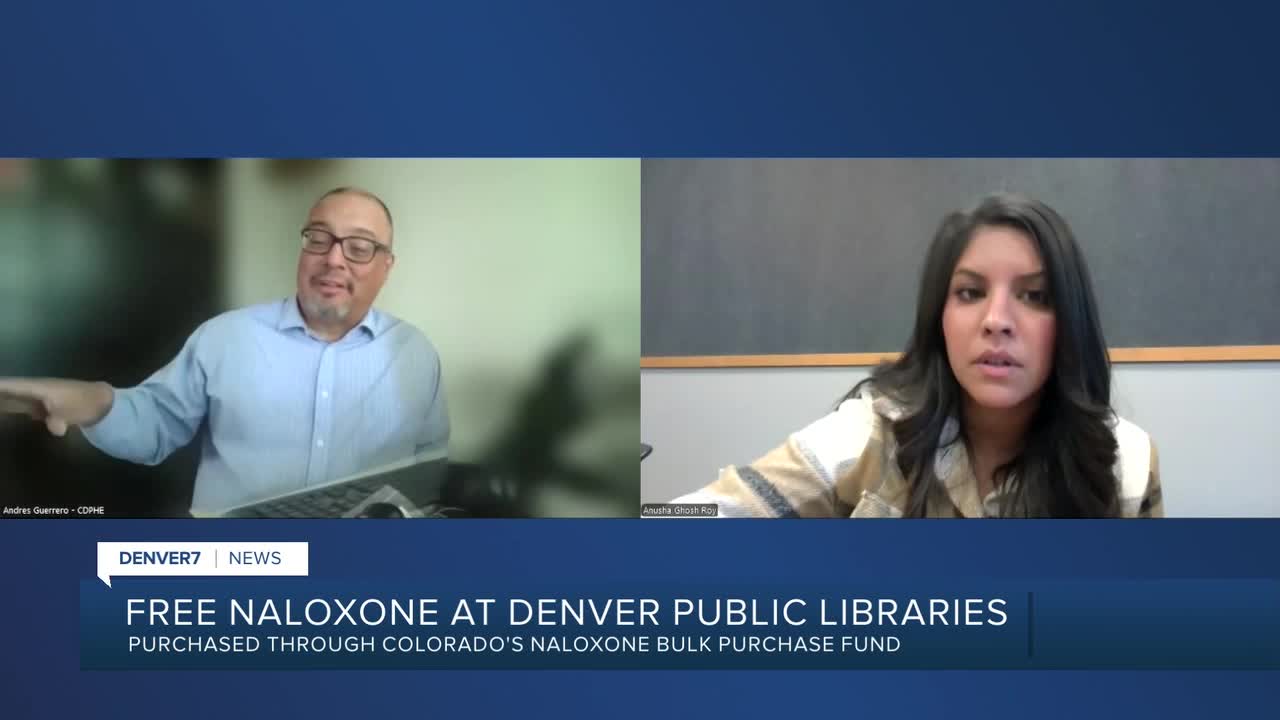


DENVER — Right now, you can get free naloxone at any Denver Public Library as part of a program that started over the summer at the Central Library in downtown Denver.
The naloxone comes from the state's naloxone bulk purchase fund. Denver7 has now received a couple of questions about the funding from people on the front lines of the opioid crisis, worried about losing the resource, especially since it saves lives.
Denver7 asked Denver Department of Public Health and Environment (DDPHE)'s Ally Arnaiz if she has the same concerns.
"Definitely," Arnaiz said. "I'm grateful to know that this past year they got some support from the Colorado Attorney General's Office, and the program feels stable now, but there were concerns last year for sure. I think it would be devastating if there wasn't a centralized place for a variety of settings."
The program takes on even more importance after overdoses went back up in the city last year.
Brianne Hanson with Central Library said the bin of naloxone there gets refilled two to three times a day.

"We hear a lot of stories from customers that, oh, I used it at the bus stop on someone," Hanson said. "I used it at home. I need to get more because I've given it to my friends."
Hanson said she's even seen people run in grab the naloxone and then run out to use it on someone outside the library.
DDPHE partnered with the library system to start the program at downtown's Central Library, and now it has expanded to around 20 branches across the city.
“I think there's been a lot of conversation about third spaces the past couple of years," Arnaiz said. "Libraries is the perfect third space. You don't have to purchase anything to come here. Anybody could walk in here, and it's not a clinical feeling, it's just community feeling. And I think it's a perfect place to have it visible and address stigma and really make it something that people see commonly."
People can now come in and get free fentanyl and xylazine testing strips along with free naloxone, which can reverse an overdose.
Denver7 took the funding concerns to the Colorado Department of Public Health and Environment (CDPHE) well. Leaders there have heard the same concerns.
"That is something that has come up multiple times over the years,” CDPHE Manager of the Overdose Prevention Unit Andres Guerrero said.
He said it's because their funding fluctuates year to year, depending on where they get the money from and if there is a time limit on spending it.
We checked over the last five years, funding was secured every year but it varied anywhere from $1.6 million when the program first started, to as high as $11 million to most recently around $6 million.
"Folks will hear about the time limit on one of the funding or multiple funding sources that we have, and then they they are afraid that there's nothing coming after," Guerrero said. "This is something that we constantly work on. We are always looking for additional sources of funding, whether that be grant funding, whatever the situation is. We are always, always, always seeking out any sort of funding that we can in order to supply naloxone."
The funding can come from a variety of places, including federal dollars and grants.
Guerrero also said they have a priority list to get naloxone to those who need it the most.
As for now, Guerrero, said the program will operate as is, and that any changes to funding would come from higher up.

