



BOULDER, Colo. — Denver7 has been sharing all season just how unusually warm and different this winter has been — with warm temperatures and low snowpack — and it has impacted a lot of things here in Colorado. One being a project aimed at reducing wildfire risk in Boulder County.
According to Boulder County’s website for the project, the goal of the Middle Boulder Creek Fuels Reduction Project is to use treatment methods like mechanical forest thinning and prescribed burning, to decrease the hazardous forest fuels and ultimately reduce the risk of wildfires.
The project focuses on areas west of Nederland, including the Tucker and Elk Draw area, Arapahoe Ranch and U.S Forest Service Area.

But the county said all of this is on pause until this summer because of the unusually warm winter temperatures and low snowpack.
The contracting process will continue in the summer followed by mechanical operations beginning in the winter.
Some Coloradans, though, think the pause in this project is actually a good thing.
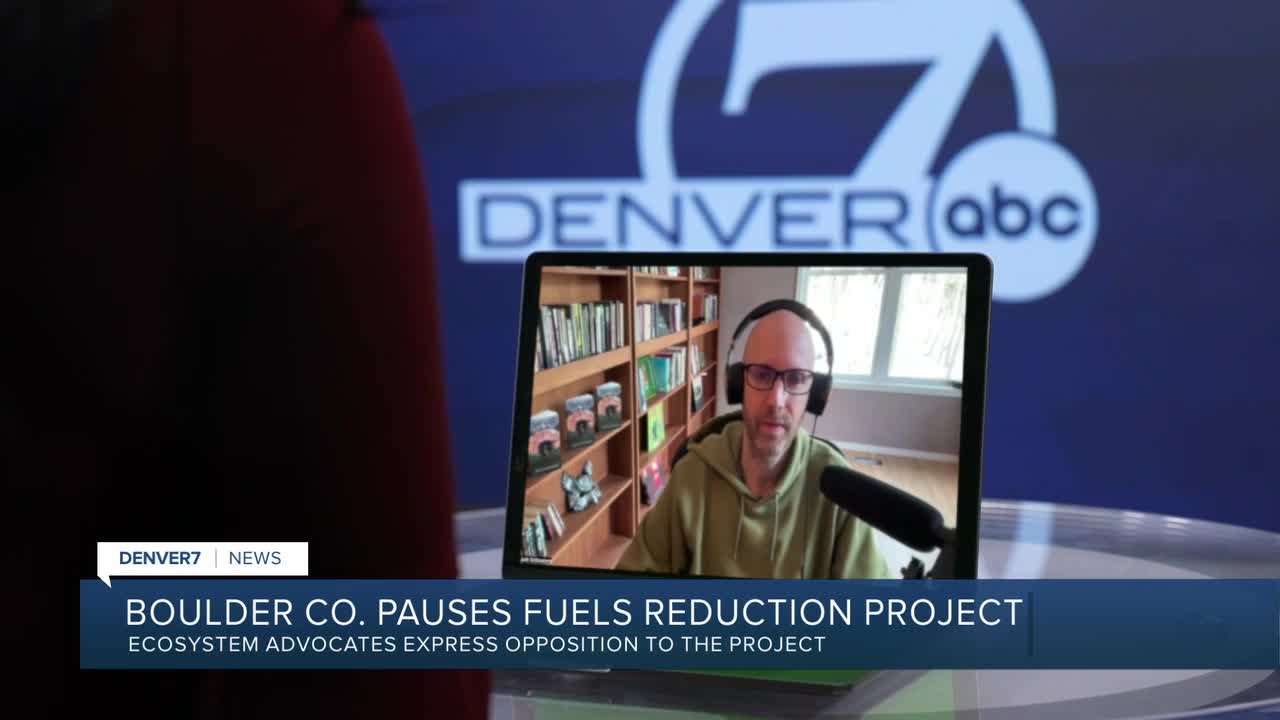
Josh Schlossberg, a Colorado advocate for the Eco-Integrity Alliance believes this project will do more harm than good.
“I think we all are concerned about wildfire. That's why we need to focus on the things that actually work,” Schlossberg said.
He lives in Nederland, about a mile and a half from one of the project areas.
“The truth is, there is ecological harm from this. When you remove nutrients from the forest, you kill trees, you destroy wildlife habitat. I mean, that's just a fact that it's harming the forest,” Schlossberg said.
The Eco-Integrity Alliance believes funds would be better spent investing in other practices that would prevent damage from wildfires, which Schlossberg said have already proved to be effective.
“Wiildfire is a concern. There's no question about that. If we choose to live in the Fire Plane, there are going to be fires, and we have to address that,” Schlossberg said.
He encouraged “home hardening." Schlossberg explained this a process to make homes out of materials that are less likely to combust.
Denver7 followed up with Boulder County Parks and Open Space about these concerns and more information on the project.
The department sent Denver7 a statement saying, in part, “Our [Boulder County Parks and Open Space] adaptive forest management is guided by current scientific consensus in forestry and fire ecology to support functioning ecosystems and diverse habitats.”
The full statement reads:
“Boulder County Parks & Open Space is committed to maintaining our forests through management practices that promote long‑term ecosystem resilience. Caring for more than 30,000 acres of foothill and mountain forests requires thoughtful, evidence‑based decisions. Our adaptive forest management is guided by current scientific consensus in forestry and fire ecology to support functioning ecosystems and diverse habitats.
As trusted stewards of these public lands, we draw on current natural and cultural resource inventories and rely on a strong network of partners to help inform and guide our work. These partners include research institutions and nonprofit organizations such as Colorado State University, the University of Colorado, the Colorado Forest Restoration Institute, The Watershed Center, and the Boulder Watershed Collective, whose scientific and on‑the‑ground expertise strengthens our understanding of forest conditions. Through the Boulder County Fireshed, we collaborate closely with the City of Boulder, local conservation districts, fire protection districts, Wildfire Partners, and the Boulder County Sheriff’s Office to align forest health, wildfire mitigation, and public safety across the landscape. Together, these partners help ensure our management actions are coordinated and reflect the community values we serve.”
The Eco-Integrity Alliance is not the only organization opposed to the project. Public comments posted to the project page show residents and other organizations sharing concerns.
There have been public meetings throughout the project. Those summaries can also be found online. The project is expected to be complete in 2027.


