

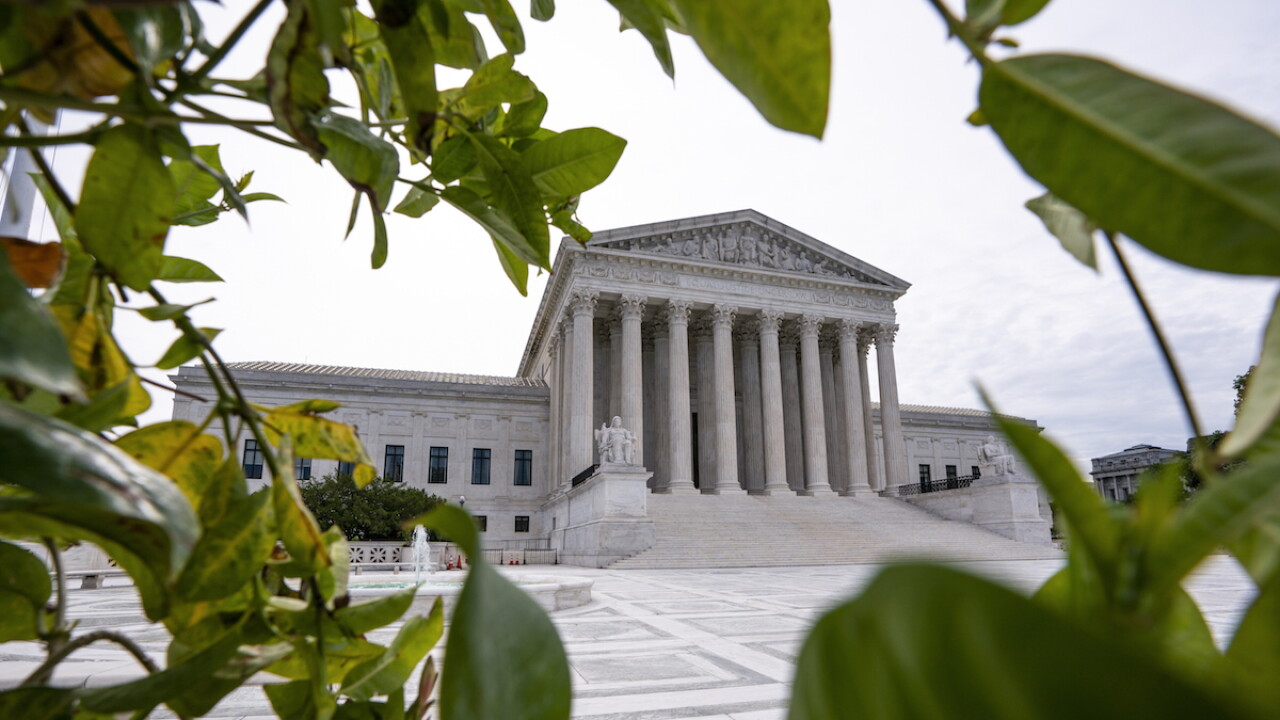


BOULDER, Colo. — Questions about a 2018 lawsuit from the City and County of Boulder against oil companies Suncor and ExxonMobil reached the U.S. Supreme Court Monday, with justices taking up the question of whether cities can hold energy companies responsible for the effects of climate change.
Boulder's lawsuit alleges Suncor and ExxonMobil contributed to climate change and should pay for the resulting harm to local communities. The companies argue the issue should fall under federal law, not state court.
A group of Coloradans stood outside the U.S. Supreme Court to witness oral arguments — among them, survivors of the 2021 Marshall Fire in Boulder County who said the case goes hand in hand with what they experienced.
"It's important to have our voices be heard as as the survivors of wildfire like this," Jenny Singer-Rupp said.
The case speaks to the rising costs communities continue to shoulder to prepare for and respond to wildfires — which Colorado scientists have said can be made worse by climate change.
"We rebuilt our house. We also navigated insurance. We navigated the financial uncertainty," Singer-Rupp said.
Another survivor, Louie Delaware said the case is about more than rebuilding lives.
"What we're doing here is to be able to try to convey to the Supreme Court and to others the issues associated with many of these catastrophes," Delaware said.
Delaware also said oil companies have known about their role in warming the atmosphere for decades.
"The oil companies knew from the 60s and 70s that what they were doing was contributing to this this warming of the atmosphere, but they withheld it from the public," Delaware said.
Suncor and ExxonMobil both denied requests for comment. The Manufacturers' Accountability Project, a group pushing back against lawsuits targeting energy producers, issued a statement on the case. It said in part, "The justices recognized that the claims in this case go far beyond conduct in any one state, which is why this lawsuit is inherently about interstate and global emissions."
Paul Chinowsky, a professor emeritus of civil engineering at the University of Colorado, who researches costs associated with climate-fueled risks like wildfires, talked about why this case matters to the average Coloradan.
"It comes down to, if we're going to both fix what's already happened and prepare for what's coming in the future, how are we going to pay for that? Who is ultimately responsible for helping to pay to be resilient?" Chinowsky said. "Your costs for insurance, as you said, the risk factors for floods and wildfire are going to go up."

State
FEMA awards Colorado $10.5 million in pre-disaster mitigation grants
Chinowsky listened to the oral arguments, too, and shared his takeaways.
"Is climate change something that really is under the jurisdiction of Congress, federal policy, or do states have the right to, under their own law, to try and recover damages from a national issue?" Chinowsky said. "I think even more to the point is, should the should the Supreme Court be taking this up now before it's even gone to court?"
Singer-Rupp said she hopes the case moves forward.
"I do hope that … we have our day in court," Singer-Rupp said.
Delaware expressed the same hope.
"... convince the court to have us have our David and Goliath day in court."
If the Supreme Court sides with the companies, the case ends there. If it sides with Boulder, the lawsuit will continue in state courts.
This story was reported on-air by a journalist and has been converted to this platform with the assistance of AI. Our editorial team verifies all reporting on all platforms for fairness and accuracy.



Denver7 is committed to making a difference in our community by standing up for what's right, listening, lending a helping hand and following through on promises. See that work in action, in the videos above.

