

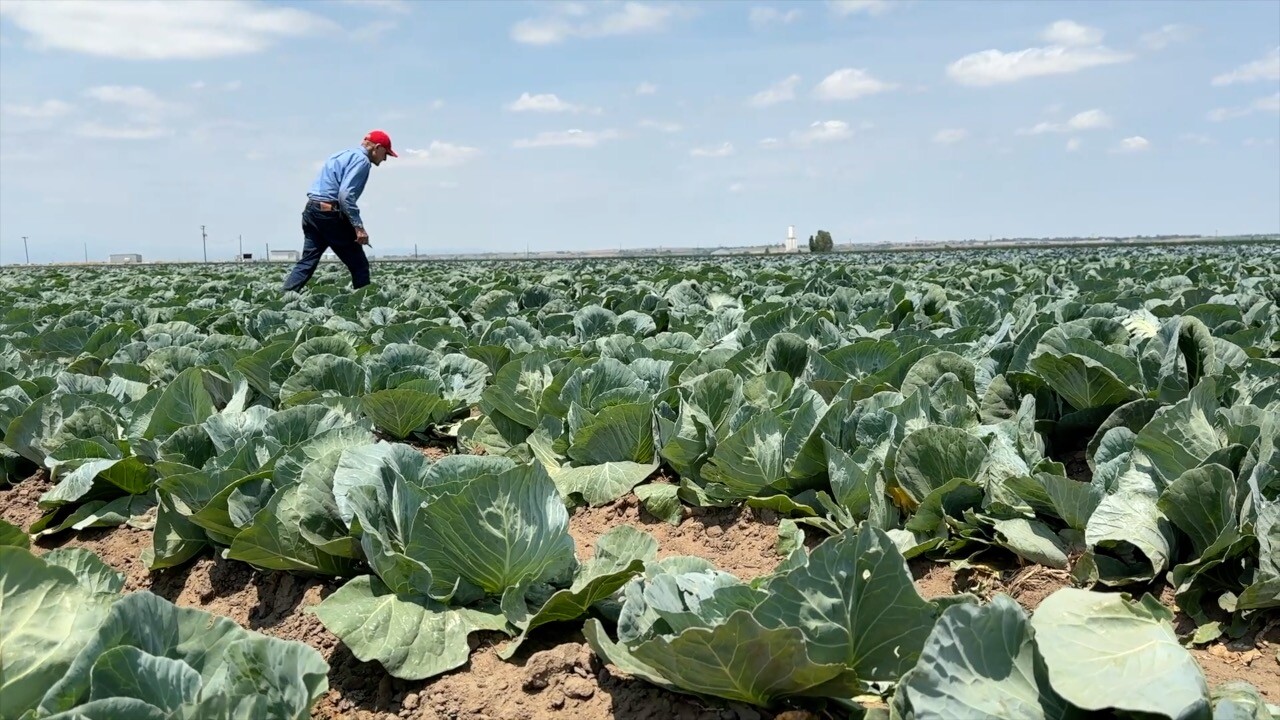


WELD COUNTY, Colo. — A third-generation Weld County farmer says hail storms pose a devastating threat to Colorado crops, and to the tradition and pride that come with growing them.
Dave Petrocco owns Petrocco Farms in Weld County, where has family has been farming since 1916.
“It becomes part of your life, and also something that we carry on as a tradition,” Petrocco said.
Watch Denver7 reporter Ethan Carlson's story in the video player below:
That tradition includes hard work, adaptation, and planning, but not everything is within a farmer’s control.
“For Mother Nature, we just cross our fingers and say this has got to be the lucky one. Hail free,” he said.
Petrocco has seen the damage hail can cause firsthand.
“I’ve seen hail storms so severe that you drive by here the next day, and unless you’re the grower, you don’t know what crop was there,” said Petrocco. “They’re beat down to the soil, and there’s nothing left but chopped up, shredded, mushy leaves.”
Jack Buffington, executive director of the Transportation and Supply Chain Institute at the University of Denver, says Colorado agriculture is under significant strain from multiple directions.
“Agriculture, it remains a big part of the Colorado economy, and it’s under a lot of pressure right now, when it comes to weather events, when it comes to the cost of fertilizers, given what’s happening with the war, equipment costs, and so forth,” Buffington said.
Buffington says extreme storms are not likely to affect most prices at the grocery store, but local farms like Petrocco’s face real financial consequences when crops are lost.
“It also hurts pride and the tradition of having a healthy, marketable product that’s in demand that people want, and so that goes away, and if it’s something that encompasses your whole job, that’s devastating,” Petrocco said.

When it comes to protecting crops from hail damage, Petrocco says there is little that can be done.
“There’s only one thing that helps me, and that’s prayer. I just got to pray that nothing devastating happens,” he said.
Still, Petrocco knows his farm will be here for generations to come.
“In the knowledge that we gathered over the years, we just like to produce, and we like making food, and so that’s the reason why we do it,” Petrocco said.
This story was reported on-air by a journalist and has been converted to this platform with the assistance of AI. Our editorial team verifies all reporting on all platforms for fairness and accuracy.


