

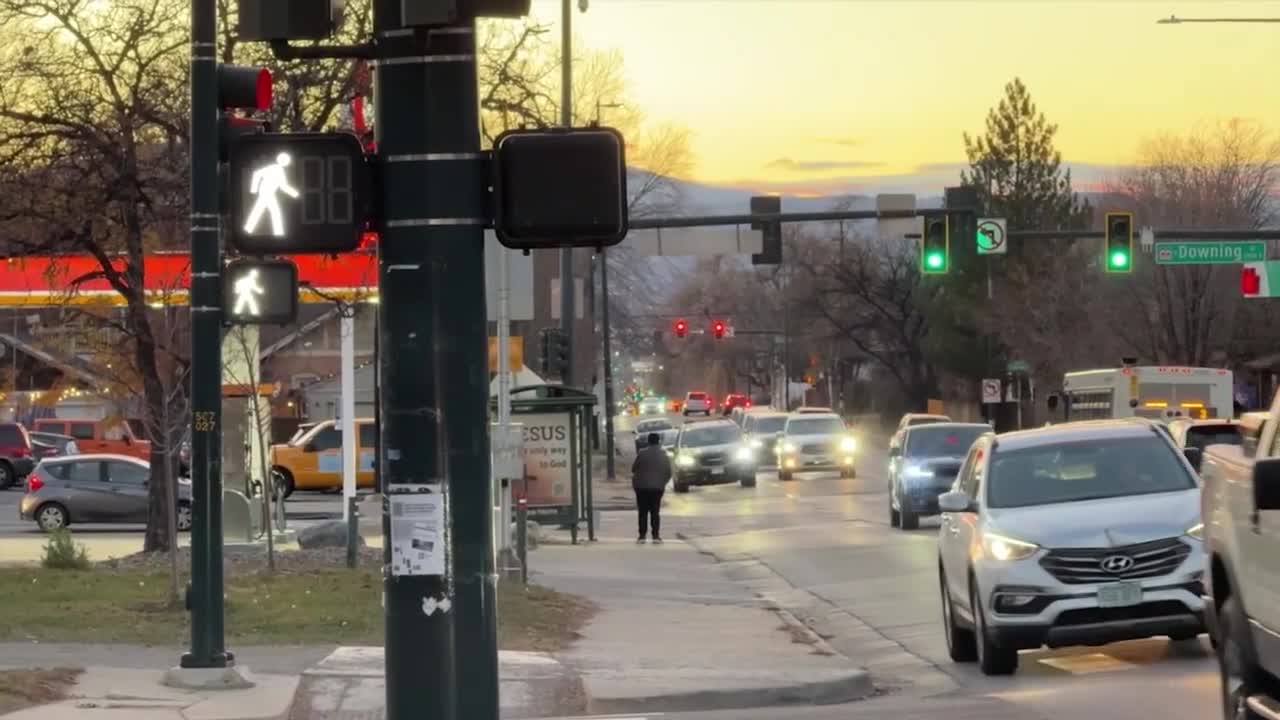


DENVER — Neighbors know the four-lane stretch of Alameda Avenue through South Denver can be a pain for drivers, cyclists and pedestrians.
Speeding cars, little room between the street and sidewalk and difficult left turns make it not only one Denver’s busiest streets, but also one of its most dangerous.
The city’s Department of Transportation and Infrastructure (DOTI) said Alameda between Franklin and Lincoln averaged about 55 crashes each year between 2021 and 2024.
For years, neighbors like Jamie Rooney and Tatianna Spector have been pushing to make it safer.
“I don't feel comfortable with knowing my neighbor's house has been crashed into three times,” Rooney told Denver7. “[Alameda has] rear-ends, side swipes, T-bones, all of the classic situations where blind spots are involved.”
PREVIOUS COVERAGE:
- Denver’s Department of Transportation and Infrastructure redesigns Alameda Avenue after community pushback
- Reaction from Washington Park residents to "Alameda Lane Repurposing Project"

Upgrade Plan Changed
Denver’s Department of Transportation and Infrastructure started public outreach meetings to discuss changes to make the street safer in 2020.
After more community meetings and delays brought on by the COVID-19 pandemic and construction at the Alameda underpass, DOTI seemed to settle on a design to move forward with this year.
It involved reducing the four-lane road to two lanes with a dedicated center turn lane, along with some buffer space between the street and curb.
The “road diet” plan, however, was changed suddenly this fall. DOTI introduced a new design that would keep two eastbound lanes, and change one westbound lane to a series of “turn pockets” between Franklin and Pearl Streets.
The new design includes some elements of the original plan, like reducing the speed limit from 30 to 25 miles per hour, adding marked crosswalks, striped medians and pedestrian refuge islands.
But hundreds signed a petition led by Jill Anschutz, expressing concerns that reducing the lanes on Alameda would add more congestion and divert traffic onto neighborhood streets.
“We think that if you make congestion a lot worse, you frustrate drivers and you force them into these neighborhood streets that are narrow and are highly used by kids and pedestrians,” Anschutz told Denver7 in September. “And that's what we mean by we think you're just going to create new safety issues rather than really completely resolving the concerns."
Neighbors Frustrated
The change came as a shock to hundreds of other neighbors, many who have now signed a petition with the West Washington Park Neighborhood Association (WWPNA) urging DOTI to bring back the original design.
Neighbors feel frustrated about a lack of meetings to discuss the change and the implication that wealthy and well-connected neighbors are being heard more than everyone else. Many also feel the new plan jeopardizes safety that was taken care of by the original plan.

“Having the turn pockets is kind of just like a watered-down [plan], like we're just kicking the can down the road,” Spector told Denver7. “It's not a matter of if someone's going to get fatally hurt [on Alameda]. It's just a matter of when.”
At Tuesday night’s WWPNA meeting, DOTI representatives — including executive director Amy Ford — presented their reasoning for the change in plans. They argued the new design still addresses safety while not having as significant of an impact on traffic congestion and diversion. DOTI representatives said that's one of the legitimate concerns held by many others in the community.
But Ford and DOTI heard mostly pushback from those at the meeting.
“The fact that we thought this was a done deal, that we gave all our comments to you and you then ignored, is a very very personal betrayal to the neighborhood,” one speaker told DOTI officials.
“The topics that you brought up, that are the reasons that you revisited the design, none of them have to do with safety,” another neighbor said. “It’s all being more comfortable in your car.”
The criticism comes after the DOTI Advisory Board also questioned Ford in a virtual meeting last month, concerned about the quick decision to change the design after a drawn-out public outreach process.

Ford insisted at the meeting, the department was using the best data available, and the newer street design will have the best overall effect on safety and traffic mobility. She also said the department wants to add some sort of buffer for pedestrians, but is not sure how yet.
Construction on the new street design is set to begin late next year, with early crosswalk safety improvements coming at the beginning of 2026.
Denver7's Jeff Anastasio contributed to this report.
-
Click here for more stories Denver7 revisited

-

The Follow Up
Denver nightclub tied to sexual assault accusation to reopen under new name
-

The Follow Up
Denver accelerates Aztlan Pool rebuild after leak forced summer closure
-

The Follow Up
Father of cyclist killed in hit-and-run crash fighting for safer Aurora roads


