




DENVER — It may be the first day of spring, but if certainly feels like summer in Denver — and the heat isn’t done with us just yet.
Denver continued to break records for a second day in a row Friday, surpassing a high of 80 set 119 years ago and tying with the all-time March record high it set on Thursday, when the thermometer reached 85 degrees.
Denver typically sees an average temperature of 42 degrees in March, and an average temperature of 58 degrees for March 20, according to the NWS, according to historical weather data from the NWS.
Denver International Airport recorded a temperature of 85° this afternoon. This is a new daily record, breaking the previous record of 80° set in 1907. pic.twitter.com/RfWfpSAEGt
— NWS Boulder (@NWSBoulder) March 20, 2026
Hotter temperatures are on the way
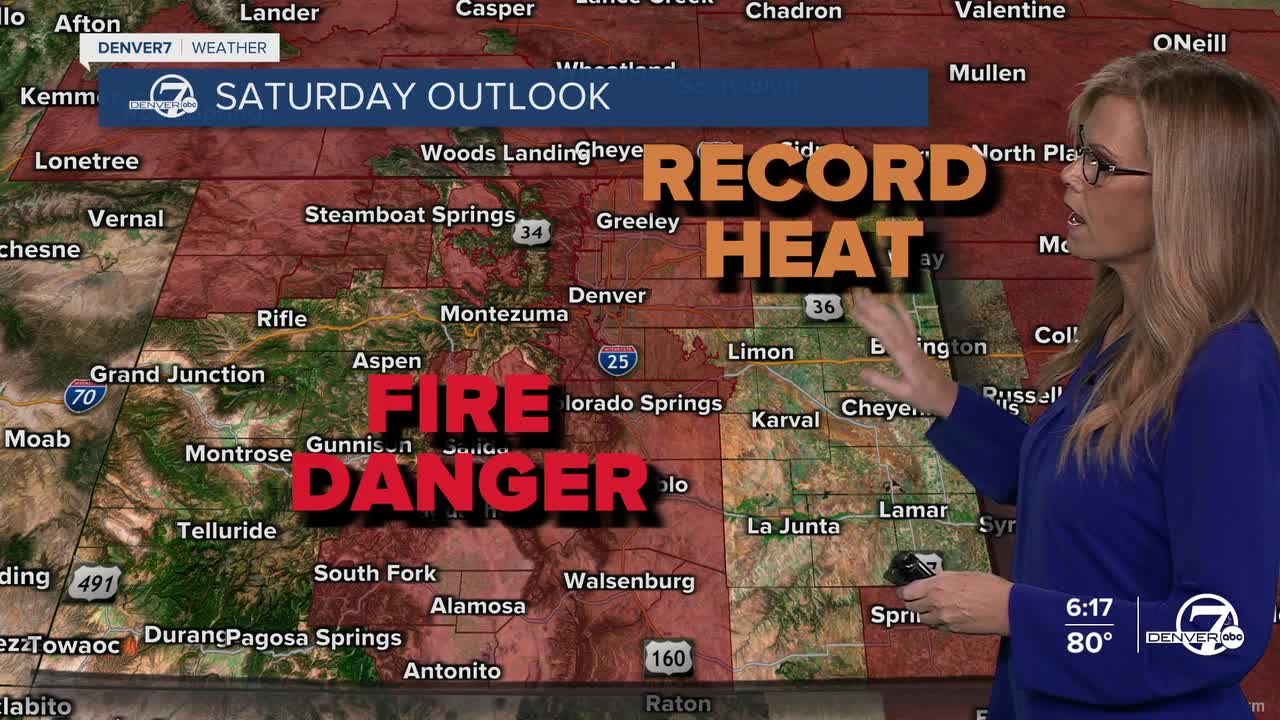
“Saturday will be the hottest and most concerning day, as highs soar to near 90 degrees and winds pick up quite a bit,” according to Denver7 chief meteorologist Lisa Hidalgo. “Humidity levels will drop into the single digits in some areas, so it'll be a bone-dry day.”
That combination will make for widespread critical fire weather conditions, making any outdoor burning or sparks especially dangerous.
A weak cold front late Saturday into Sunday will bring a brief cool down, with temperatures dropping back closer to normal, mainly into the 60s, and there could be a few light showers, especially in the mountains.
Hidalgo said it’s not going to be a big storm, but it will at least provide a short break from the extreme heat and fire danger.
But the reprieve doesn’t last long.
Monday’s high will jump back into the upper 70s and temperatures are expected to climb possibly into the 80s again by Tuesday and Wednesday breaking even more record afternoon highs.
The reason we’ve seen such warm temperatures this is due to La Niña, which helped keep cold storms away from Colorado, as the Earth’s overall warming trend made the warm days even warmer.
At the same time, a persistent high-pressure ridge has remained over the western United States, steering arctic air away from the state and leaving Colorado under clear and above-average temperatures.
Warmer conditions have also meant a lack of snowfall for the season- especially in March, our snowiest month.