

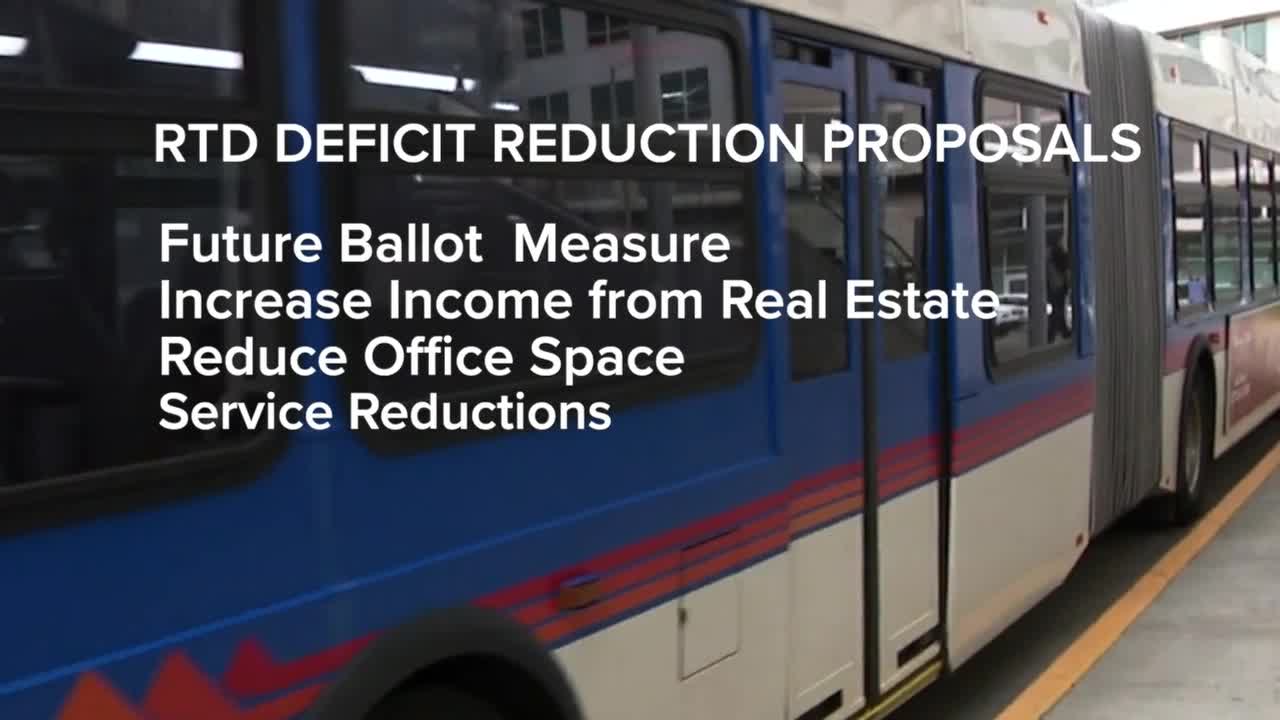


DENVER — The Regional Transportation District (RTD) board is expected to discuss several options Tuesday to help close a $250 million budget deficit.
Ever since federal COVID-19 relief funding ran out in 2024, RTD has been operating at a deficit, which the agency said is not sustainable.
On Tuesday, board members are expected to discuss a future ballot measure for additional revenue, increasing income from real estate, reducing office space and improving fare collection.
- Watch the full story in the video player below.
“The Board is currently exploring the option of going to the ballot for additional funding through a tax increase. Funds would be used to address the deficit and to provide service,” an RTD spokesperson said.
One of the biggest proposals is possible service reductions, which could have an impact on riders.

“If they do minimize it or take it away, it's going to hurt me and a lot of people, because we do rely on it. I'm using it at least three to five times a day, whether it's going to work or just going to the store. I’m out of transportation right now, so that's the main source of riding and getting to point A to point B,” RTD rider Charles Robinson told Denver7.
RTD staff will model scenarios that could reduce service by anywhere from 15% to 20% depending on ridership and geographic needs.
RTD told Denver7 when proposing service changes staff follows along certain guidelines:
- Service performance evaluation
- The effects on the overall integrity of the transit network and on transit-dependent markets
- The availability of alternative services to affected customers
- Cost-effective distribution throughout the District and Family of Services and the ability to
- enhance service when possible
- Title VI of the Civil Rights Act: benefits and services are provided without regard to race, color or national origin; also, disparate effects on low income and minority populations
- Response to changes in the communities where services are provided
RTD rider Charles Robinson told Denver7 he relies on transit multiple times a day because he does not own a car at the moment.
“Some of us aren't fortunate enough to have cars. The public RTD is a perfect source for us and a very valuable asset to my life as far as transportation and getting to work back and forth,” Robinson said.
An RTD spokesperson said the agency’s service optimization efforts are focused on aligning service with customer demand, operational needs and available funding, not simply reducing service or staffing.
“As part of that process, some services may be reduced or modified while others are added, restored, or expanded where demand, funding, or strategic priorities support the investment,” the spokesperson added.
The agency said it must continue hiring bus and rail operators regardless of service adjustments. Like most transit agencies, RTD experiences ongoing workforce attrition through retirements, resignations, and employee promotions into other positions.
“Maintaining our budgeted operator staffing levels is necessary to deliver the Board-approved service plan safely and reliably. These hiring efforts are primarily replacing employees who have left frontline operating roles, not increasing the size of the workforce,” an RTD spokesperson said.
No final decisions are expected during Tuesday’s board meeting. The focus is giving staff the green light to keep studying the costs, savings and potential impacts of these options before the board makes any final decisions.

