

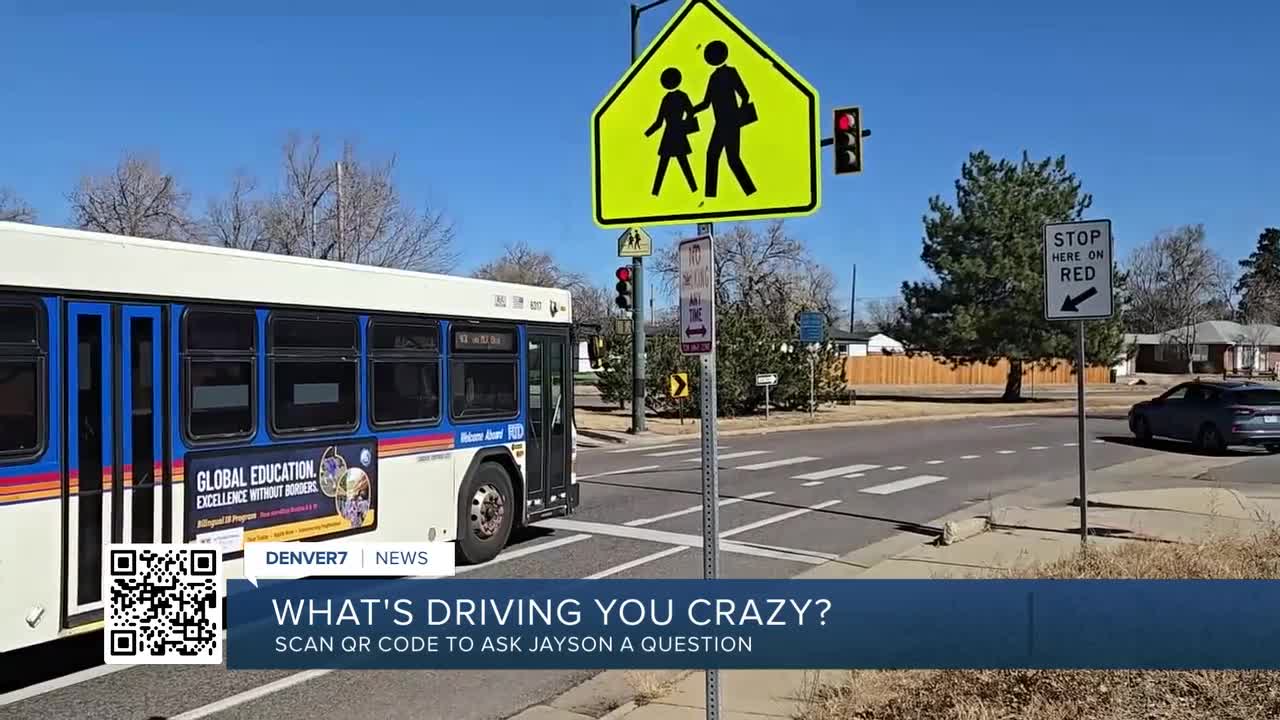


DENVER — Jess and Jim from Denver write, “What's driving you crazy? There is a stop light at Martin Luther King and Elizabeth. My husband and I hit this light everyday, twice a day. This light makes no sense due to the houses and median. We would love to hear your opinion. Thank you for all you do!”
It might seem like there is no reason for this light but its installation comes after a deadly crash. That specific gap signal that stops traffic on both sides of MLK Jr. Boulevard at N. Elizabeth Street is over 20 years old. They city couldn’t tell me confidently what the original reason was for the initial installation but did say this pedestrian crossing is helpful for people crossing the street going to or from the adjacent neighborhoods, Columbine Elementary School and PREP Academy just three blocks away.
Denver7 viewer Natasha, who says she grew up nearby around 36th and Elizabeth told me she remembers these signals were installed after a child died after being hit by a car. A Rocky Mountain News article from December, 2001 by staff writer Sue Lindsay reads, "An 8-year-old girl is dead because Johnny Clements was too drunk, a prosecutor told a Denver jury Wednesday. The girl, Brittany Johnson, was pedaling home on her bicycle this past summer when Clements hit her with his motorcycle. He is on trial in Denver District Court on charges of vehicular homicide and driving under the influence of alcohol. At the time of the accident, his blood-alcohol level was 0.202 percent, more than twice the legal limit.
“He hit her head on. She didn’t see it coming,” said prosecutor Chris Penny. Clements, 52, was riding with a pint of tequila and a 22-ounce bottle of beer. He told police he had a beer and a shot of tequila shortly before the accident. “That is what caused the death of Brittany Johnson,” Penny said. Noni Reid was driving behind Clements when she saw him take the curve too fast. She said she knew that people tend to cross the street at the corner ahead. “I told my kids, that’s an accident waiting to happen,” she said. “The next thing I know, I saw the little girl’s bike flying up,” Reid said. Police said Brittany was thrown 80 feet. “I saw a little girl laying out in the street. I rushed to her and I yelled at someone on the street to grab a blanket so we could keep her warm. I told her everything would be all right and don’t move. She said, ‘It hurts.’”
Brittany died before paramedics could get her to the hospital. Defense attorney Gary Fiedler said Clements didn’t have time to react once he got around the blind curve and saw Brittany riding her bike the wrong way down a one-way stretch of Martin Luther King Boulevard at Elizabeth Street. “Two seconds or less. That was all the time he had to react,” Fiedler said. “He saw her, pulled to the left and laid it down, but it was too late.” Clements was convicted twice in 1992 of DUI or driving while ability impaired."
According to a February 6, 2002 Denver Post article, Clements was acquitted of vehicular homicide charges but given a year in prison for the drunk driving charges.
The city has told me in the past that mid-block lights like this has several main functions — to break up traffic flow, to slow down drivers, to allow for downstream gaps for turning drivers and, maybe number one, allow for pedestrians to cross the street. The City of Denver calls these kinds of signals “speed gaps” or “pacing signals” and you will find them on all kinds of one-way roads around Denver.
- Watch the full story in the video player below.
MORE: Read more traffic issues driving people crazy
When I went out there, I timed both signals and found quite the curious discrepancy. Looking at eastbound traffic, the light was green for 20 seconds and red for 80 seconds. It feels a lot longer when you don't see anyone there or see any need for the signal in the first place. The light for westbound traffic was nearly the opposite — green for 70 seconds and red for 25 seconds. I timed numerous light cycles for a little over 30 minutes and saw several red-light runners during that time — presumably frustrated with a very long wait for seemingly no reason.
When I asked Denver’s Department of Transportation and Infrastructure (DOTI) for the explanation why eastbound traffic is held on red for so long and why westbound traffic gets such a short red? I was told, “Thank you for bringing this to our attention. We have asked our Traffic Operations division to investigate the signal timing and once they investigate the signal timing, adjustments will be made if it is found to be necessary.”
I followed up a week later after the city took a look at the signal box and told me, “Our traffic operations team replaced the controller with new equipment. It was an older controller and appeared to need reprogramming as the timing cycling was out of sync. The previous one was taken back to the shop for diagnosis.”
I again went out to time the lights and found a major change. The lights in both directions are now timed to be red for about 27 seconds and green for about 60 seconds. I still saw several red light runners going in both directions.
These signals are one part of Denver’s Safer Streets initiative that aims to slow down drivers all over the city in different ways like reduced lanes and speed cushions. City of Denver traffic engineers saidwhen properly used, these gap signals help reduce the risk of all kinds of speed related crashes, provide space in the traffic stream benefiting other access points further “downstream” and provide right-of-way changes for traffic at intersections. I will say, when I was delivering pizzas 30+ years ago in east Denver, the gap signals helped me cross 13th and 14th as I was going from delivery to delivery.
If you drive around town, you will see these signals typically on roads with speed limits of 30 mph. Residents along these roads will tell you, drivers go well over these speed limits constantly and any method used to slow them down is a good thing. The signals are most famously along 8th Ave., 13th Ave., 14th Ave. and just north of downtown on roads like Stout Street.
Now that the signal equipment has been replaced, hopefully the traffic operations division will continue to tweak this signal timing to allow for more green time so you won’t have to sit at a seemingly unnecessary signal longer than you need to.
Denver7 Traffic Expert Jayson Luber says he has been covering Denver-metro traffic since Ben-Hur was driving a chariot. (We believe the actual number is over 25 years.) He's obsessed with letting viewers know what's happening on their drive and the best way to avoid the problems that spring up. Follow him on Facebook, Twitter or Instagram or listen to his award winning Driving You Crazy podcast on any podcast app including iTunes, iHeartRadio, Spotify, Podbean, or YouTube.
WHAT'S DRIVING YOU CRAZY? DENVER7'S JAYSON LUBER ANSWERS YOUR QUESTIONS.
-
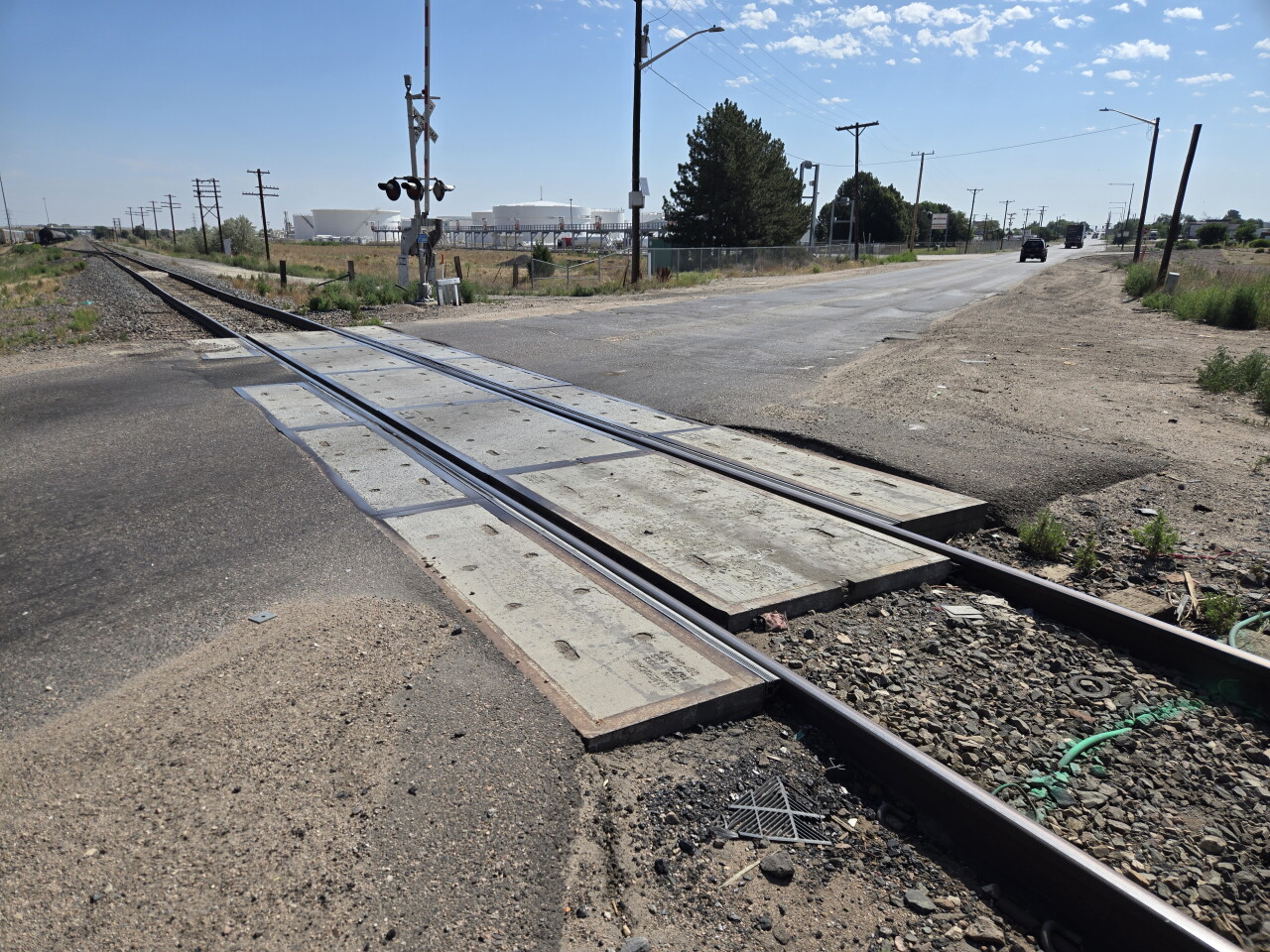
Why is the rail crossing on 96th in Commerce City still so car-damaging rough?
-

Can you explain why the red and yellow arrow lights were on at the same time?
-

Could we get a green arrow light at 120th and Tower to get through quicker?
-
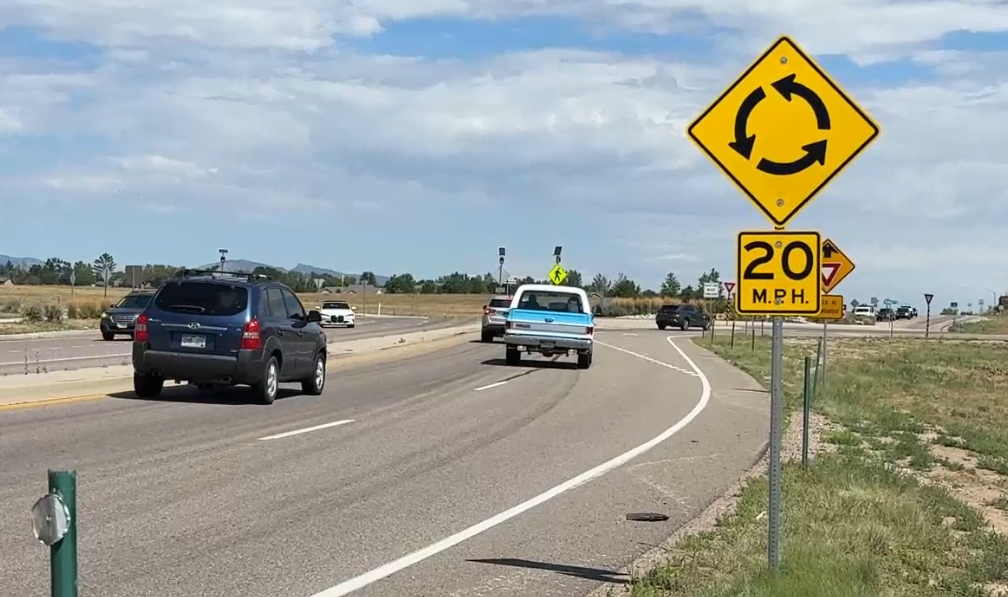
I hate the constant fight to very quickly merge left on Berthoud Pkwy from 287!
-

Driving You Crazy: What are the yellow poles for at 29th and Depew?


