

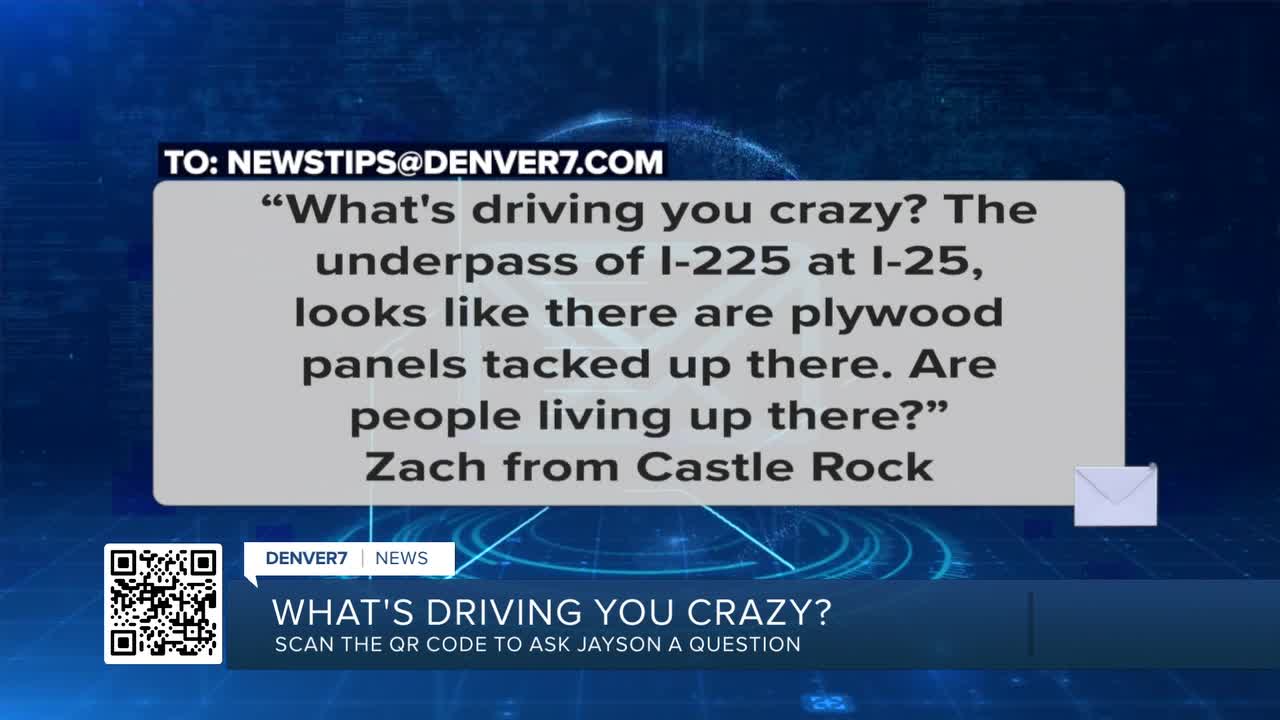


DENVER — Zach from Castle Rock writes, “What's driving you crazy? The underpass of I-225 at I-25, looks like there are plywood panels tacked up there. Are people living up there?”
I can assure you Zach, no one is living up there. I went to take a look at the panels, and it would take either an insulated bucket truck or a wing and a prayer to get up and down from there.
- Watch the full story in the video player below.
The sheets you see under that bridge structure are not made of plywood. They are insulated dielectric panels made of a material called Glastic. The Glastic sheets are made from a fiberglass-reinforced thermoset polyester resin. They are non-conductive and are designed to prevent electrical arcing from the overhead catenary system (OCS) to the steel on the bridge structure. Electrical arching is the high-temperature discharge of electric current.
These panels are used when the OCS wire is close to metal infrastructure, such as the steel girders on the bridge above. The OCS is the system of overhead cables you can see above the tracks used to supply electricity to the trains. That power flows from the wires through a pantograph attached to the top of the train.
The Regional Transportation District (RTD) described the need for the Glastic panels to me this way — they are similar to insulating an electrical wire. Because the OCS wire and messenger wire lack coatings for insulation, the panels serve as the insulating material.
MORE: Read more traffic issues driving people crazy
I asked what might happen if one of the panels became loose since they are in place above passenger filled trains and cars. I was told each sheet is secured with non-conductive nylon bolts and to date, the RTD maintenance crews reports they have never had a failure with the panels becoming unsecured. RTD told me they conduct regular visual inspections to ensure the panels are secure and would make any needed repairs resulting from these inspections after the OCS is de-energized. I was also told that if a broken panel fell on an energized wire and if that wire hit any metal structure, the OCS will sense there is an issue and power will be removed immediately.
I also asked, "why there is a little gap between the panels and why they didn’t cover the entire area under the bridge?" I was told dielectric panels are only used where the OCS wire is close to metal infrastructure like here just under the steel girders on the bridge and aren’t needed outside that area. That is why there is a gap between the covered area.
There are a few other areas that these dielectric panels are used along the RTD system. If you look closely as you are driving on southbound I-25, you can see them under parts of several of the bridges between Broadway and Evans.
Denver7 Traffic Expert Jayson Luber says he has been covering Denver-metro traffic since Ben-Hur was driving a chariot. (We believe the actual number is over 25 years.) He's obsessed with letting viewers know what's happening on their drive and the best way to avoid the problems that spring up. Follow him on Facebook, Twitter or Instagram or listen to his award winning Driving You Crazy podcast on any podcast app including iTunes, iHeartRadio, Spotify, Podbean, or YouTube.
WHAT'S DRIVING YOU CRAZY? DENVER7'S JAYSON LUBER ANSWERS YOUR QUESTIONS.
-
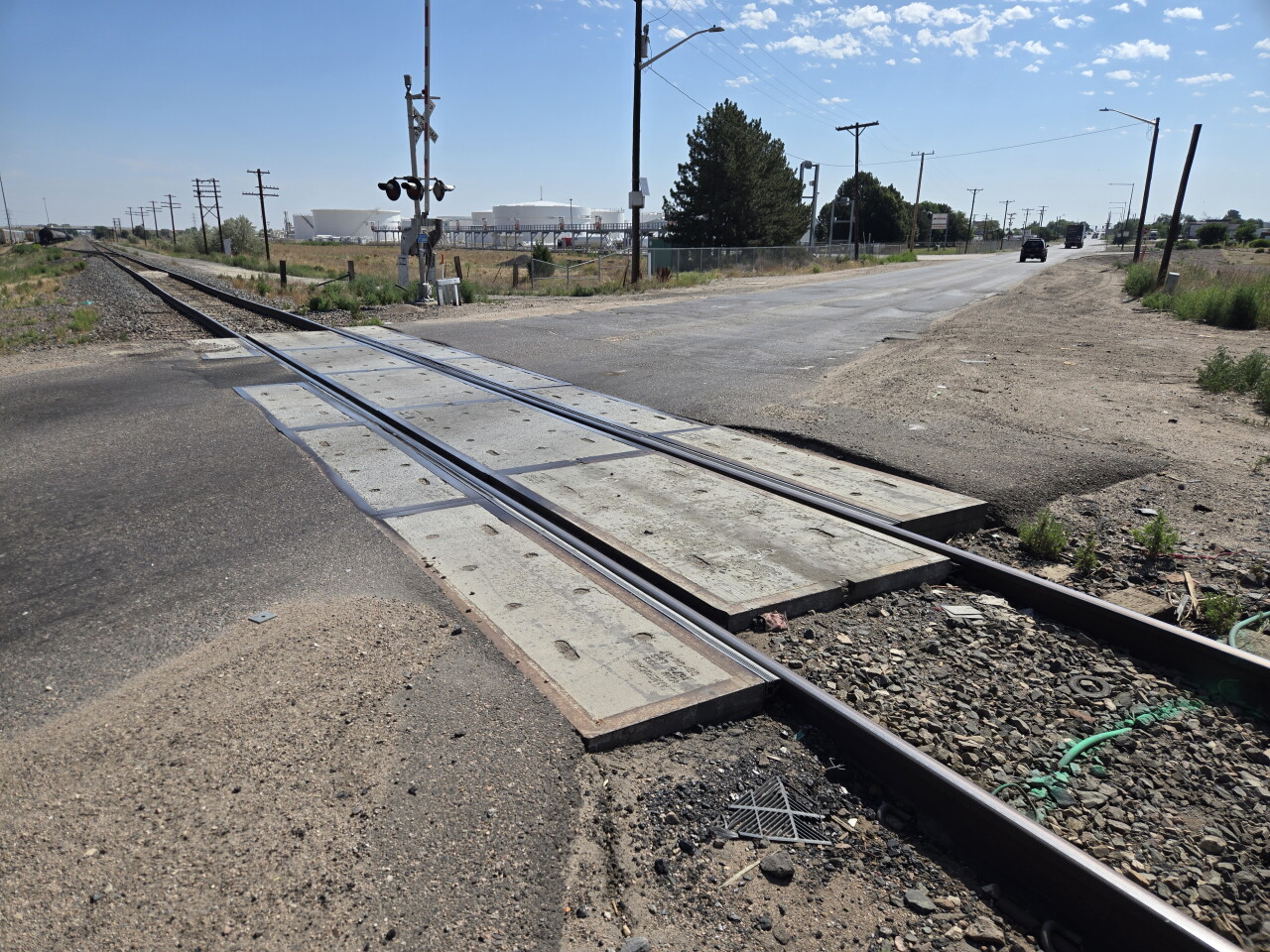
Why is the rail crossing on 96th in Commerce City still so car-damaging rough?
-

Can you explain why the red and yellow arrow lights were on at the same time?
-

Could we get a green arrow light at 120th and Tower to get through quicker?
-
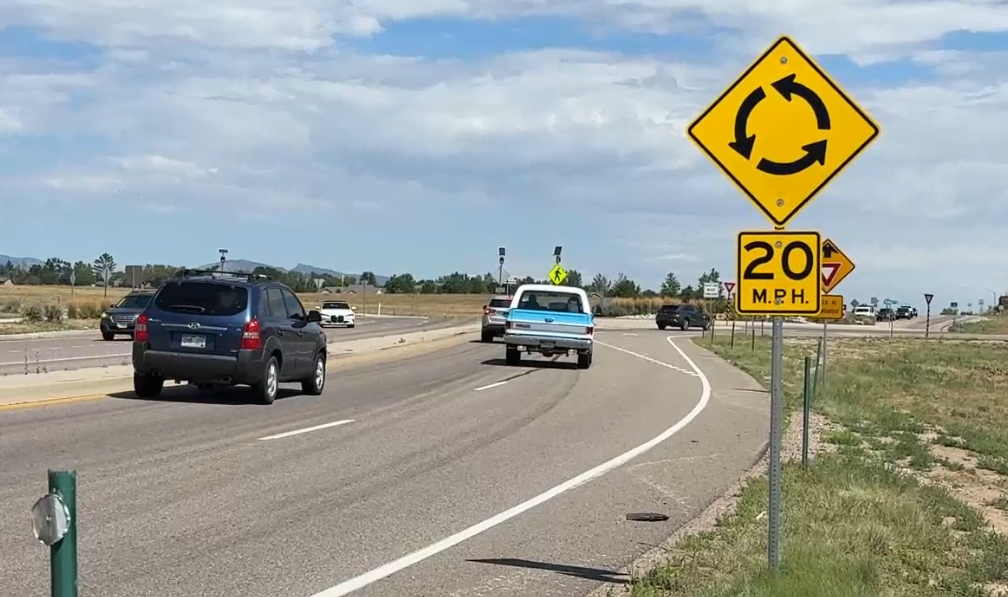
I hate the constant fight to very quickly merge left on Berthoud Pkwy from 287!
-

Driving You Crazy: What are the yellow poles for at 29th and Depew?


