



AURORA, Colo. – Wildfire smoke from fires burning in Washington and Montana is blanketing parts of Colorado, with the haziest conditions expected to linger through early Wednesday.
Denver7 Chief Meteorologist Lisa Hidalgo said a cold front moving through the region is breaking down a ridge of high pressure that had been keeping the smoke pushed farther north.
"I'd say from today into early Wednesday is when we're going to see most of that smoke. And then as that ridge of high pressure builds back in toward the end of the week, it should clear up," Hidalgo said.
Hidalgo said the smoke is expected to be thickest across northern Colorado, particularly along and north of Interstate 70, with air quality alerts already in effect for parts of northwestern Colorado.
"You don't even need to have a respiratory illness or a lung or a heart disease to feel it. You just step outside, and it'll make your eyes water. You won't feel good," Hidalgo said.
Aurora resident Arana Smith said the smoky conditions are affecting her family and her 2 bulldogs, Nala and Mila.
► Watch Ethan Carlson's report in the video below;
"It's really scary knowing that there's so many wildfires coming from everywhere. It's not just Colorado. So, it’s very worrisome," Smith said.
Smith said her bulldogs are especially vulnerable.
"They just have flat faces, so their noses are small, their airways are small. Smoke and that type of stuff really irritates them. So, one, they can't enjoy it because the heat. But then with the smoke, it's like, all right, you got to get inside now," Smith said.
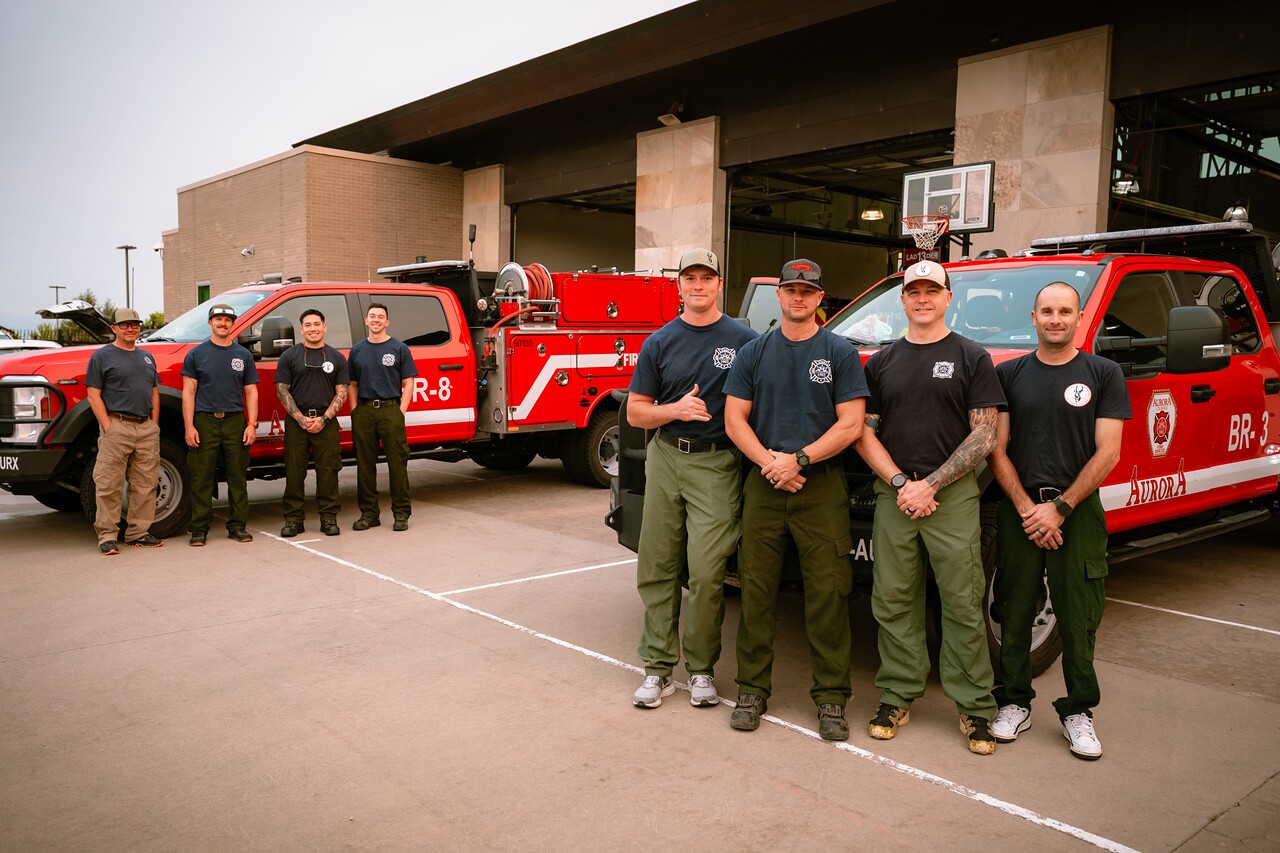
As smoke fills Colorado skies, 8 firefighters from Aurora Fire Rescue have deployed to help battle the Sinlahekin Fire in Washington state, located about 180 miles northwest of Spokane. The fire had burned more than 73,000 acres and was 0% contained as of Monday afternoon, with mandatory evacuations in place and structures threatened.
The crews departed in 2 Type 6 wildland fire engines — also called brush trucks — which are capable of pumping water while in motion, going off-road into forested terrain, and navigating residential driveways for structure protection. The trucks also carry enough space for personal protective equipment and camping gear, as the firefighters could be living in tents at the fire scene for the duration of their assignment.
Aurora Fire Rescue Public Information Officer Eric Hurst said the smoke visible over the Denver metro area underscored the urgency of the deployment.
"The smoke from Washington affecting us here in the Denver metro area is certainly an indication of why it's so important for our firefighters to go and deploy and help those communities," Hurst said.
Hurst said the scale of the destruction made the need clear.
"Some people have lost their homes already, and we know that the toll is very great there. People's lives are in danger. So, for our firefighters to be able to go up there and do good for that community, I think they take a lot of pride in that," Hurst said.
The firefighters face a 2-day drive to reach the fire. Once there, they will begin a 14-day assignment on the fire line before making the 2-day drive back to Aurora.
Hurst said Aurora Fire Rescue does not choose which fire its crews respond to — that is determined by where the immediate need is greatest. He also said the department is careful not to overextend its resources.
"The City of Aurora still has wildland fire engines and wildland firefighters here at home, because we know it's been dry, warm, and breezy here, as well. So, certainly, there's a risk of us having fires back home, and we never stretch ourselves too thin," Hurst said.
Hurst said mutual aid between fire departments is a cornerstone of how the wildland firefighting community operates.
"I think one of the biggest reasons why Aurora Fire Rescue helps out of state is because that we know at some point Aurora is going to need help from out of state too, so it's a great way for fire departments to help each other," Hurst said.
This story was reported on-air by a journalist and has been converted to this platform with the assistance of AI. Our editorial team verifies all reporting on all platforms for fairness and accuracy.

