


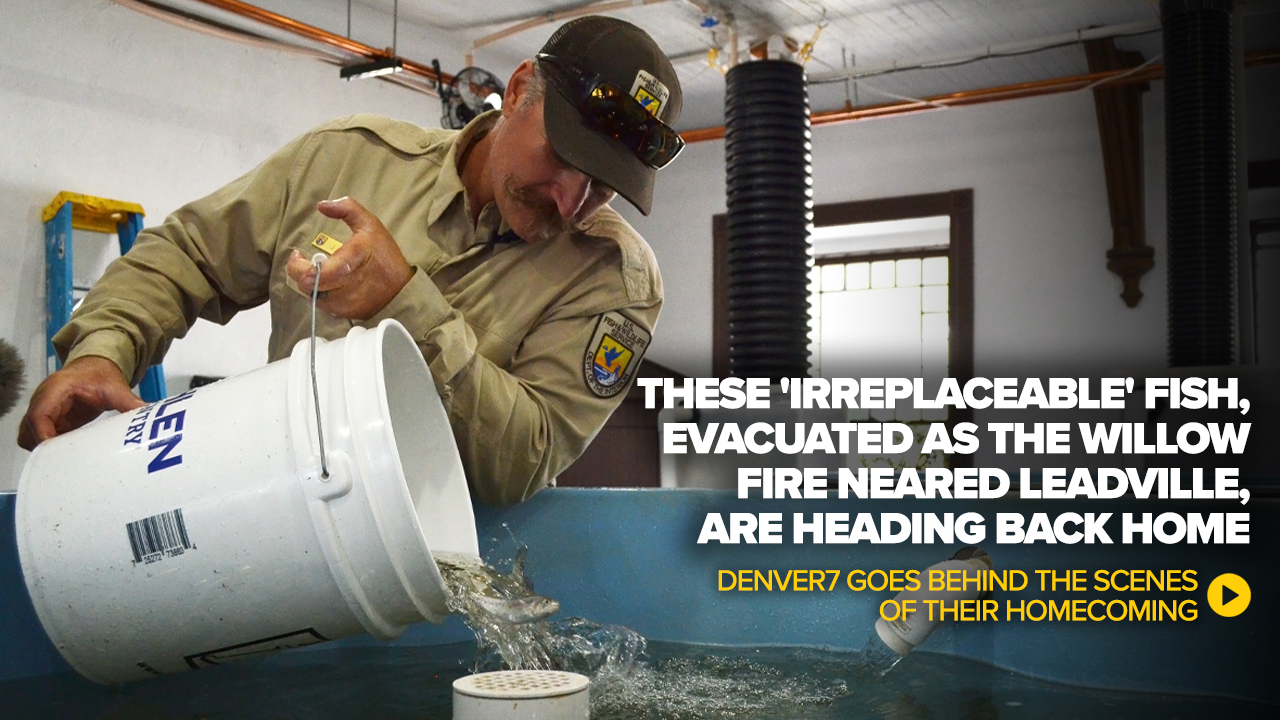


LAKE COUNTY, Colo. — Thousands of "irreplaceable" fish are making their way back home after the Willow Fire outside Leadville forced one of the country's oldest hatcheries to evacuate.
As neighbors just west of Leadville gathered their belongings to evacuate in late June and early July, biologists at the Leadville National Fish Hatchery also packed up their precious cargo: nearly 150,000 fish.
And now, with all mandatory evacuations downgraded, these fish, just like their human neighbors, are coming home.
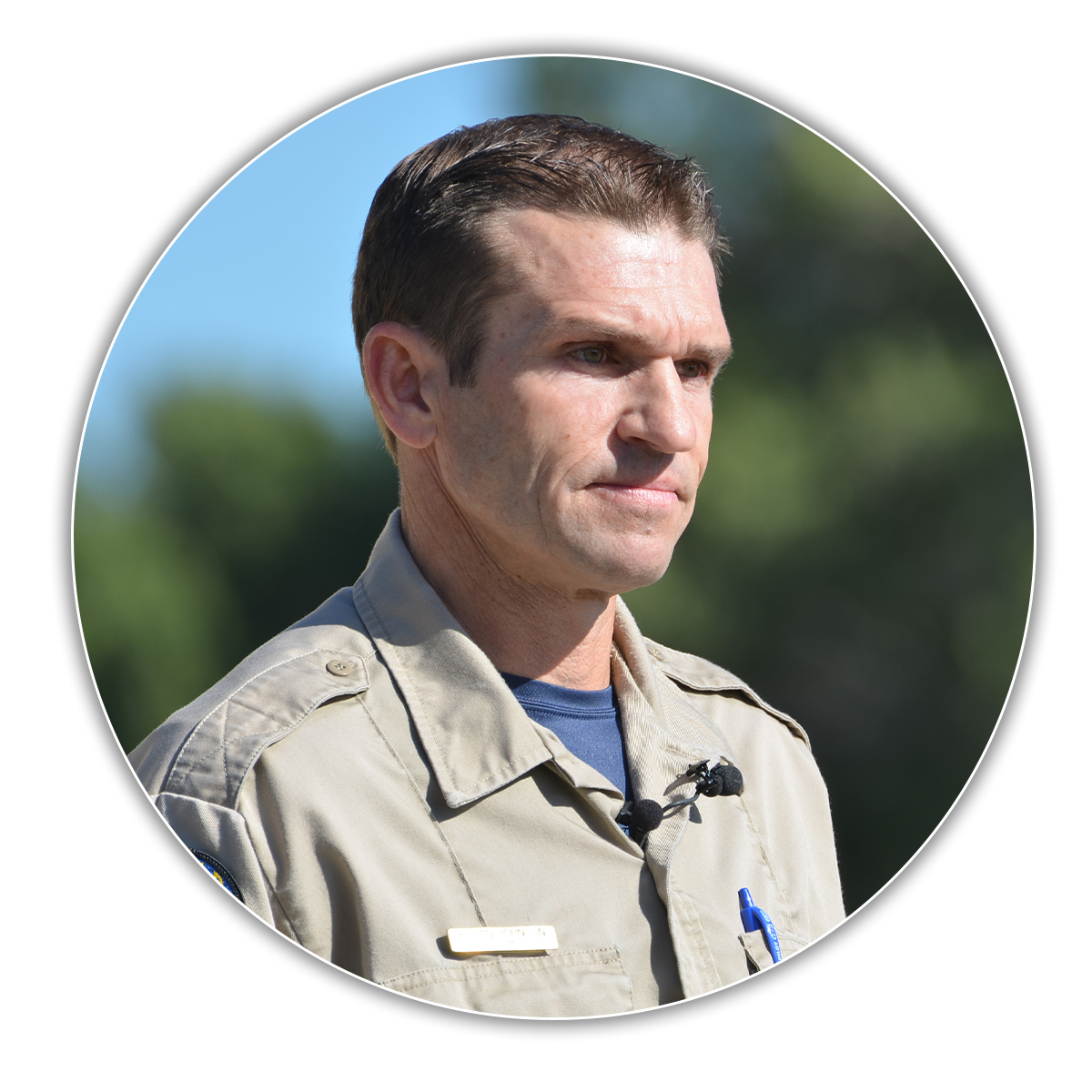
Denver7 joined Colorado Parks and Wildlife (CPW) and the U.S. Fish and Wildlife Service (USFWS) for the start of a homecoming for about 5,000 greenback cutthroats on Thursday. These fish — Colorado's state fish — are listed as federally threatened and state threatened. They have just one reproducing population in the wild currently, explained Bryan Johnson, hatchery manager for the Mt. Shavano Fish Hatchery in Salida, which is one of the places the fish were brought.
"And so we don't want to do anything to compromise that," he said.
The Leadville National Fish Hatchery is a uniquely perfect place for trout to start their lives thanks to the cold, clean water that comes down off Mount Massive into the subalpine forest outside the hatchery's front doors. The hatchery is rearing Hayden Creek cutthroat trout, rainbow trout, and greenback cutthroat trout, which are eventually released into the wild to support sustainable trout populations — and Colorado's $2.4 billion fishing industry.
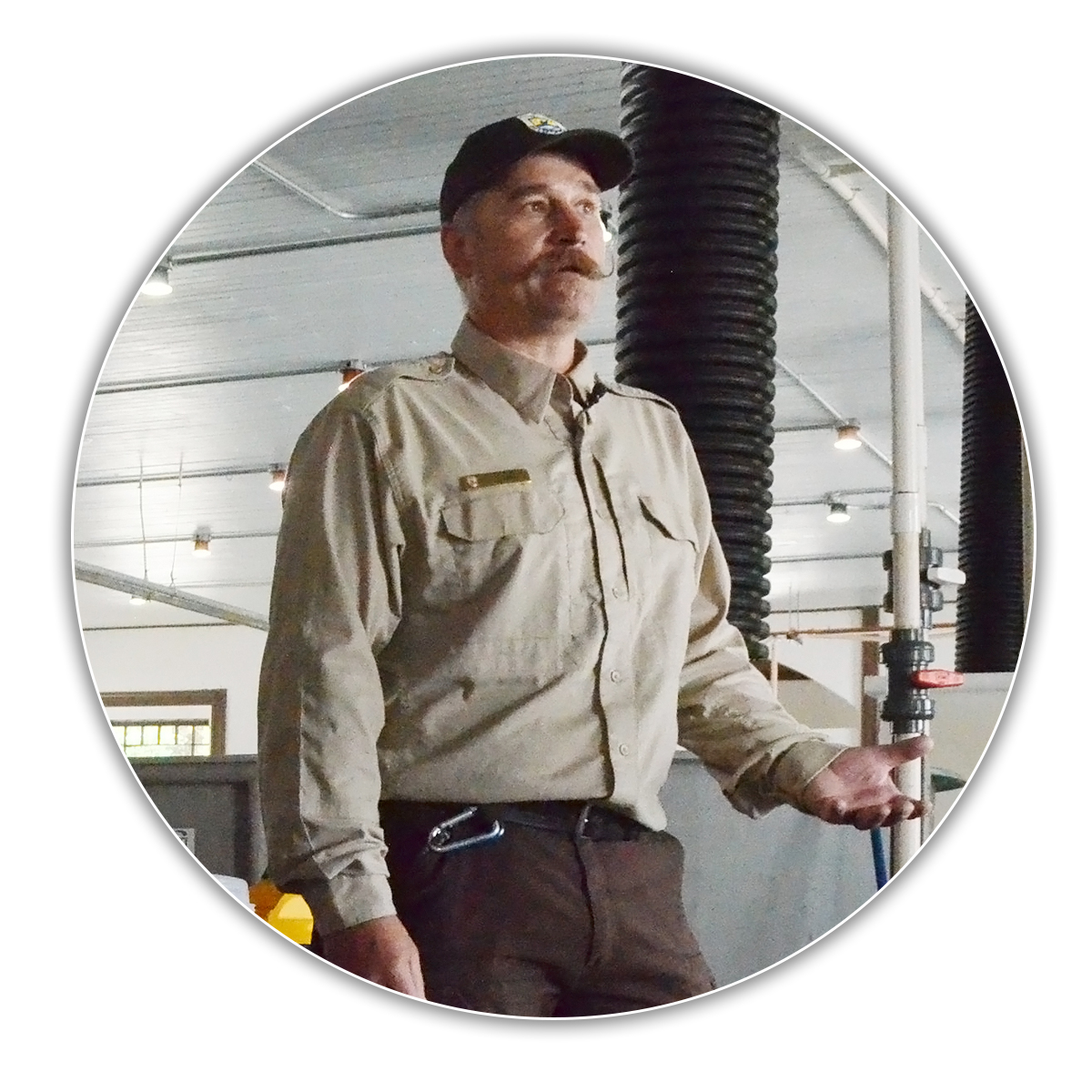
Josh Homer, supervisory biologist for the Leadville National Fish Hatchery, explained that the greenback cutthroat broodstocks, which are mature fish kept for breeding, at the Leadville hatchery are "essentially irreplaceable."
"We've been developing this broodstock for decades," he said. "It's the only broodstock of its type in the world."
So, when the Willow Fire grew near, the decision was made quickly: They had to keep those 150,000 trout safe and get them out.
Bucket by bucket, fish by fish.

The Willow Fire started burning on the afternoon of June 28 south of Turquoise Lake and six miles west of the City of Leadville.
Denver7 has been tracking each development along the way and as of Friday afternoon, it has burned 7,196 acres and is 66% contained. The human-caused blaze injured 12 people and forced multiple evacuations.

On the Sunday evening the fire started, Homer, who lives in Hotchkiss about 150 miles away, remembered seeing a notification about a small fire — between three and five acres — close to the hatchery.
He went out to work in his garden.
When he returned, the Willow Fire had jumped several hundred acres.
"After it did that, I knew right then I had to make my way over here," Homer said.

With conditions growing more serious for the hatchery, Homer and Johnson connected to start pre-planning what an evacuation would look like for 150,000 fish — what facilities could take them, what trucks could move them safely, which locations had enough staffing to help.
"Even that night, we were ready to go," Johnson said.
He added that they feared the fire may reach a water treatment supply for Turquoise Lake, which would shut off the Leadville hatchery's water supply.
"Knowing the overall value of these fish and the potential that this fire could do a lot of unpredictable things very quickly — that just made me feel that we needed to get these fish out of here sooner rather than later," Homer said.

By the following afternoon — Monday, June 29 — the fire was within two miles of the building and ash was falling from the sky.
"We could see the flames from the facility," Homer said.
The plan went into motion on June 30. Over the span of three days, staff caught all 148,000 fish in the tanks at the Leadville facility, put them into buckets, walked them out to a waiting truck, and gently released them into a portable transport tank. They repeated this over and over. Every move was carefully recorded.
The fish were brought to the Mt. Shavano Hatchery in Salida, Roaring Judy Hatchery in Almont, Durango Fish Hatchery in Durango, and the John W. Mumma Native Aquatic Species Restoration Facility in Alamosa. Instead of risking any losses of rainbow trout, crews decided to stock waterways with some of the 142,000 rainbows that were evacuated, CPW reported.
Standing outside an isolation unit at the Mt. Shavano Hatchery in Salida, Johnson explained it is specifically built to house cutthroat trout and rescue populations from the wild. Or, in this case, rescue fish from another hatchery in need.
CPW's hatchery section shares a spreadsheet detailing all its isolation facilities and what kind of extra room they have in case of urgent situations like this.
Of the 5,000 greenback cutthroats that were rescued, 1,479 were brought to the Salida isolation unit, Johnson said.
"For me personally — first time we've had to rescue fish because of a fire," he said.

Shortly after all of those fish were transported off the truck and back into their tanks in Leadville, a crew from the Durango Fish Hatchery — Sarah Gump and DaNelle Ellington-Martinez — pulled up.
They, too, were bringing fish back home after a nearly five-hour drive from Durango.
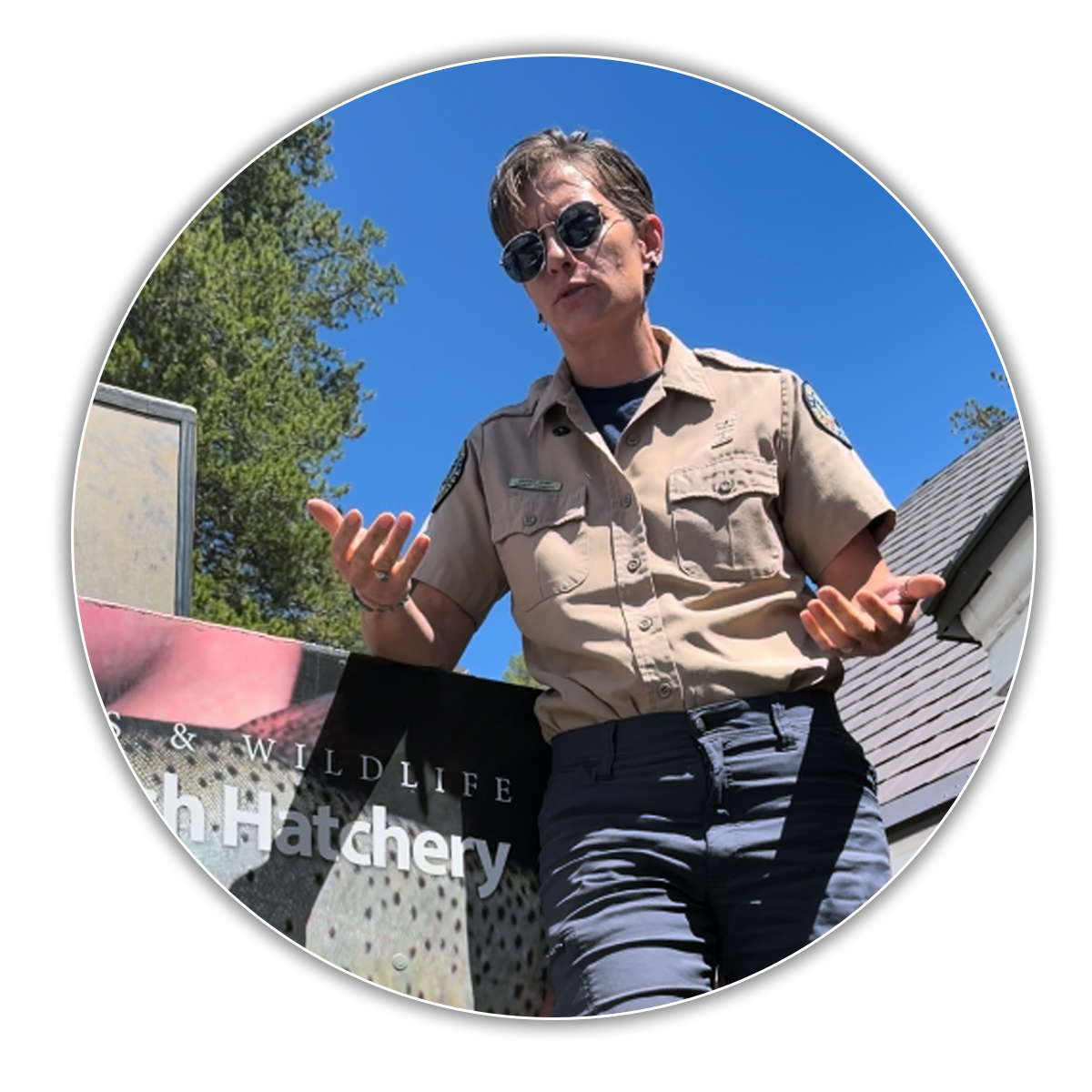
Sarah Gump, who has worked as a hatchery technician in Durango for 16 years, said she was also part of the effort to evacuate fish during the 416 Fire in 2018.
“This is the second time in my career that we have had the honor to rescue the native species," she said. “It is such an honor to carry out the mission of Parks and Wildlife on a day-to-day basis. But it’s just next level being able to rescue native cutthroat species, take them into our facility, care for them (and) see how well they do.”
The fish that were evacuated to Durango this summer "did magnificent" there, she said.
“To bring them back here today, to bring them home, is such an honor," she said. "I’m stoked to bring them home today.”

What could have been quite the upstream battle was "seamless" thanks to the partnership between USFWS and CPW, Homer said.
Johnson echoed that statement, saying despite how enormous the task may sound, their preparations and coordination reduced many challenges. CPW stocks 250,000 pounds of fish around Colorado waterways each year, so staff are used to moving large quantities of fish, he explained.
"We were ready," he said.

When conditions allowed, firefighters at the Willow Fire used a backburn technique along the east side near the hatchery, meaning they intentionally ignited a small fire near a control line to get rid of any fuel, essentially stopping the fire in its tracks.
A spot fire outside the wildfire's main perimeter reached as close as 50 yards from the hatchery, Homer said. And the main blaze got as close as half a mile.
But fire crews made careful progress and by Tuesday, they were able to start removing hose and equipment from the fireline.
On Thursday, as Denver7 watched hundreds of fish get transferred from truck to bucket to their home tank, more good news came out of Leadville: All mandatory evacuations were downgraded to pre-evacuation status.

Amid the evacuations, the community worried over the safety of the hatchery. All over social media and within community groups, people wondered how the fish would fare.
"There was a lot of concern that these fish would either be abandoned or potentially burned over," Homer said. "And a lot of rumors flew back and forth, and there's only so much we could say, and especially in the time frame we had it. So, there was a lot of concern locally for what was going to happen to the fish."
There were also plenty of people ready to help.

"We had a ton of local support as well as across the state or even across the nation," he said. "I had people reaching out to me that I haven't talked to in years that said they saw this fire crop up. They said, 'If you need anything, give us a call. We'll be more than happy to come and help.'"
The community deeply values the facility as well as its past, its grounds and the recreation it offers.
"This facility has a history like none other," Homer said. "It's the oldest active fish hatchery in Colorado. It's the second-oldest fish hatchery still operating within the Fish and Wildlife Service. And it just has such a storied history. We have this beautiful building — the original building was built in 1889. We still do our fish work in here."

The property includes seven miles of public trails, bringing in 36,000 visitors yearly to either see the hatchery or explore the 3,072 acres of wilderness outside it.
So, it's about more than just a fish. This place is about crucial species, community, history, and a dedication to preserve all of it for generations to come.
"It's fun to go to a lake and see a little kid fishing for his first time, or somebody with their grandkid out there," Johnson said. "And that's very rewarding to see that."
Denver7's Maggy Wolanske contributed to this report.
