



DENVER — The repeated red flag days are changing the response and requiring more resources from our local fire departments.
South Metro Fire Rescue (SMFR) gave Denver7 some insight into what happens to their resources.
On a red flag day, the agency classifies every wild land fire as a large one and the response changes.
- Watch the full story in the video player below.
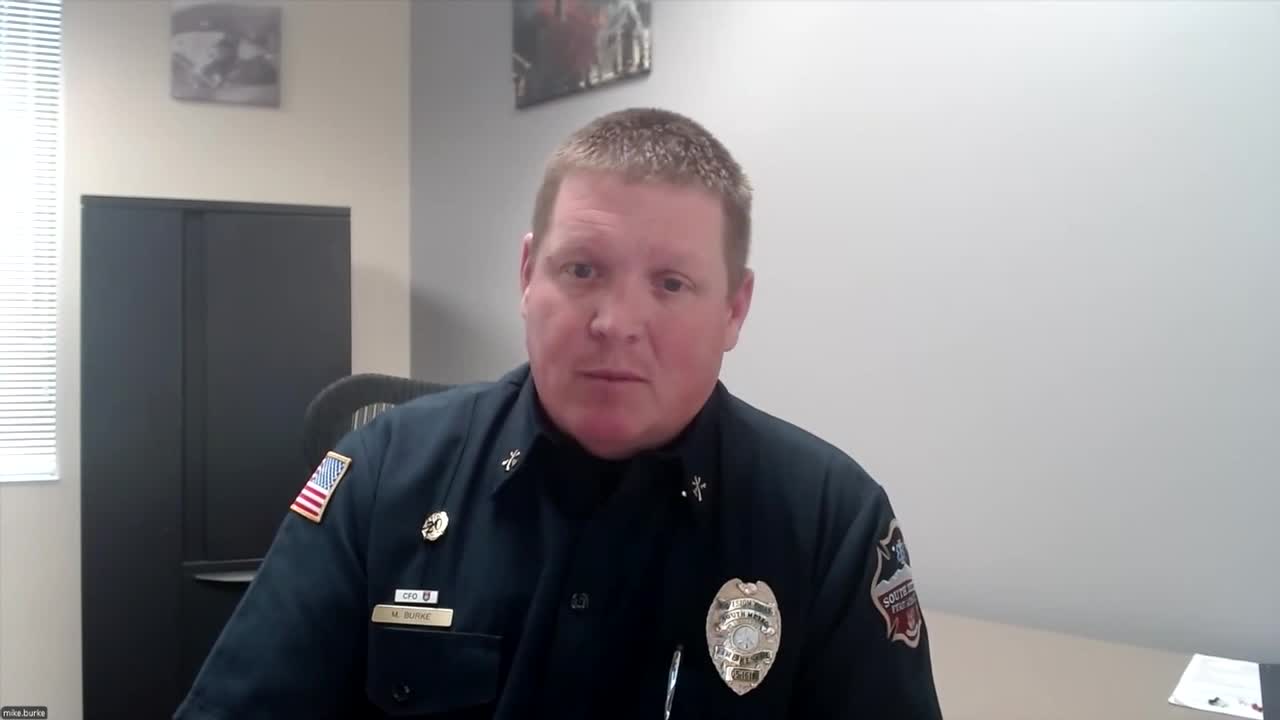
“You get two fire engines, two wild land engines. You get two of our specialty wildlife team,” South Metro Division Chief of Operations Support Mike Burke said. “Those crews are our people that are deployed and really specifically trained for wild land, and spend a lot of time training on that. You get a safety officer, two battalion chiefs, a medic unit. If we're in a place where we don't have hydrants readily available, we would also bring a water tender, which carries 3,500 gallons of water. So, resource demands are much higher on red flag days first.”
Then, on the most hazardous red flag days and days the National Weather Service (NWS) deems potentially dangerous situations, the agency will staff up.
“So back in December, and I believe January, and maybe one day in February, when we had the PDS that was impacting our district, we brought in a total of eight extra firefighters that we put on fire engines,” Burke said. “We also brought in what we call an FDO, which stands for fire duty officer. That's a wild land trained battalion chief level employee that oversees wild land reparations.”
It does come at a cost.
“It comes with the cost of overtime," Burke said. "It comes with the cost of our firefighters having to be away from their families one more day of the month, and that's something that we try to respect and be aware of, right?”
Right now, Burke said SMFR has the budget for this but said if this pattern continues in the long haul, there will likely be bigger conversations and adjustments.
“The ask that I have for the community is to be very cautious,” Burke said. “Right now, it's more dangerous than I've seen in a long time."
That means paying especially close attention from zero to 100 feet in a ring around your home.
A few guidelines to keep in mind, in the zero to 5 feet range, remove combustible materials, think about bushes and landscaping.
Burke also said to look at the trees around your home and if there are any limbs or brush hanging lower than 6 feet. It’s a good idea to clean that up to help keep fires on the ground.
You can also contact your local nursery or gardening center about more fire-resistant plants.
And sign up for emergency alerts in your area.

