


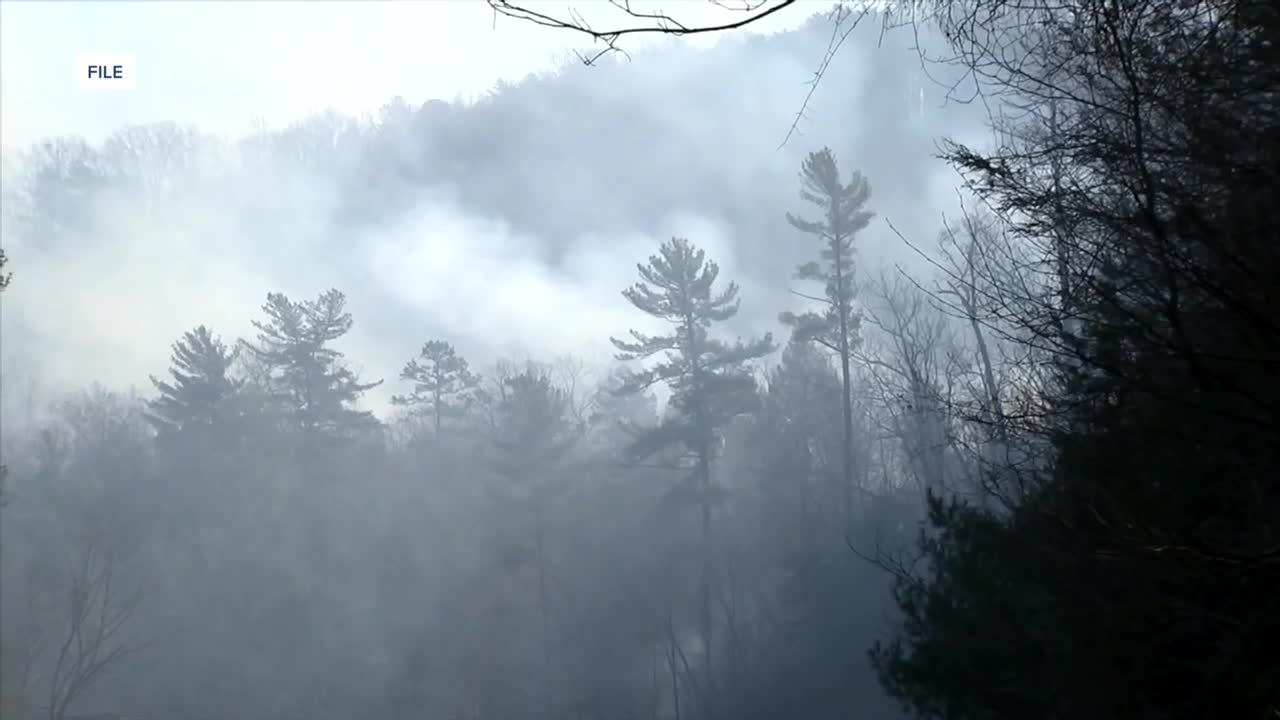


DENVER — Colorado has a longstanding and consistent history of wildfires, but the tactics and strategies surrounding how firefighters attack those fires have evolved dramatically over the decades.
Brett Wolk, Colorado State University associate director and co-lead of the Colorado Forest Restoration Institute, explained that new technology, science and tools have guided fire managers toward better practices when it comes to firefighting after years where full fire suppression was the de-facto response.
In his work at the Colorado Forest Restoration Institute, which was created by Congress in 2004 and is housed at CSU, he helps guide other agencies to decide how, when and where to initiate fire mitigation efforts to prevent large, destructive blazes.

"We participate in producing research and helping shape research that is usable in the field," he said. "But we spend a lot of time working with firefighters, foresters, policymakers, helping them use research on a daily basis. They always have more questions than we can answer, so we go back to the research community and kind of play that back-and-forth role."
Today, a lot of fire mitigation work happens in the so-called "preseason," or before a fire starts. That can include forest thinning, prescribed burns, pruning and more.
When wildfires do break out now, firefighters are armed with detailed knowledge of the landscape, plus new scientific systems and models can better map out a fire's behavior. This gives fire crews a leg up in the fight and allows them to quickly determine the best course of attack.
"We can save hours or days of planning what to do and where to be the most effective at fighting a fire, instead of having to start from scratch every time that a new fire starts," Wolk said.
That hasn't always been the case. Not too long ago, the standard reaction to any blaze was an aggressive interior attack and total fire suppression. This began changing in earnest around 2000 as concrete data became more prevalent about how this may actually hurt ecosystems and set them up to burn in larger, more uncontrollable wildfires.
-
The Colorado State Forest Service has a website ready to help residents determine their wildfire risk and how to create defensible space. Click here to learn more.
But current-day Colorado is still feeling the effects from those previous firefighting tactics.
"I think a really key message is that balance of fire is a part of the societies and communities that we live in, and it's necessary for all the things we love about Colorado in our forests, and obviously can also do a lot of harm, right?" Wolk said. "I think balancing those two and communicating yes, fire can be very bad in some situations, but fire is also our best tool to reduce risk. Having fire in the landscape under our terms — and more times where we have more control over it — is always going to make us safer in the future when new wildfires start."
Wolk spoke with Denver7 about a brief overview of Colorado's wildland firefighting history, its evolution, and its impact today.
How firefighting has evolved in Colorado
That story starts thousands of years ago with Indigenous people and their ancestors. Fire was integral to their way of life and was used as a tool for everything from hunting to managing the land, according to the National Park Service. In addition to using fire in ceremonies, Indigenous people also set smaller, controlled fires to promote a forest's health and ecology.
Through colonization, many of those communities were displaced.
"And when we did that, the important thing to recognize is we took their fire management out of the system," Wolk explained, and officials focused on completely stopping wildfires.

One of the successful strategies implemented in the western United States in the mid-1800s and late 1800s was grazing. People allowed millions of sheep to consume fire fuels, stopping any potential fires, but also deliberately disrupting a natural part of the land.
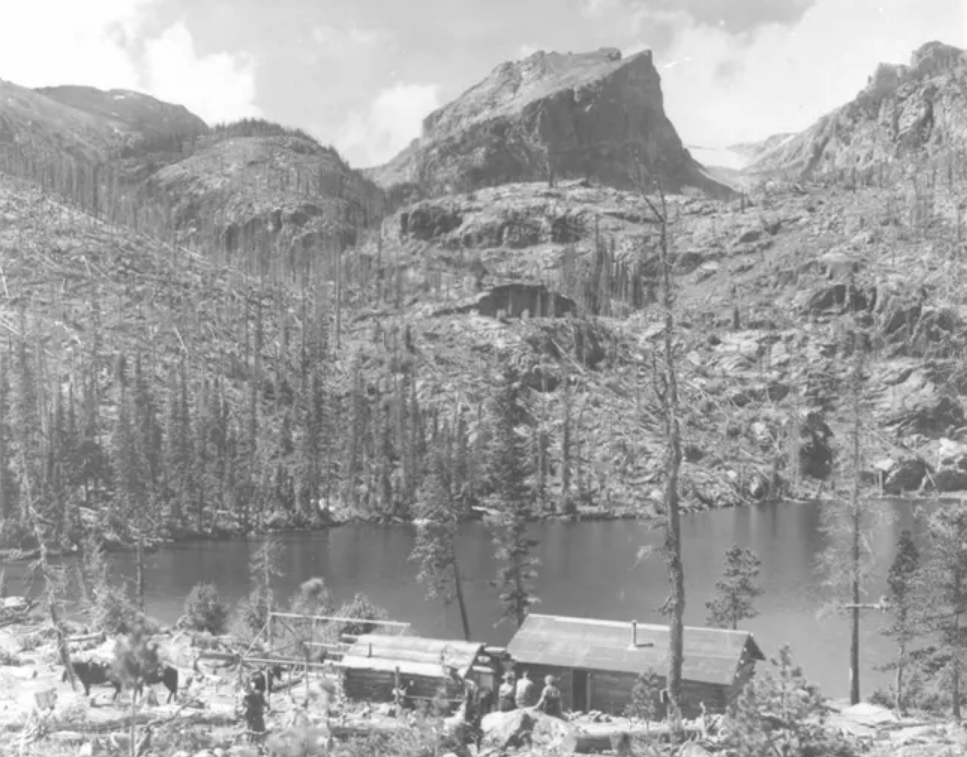
A series of forest fires in August 1910 across the northern Rocky Mountains — called the Big Blowup — grew beyond 3 million acres in just two days, which convinced local and national experts "that only total fire suppression could prevent such an event from occurring again, and that the Forest Service was the only outfit capable of carrying out that mission," according to the Forest History Society. The year after these massive fires, Congress doubled the U.S. Forest Service budget and passed legislation to institutionalize and professionalize fire suppression, according to the National Interagency Fire Center. As such, natural, low-intensity burns were essentially wiped from the landscape.

The idea of complete fire suppression ramped up in the 1930s after many severe fire seasons in the west. After a couple wildfires killed firefighters, the U.S. Forest Service established a so-called "10 a.m. policy," meaning fire managers aimed to extinguish a wildfire by 10 a.m. the following day. This required firefighters to keep a fire as small as possible while getting extremely close to the flames. New resources like firefighting aircraft and other wildfire-specific vehicles were added to the toolbox in the 1950s, a few years after World War II ended, Wolk said.
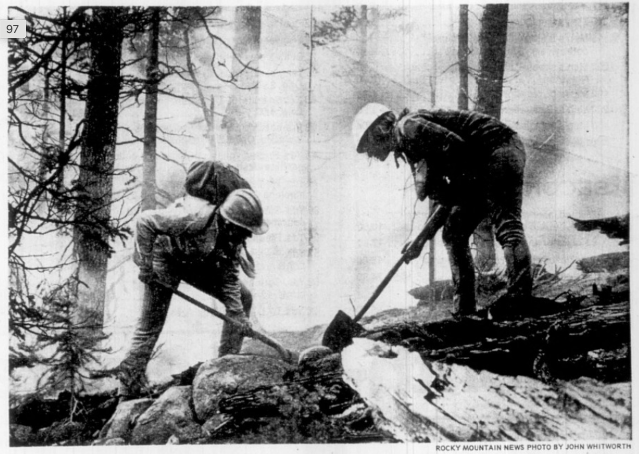
"That really persisted all the way into the 1980s and 90s — of really suppressing fires and trying to keep them as small as possible," he said. "And that means putting firefighters as close to them and using airplanes and other equipment, bulldozers and things in lots of different places... The perception was 'Fire — we can put it out. We should put it out all the time.'"

Across parts of Colorado's Rocky Mountains, fire-deprived forests grew dense and overloaded with dead foliage.
John Markalunas, fire management officer for the Bureau of Land Management Colorado Rocky Mountain District, wrote in a March 2023 article for the agency that the impact of that history on the land "permanently changed the course of wildfire in the region."
Around the 1970s and 80s, the science surrounding how wildfires can actually benefit forests began to pick up speed, Wolk said. That only became more robust closer to the present day.
"In the early 2000s, there was a series of fires — the Yellowstone fires in 1988 are a big marker — but the early 2000s, we saw many fires that started to be on the order of hundreds of thousands of acres, that really defied what we knew about how fire worked and had experienced over the last 100, 150 years," he said. "And those fires started to change people's perceptions of, we got to think about how we manage fires and how we do fire a little differently because it was just a whole other scale than people had realized, right, or experienced."

A clear shift came in 2009, when the Fire Executive Council approved a national fire plan that moved to a more risk-based approach, replacing the more rigid "full suppression" approach. Under the new plan, fire managers could assess the situation in real time to determine the best approach.
This management strategy continues to be supported by the science and analytics that had been developed over the previous 15 years, Wolk said.
"There's different strategies to attack fires," he said. "The first thing (fire managers) do is prioritize life and safety, and so, looking at evacuations, who's in harm's way — try to make sure that that's the first thing before they think about doing a lot of suppression."

If it's a small fire, they can jump right into extinguishing it, he said. But if it grows, bigger decisions come into play.
"Thinking about that balance of the risk-based approach of 'Where are we going to have the best chance of success of slowing the spread of this fire, and the biggest safety concerns of our wildland firefighters and the communities that are there?' And so balancing those two — there's lots of systems that firefighters use for communication and making those decisions where they can input information and see some of those trade-offs."

That balance was highlighted recently at the 574-acre Elk Fire, which is burning north of Lake City and east of the Gold Mountain Fire. The incident management team recently posted an update on Inciweb about changing their tactic from an initial aggressive direct attack to "indirect suppression tactics" due to "the fire's location, the inability to safely access it by ground, and the high risk associated with emergency extraction or medical evacuation." This approach will keep crews safe while allowing them to continue building fireline, the team said.
"This is still very much a full suppression strategy, but is engaging the fire where firefighters are likely to be more successful (and is a) more efficient use of limited resources rather than many low-probability high-risk attempts to slow the fire spread, and (it is) safer for firefighters," Wolk explained.
Benefits of wildfire in wild areas
Colorado's land has lived with wildfire since the very beginning, and each ecosystem has a different relationship to fire. In general, wildfires are a healthy part of a forest's ecological process, as it essentially wipes the landscape clean and allows for new growth. This gets rid of old or sickly vegetation and densely wooded spaces, leaving behind open space and nutrient-rich soil.
A long list of Colorado and federal agencies have worked for years to increase forests' resiliency so that when wildfires do come through, they burn in a way beneficial to the ecosystem.
For example, ponderosa pine forests at lower elevations along the Front Range have traditionally experienced frequent wildfires, about every five to 20 or 30 years, Wolk said.
"They have really thick bark that resist fires that are low to the ground and (have) small flames and (are) not very hot, and move through relatively quickly," he explained. "Those fires would also sort of kill a lot of the baby trees. Not all of them, obviously. But it would help keep the forest a little more open, so that the flames stayed lower and burned quicker and cooler."
In the PDF below, the Colorado Forest Restoration Institute outlines how different types of forest respond to wildfires.
Larger trees survived with spacing that promoted the long-term survival of the forest.
At high-elevation forests, things look quite a bit different.
Wolk said those forests are dominated by lodgepole pine, spruce and fir, which are all more adapted to experience wildfires every 200 years or so.
"Their adaptation is really to respond and grow new seedlings very robustly after an intense wildfire," he said. "So their strategy is not necessarily to have trees survive fires, but to grow back quickly afterwards."

Lodgepole pine trees have an adaptation called serotiny in its cones, which only open with the heat from a wildfire, he said.
"So, they're ready to go right after fire," he said.
This is applicable at the Gold Mountain Fire, currently burning in Ouray County, for example. On July 7, the incident management team reported that much of the fire was burning in the Uncompahgre Wilderness Area, where it has not burned in more than 50 years. However, Wolk explained that this is not uncommon for a forest of this type.
"Most of the forests in the Uncompahgre Wilderness where the Gold Mountain Fire is burning are higher elevation subalpine forests, which typically grow very dense and are generally considered to be OK," he said. "These forests often burn at high severity where most trees over large areas die from fires every +/- 100 years or more, then are adapted to grow back after fires. Fifty-plus years without a fire is not uncommon."
While he didn't have data readily available, he said he believes the forests are not necessarily more dense than experts would expect.
"What is out of the ordinary is the climate and how dry everything has been this winter and spring," he continued. "These higher elevation forests had very little snow, so the abundance of large logs on the ground that are usually still wet from snowmelt until early fall are very dry early in the summer, making it possible for large fires to occur."
Continuing his explanation of how trees react to wildfires, he said aspen trees and gambel oaks re-sprout after a fire. They are not built to survive a wildfire, but rather to grow back quickly after one passes through, Wolk said.
"So, lots of different adaptations, but (in) all cases, fire is needed to renew and sustain those forest systems," he said.
