

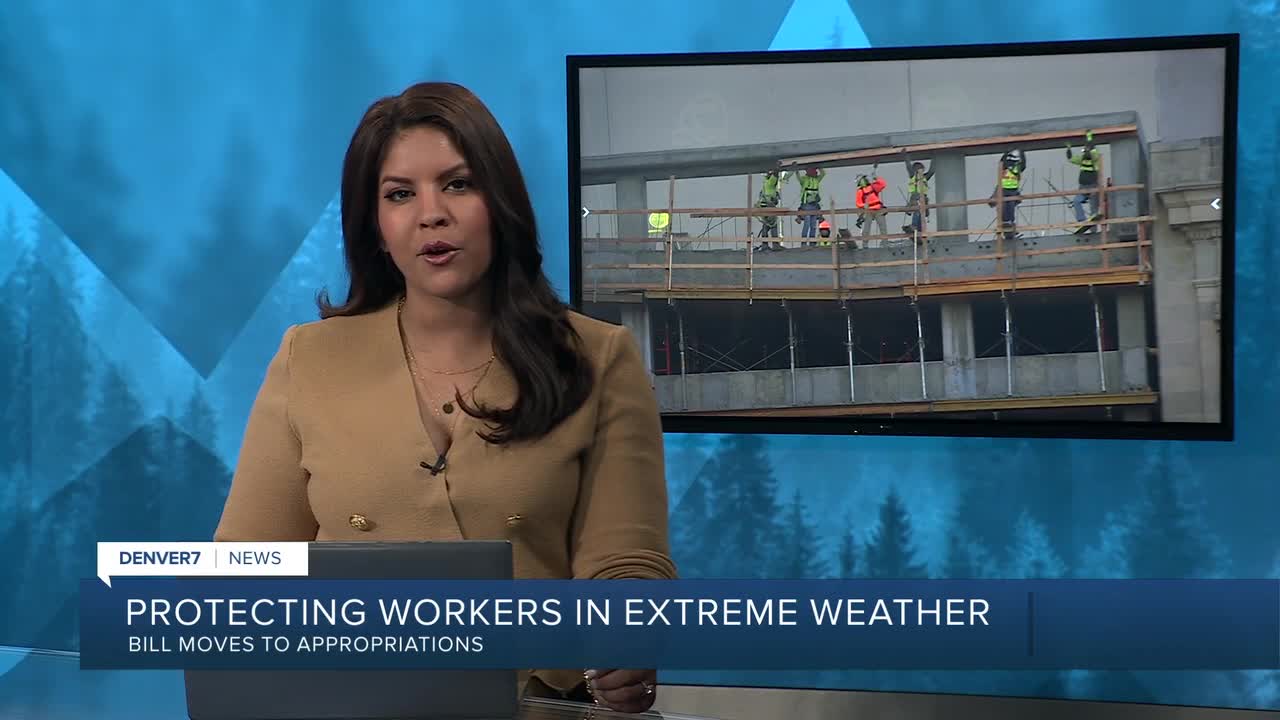


DENVER — Proposed legislation focusing on people who have to work in extreme weather is up for debate again at the Colorado Capitol.
After the latest committee hearing, it was scaled back to focus on data collection and for the Colorado Department of Labor and Employment (CDLE) to come up with a model plan to prevent injury and illness that companies can use.
It’s take two for HB26-1272 called Extreme Temperatures Workers Protections. This year’s original bill set out a plan to first collect data, then come up with guidelines, followed by requiring Colorado employers to submit a safety plan. However because of the state's budget deficit, bill sponsors said they had to scale back and balance what they want to achieve with what's realistic.
In a news release, Colorado Rep. Meg Froelich, D-District 3, wrote in part:
"Given Colorado’s budget constraints, we’re focused on collecting this important data to help us understand how extreme temperatures impact worker health and safety. Through data collection and readily available temperature-related injury and illness prevention plans, we’re moving forward with a bill that puts workers first today and creates a roadmap for the future.”
Alex Sanchez is the CEO and president of Voces Unidas. He said they are working with a coalition of 30 organizations on this.
“This bill is not meant for every day or during normal circumstances,” Sanchez said. “This is for those workers who are expected, who are required to work, when others are staying home, when schools are shutting down, when roads are not passable, when businesses are closing down, or there's a late start. There are workers who can't who can't zoom in, who can't stay home. They're literally required to go out in extreme temperatures to do a job. We believe Colorado needs to have basic standards to protect those employees, because they're dying, they're being harmed on the job.”
Voces Unidas works with families on the Western Slope. Sanchez said this would help people working in a variety of industries from construction, landscaping and roofing to name just a few.
“We're talking about some of the most vulnerable workforce," Sanchez said. "Some of the lowest paid jobs."
Sanchez acknowledged the budget deficit would have an impact on how this bill moves forward and hopes, if passed, the data gathering will give a better picture of what’s happening in Colorado.
“Many of these injuries go unseen,” Sanchez said. “Some employers may not want to report them. Workers sometimes are afraid to complain, because a complaint may be a loss of hours, a loss of jobs. We're talking about a workforce that has been taken advantage of, right?"
This same issue came up last year but was postponed.
Sanchez said supporters of the bill heard from the business community, saying it was too prescriptive and didn’t allow for nuances of the industry, so they took the year to keep working on it. He hopes this year's version will offer more flexibility. Sanchez also said he knows many companies have best practices but wants to establish a baseline of protection.
“This issue will only get worse as climate changes, conditions will also get worse,” Sanchez said. “So, these workers today who are already dying, who are losing fingers from frostbite, who are literally passing out because of heatstroke, these conditions will only get worse.”
Denver7 also heard from CEO of Associated Builders and Contractors Rocky Mountain chapter Jack Tate.
He said construction companies already have strong incentives to manage extreme weather, including heat risks, because it impacts productivity, insurance costs and workforce retention. Tate questioned if such a sweeping approach is the best way forward, and instead suggested focusing on practical and flexible safety practices that contractors are already using across Colorado’s diverse climates.
The bill passed out of committee and will head to appropriations.


