

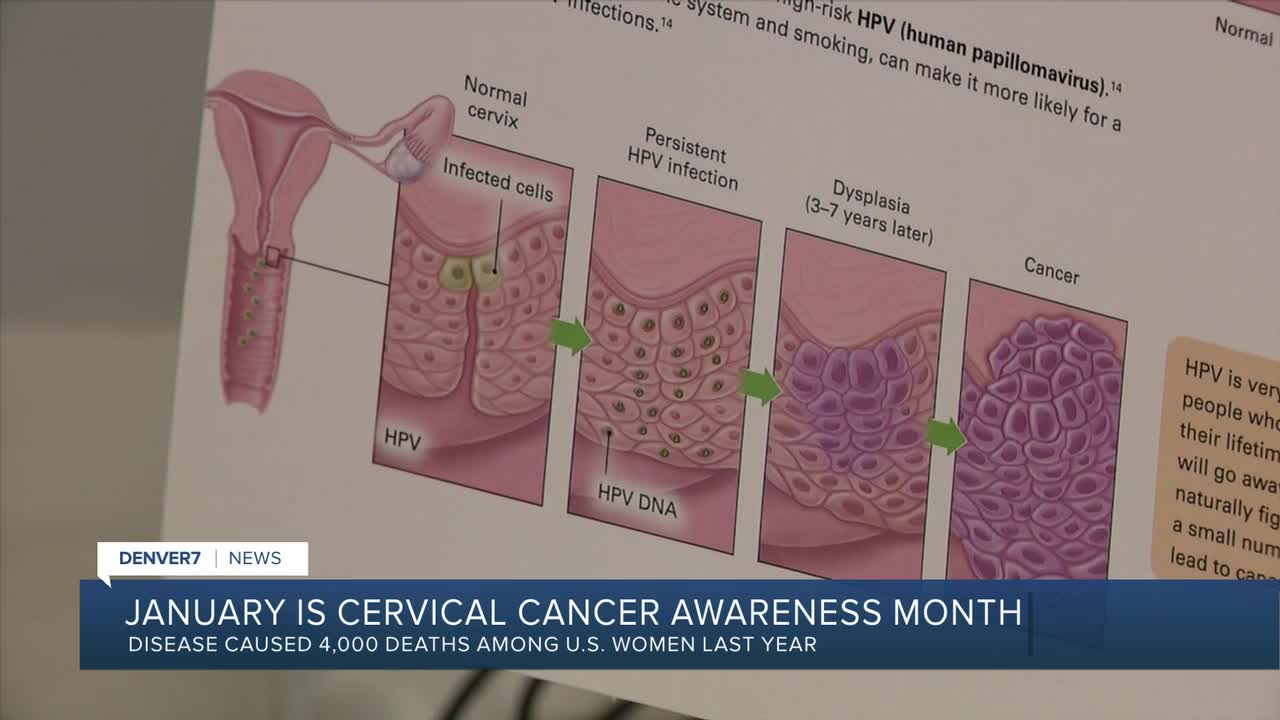


DENVER — January is Cervical Cancer Awareness Month, and this year, 14,000 new cases are expected to be diagnosed, according to the American Cancer Society.
Last year, 4,320 women died from cervical cancer despite improvements in prevention and treatment.
Cervical cancer incidence rates decreased by more than half from the mid-1970s to the mid-2000s, largely because of the increased use of screening.
Dr. Jennifer Rubatt, a gynecologic oncologist with AdventHealth Porter, recommends women get annual pelvic exams.
She says a common misconception is that getting an abnormal test result automatically means cancer.
“This is usually a very slow-developing cancer, and the whole point of doing a pap smear and preventative exams is to catch it in a pre-cancerous stage, when we can completely treat it and make it go away,” Dr. Rubatt said.
The most frequently diagnosed demographic is younger women, between the ages of 35 and 44.
Preventative measures like the HPV vaccine have reduced cervical cancer rates in young women by 90%. The HPV virus is the leading cause of cervical cancer. The vaccine is FDA-approved for women and men up to age 45.
“It can be effective at preventing cervical pre-cancer and cancer even in women and men who have already been exposed to HPV viruses. So, we can utilize it even after you've already been exposed,” Dr. Rubatt said.
In recent years, the FDA has approved HPV at-home self-collection cancer screenings.
Dr. Rubatt says they are ideal for patients with traumatic experiences or past abuse who don’t feel comfortable with a traditional pap smear.
“It's always good for women to have a trusted healthcare professional and be their own best advocate,” Dr. Rubatt said. “If they have anxiety, share that with your provider, because there are accommodations or things that we can do to make the exam as comfortable as possible, so that we can catch things early before it becomes a problem.”

