

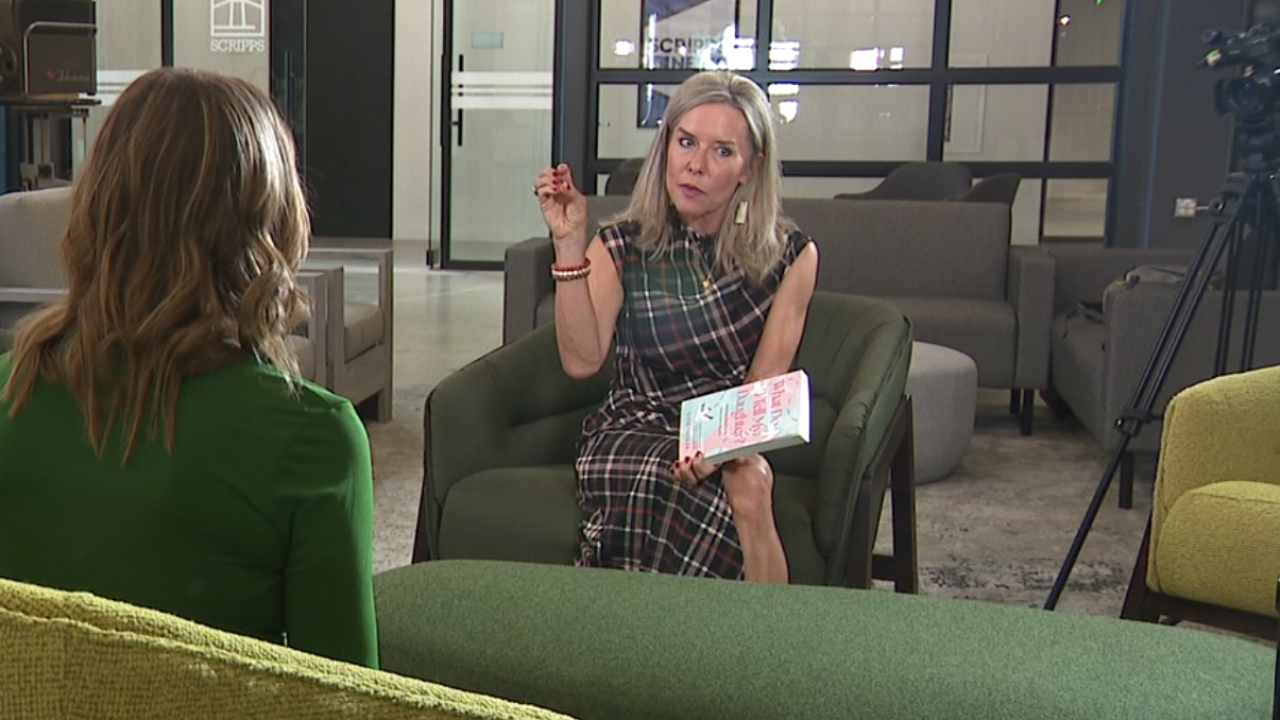


DENVER — For years, Denver7 viewers woke up with Katie Trexler.
The former Denver7 morning anchor spent seven years at the station before leaving in 2007 after her husband accepted a job opportunity out of state.
Today, she is sharing that experience in a new memoir, but her story also comes as researchers continue examining what is often called the "motherhood penalty": the career and financial impact many women face after stepping away from work or scaling back to care for children.
When I sat down with Trexler recently, parts of her story felt familiar.
As a working mom with a young daughter, I recognized the tug-of-war she describes between career ambitions and wanting to be present for family.
"I physically hurt when I couldn't be with my children as much," Trexler told me. "We want to be the best mom and the best employee, and those don't often mesh."
Trexler left Denver7 after her husband was offered what she believed could be a life-changing opportunity for their family.
"It was absolutely my choice," she said. "I knew that I wanted to do this for my family."
But she says she wasn't prepared for what came next.
"I had no idea how that decision was going to impact me for the rest of my life," she said. "Almost immediately, I felt a loss of my identity, my sense of self and certainly my earning power."
That tension sits at the center of her book, "What Do I Tell My Daughter?" In the opening pages, Trexler writes that she wanted "a successful career, a strong marriage, happy children, and a life rich with experiences and opportunities."
"Wanting all those things and having them is a completely different story, however," she writes. "Attempting to have a high-powered job and be the mom I wanted to be nearly killed me."
One of the ideas that resonated most with me was not a dramatic life lesson, but a simple observation.
"I think we can have it all," Trexler told me the day her memoir was being published. "But not necessarily all at once."
She also challenged the idea that women should lose themselves in motherhood.
"It's OK to put yourself first," she said. "It's OK to recognize you have your own needs as an individual."
Throughout the book, Trexler repeatedly returns to the same question: What do we tell the next generation of women about work, family and sacrifice?
"It's OK to consider your own heart, dreams and career while making choices for your family," she writes. "Being focused on your own needs doesn't mean you're selfish."
Trexler says she doesn't want to tell women what choices to make.
Instead, she hopes her story encourages more honest conversations about the costs of those choices and the support families need.
As Denver leaders discuss childcare access and researchers continue studying the economic impact motherhood can have on women's careers, it's a conversation that feels increasingly relevant.
And perhaps the lesson that stayed with me most wasn't about career or motherhood at all.
It was Trexler's reminder that women don't have to be perfect.
"You are OK if you're not doing it perfectly," she said. "Be kinder and gentler with yourself."




Denver7 is committed to making a difference in our community by standing up for what's right, listening, lending a helping hand and following through on promises. See that work in action, in the videos above.