

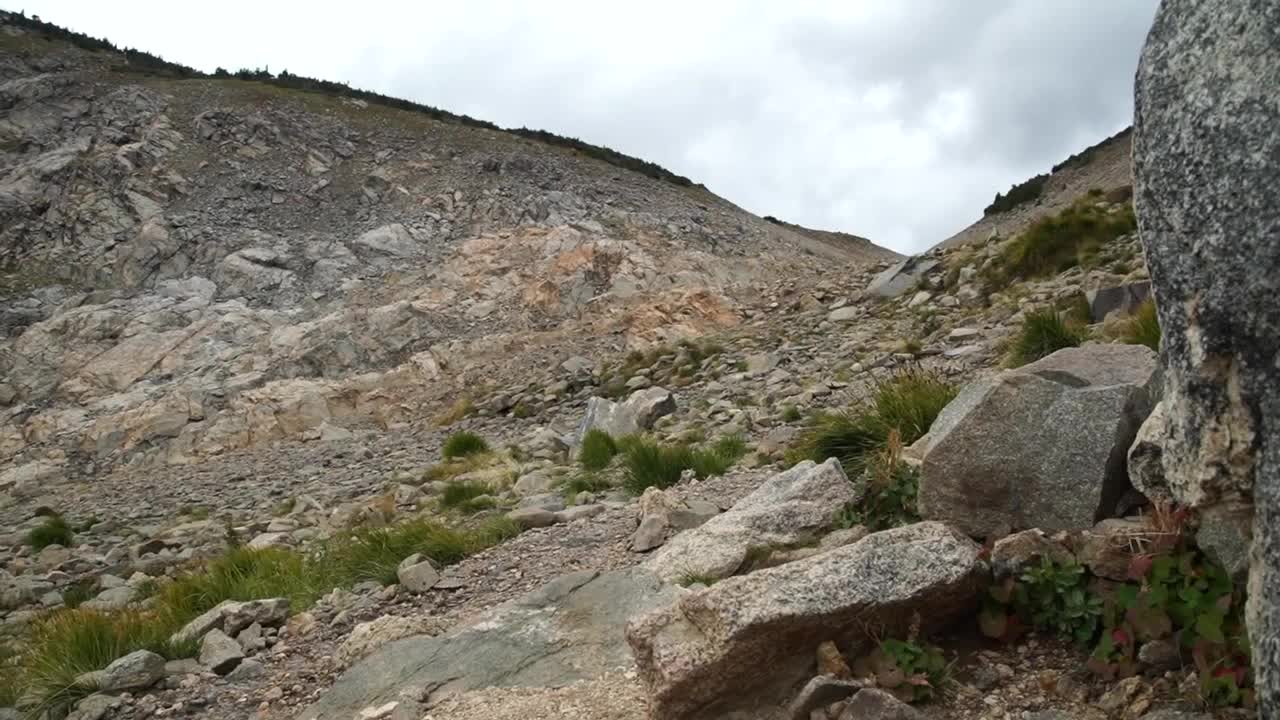


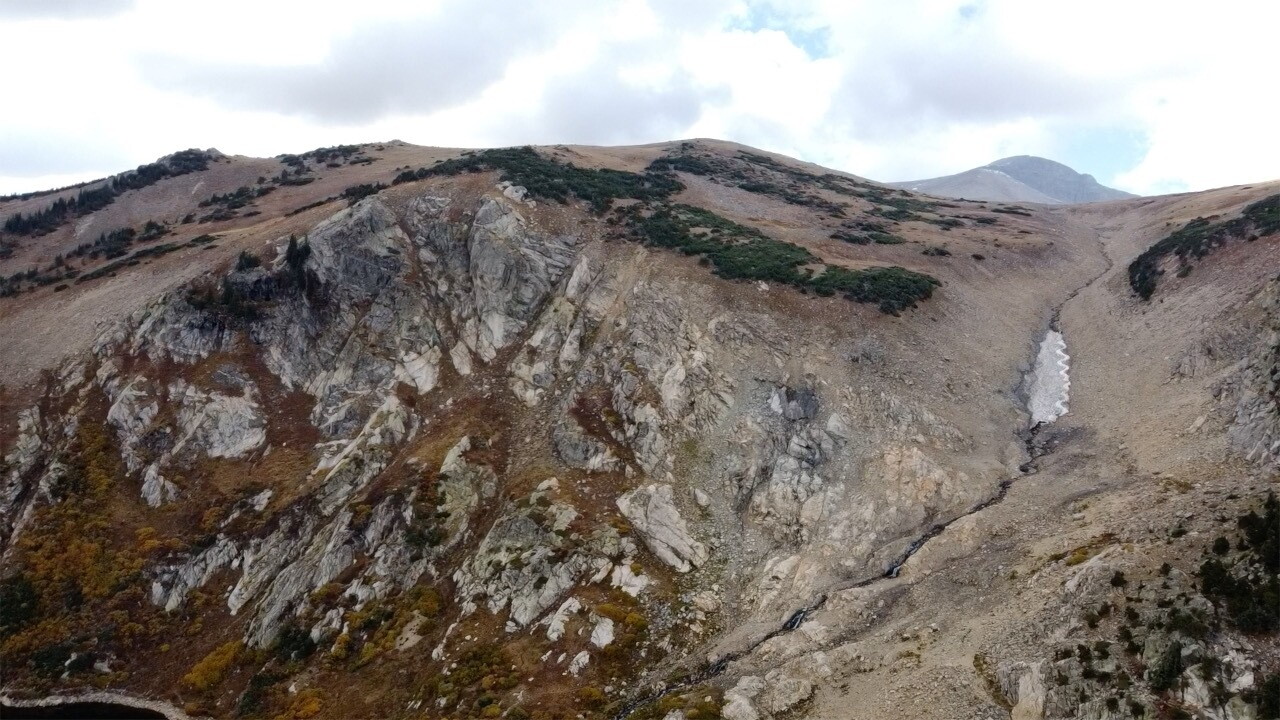
St. Mary's, Colo. — St. Mary’s Glacier, a popular destination for hikers and summertime skiers in Clear Creek County, completely melted this week after years of shrinking.
“We’re seeing this impact of a really, near-record to record low winter, followed by a record hot summer, and that's a terrible combination for a glacier,” said Dan McGrath, an associate professor with Colorado State University’s Department of Geosciences.
“It's part of a trend that we've seen, a pattern here in the last 20 years,” he added. “And something that's observed globally, of glaciers shrinking and retreating in a warming climate, and this is just one vivid example of what that looks like here in Colorado.”
PREVIOUS COVERAGE: On thin ice: Colorado's glaciers are telling a 'rather dismal' story through data, satellite imagery
McGrath points out that St. Mary’s is technically a “small perennial snowfield.”
“It's not thick enough to actually flow, which is one of the key criteria for differentiating a snow field from a glacier,” he said. “It's one of about 16 features along the Front Range of Colorado that have been mapped and kind of characterized as glaciers. It is likely that only two of those, Andrews and Arapaho, are actively flowing glaciers today.”
Regardless, McGrath says based on historical images including an aerial image from 1938, it’s the first time St. Mary’s has completely melted in nearly 90 years, at least.
“We've been monitoring all of the glaciers in Colorado using various technologies,” he explained. “So LiDAR, like a laser scan of the glacier to map its surface elevation through time, and then most recently using structure for motion and an aerial photography method to build these 3D models… We did a survey, an aerial survey, on Sept. 9, and there was just this tiny little patch of debris covered ice at that time. It was just a matter of days, quite literally, until this feature disappeared.”
When asked if the glacier will ever return to what it once was, McGrath was skeptical.
“Following a normal or a big snow year, there's a good chance that there will be some snow that will last late into the summer and may even persist through,” he said. “But what we've seen this year is the loss of all of the ice. This is the savings account of glaciers and snowfields, and so it's been completely depleted here. And so it won't rebuild to its former self unless we had multiple years where we had more snow falling than melted that following summer. And in a warming climate, that's becoming increasingly unlikely.”
With giant glaciers carving the landscape in Colorado thousands of years ago, McGrath calls losing them “a little bit of a loss of our identity.” He says Colorado’s glaciers are not essential to the local water supply like in other places around the world. He adds those looking to make a difference should try to limit their carbon footprint and vote for leaders who support that cause.
Friday was a busy day for hikers on the St. Mary’s trail, some looking to see what the glacier-less hillside looked like.
The Ramseys live in Texas, but Colorado and this trail are like a home away from home for them. They last hiked it in July.
“There was people still trying to ski down of it in July,” Will Ramsey recalled. “They were still going down it, climbing all the way up and skiing down.”
“July, you still had the glacier,” Stephanie Ramsey said. “There was a lot of steady melting, so that was sad. But I didn't think a whole lot of it. But now that it's gone, I mean… it takes away something from it.”


Denver7 is committed to making a difference in our community by standing up for what's right, listening, lending a helping hand and following through on promises. See that work in action, in the videos above.