

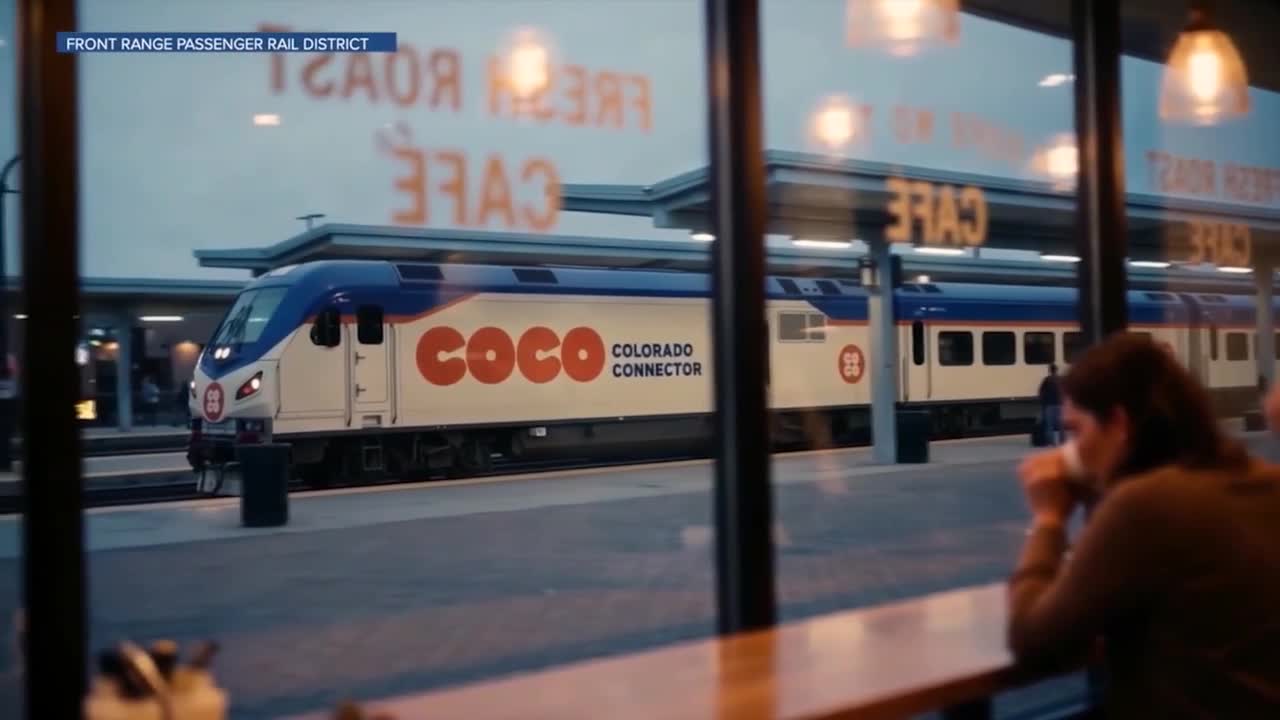


DENVER — A sales tax measure to fund the full corridor vision of the Colorado Connector, or "CoCo" train, is looking likely to pass. "Yes" on Ballot Measure 7A had roughly 55% of the vote as of Thursday afternoon.
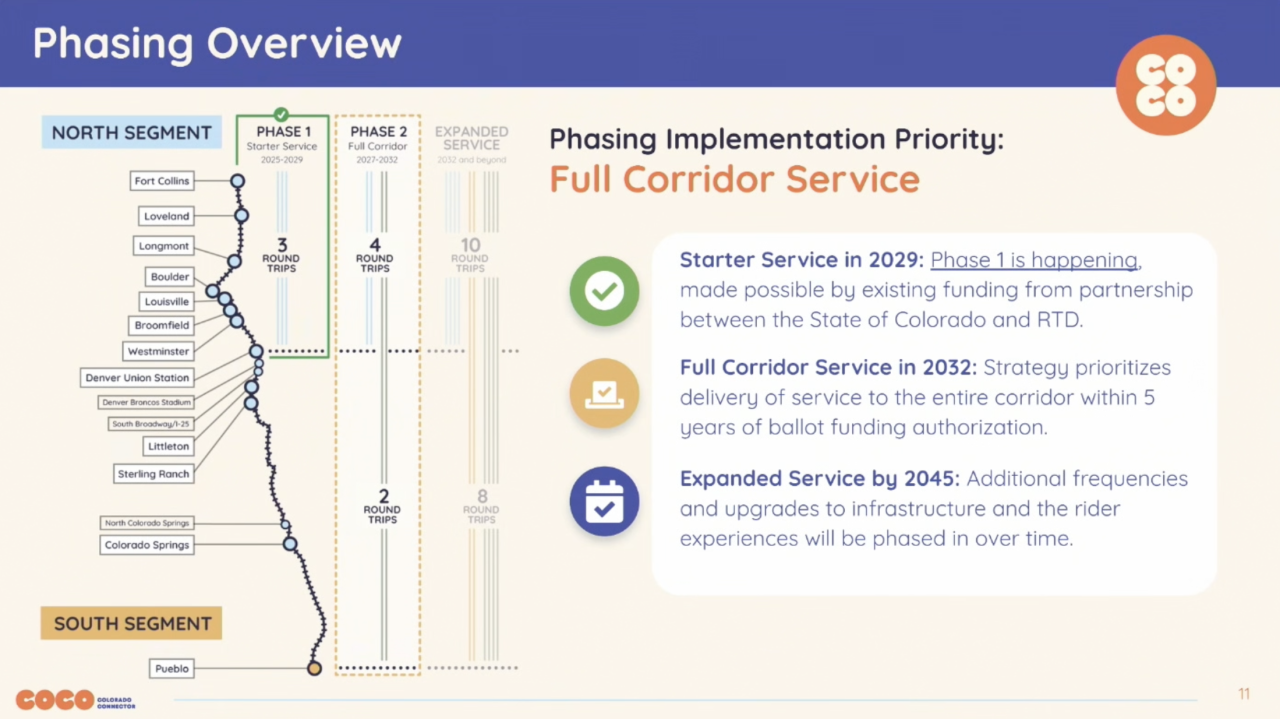
The measure, and the sales tax that appears to be coming, applies only to voters within the Front Range Passenger Rail district, stretching from Fort Collins down through Loveland, Longmont, Boulder, Broomfield, Louisville, Westminster, Denver, Littleton, Sterling Ranch, Colorado Springs and Pueblo.
"We are so excited," said James Flattum, director of outreach for the Coloradans for CoCo Campaign. "I think this is a project that there has been a concept of for generations. Finally, having a plan in place and critically having the voters say, 'Yes.'"
WATCH: Sales tax to fund CoCo train from Fort Collins to Pueblo on track to pass
The Front Range Passenger Rail District (FRPRD) is planning to use existing tracks and partnerships with BNSF and Union Pacific to build out the service.
FRPRD plans to use funding from existing state revenue and FasTracks reserves, separate from 7A, for "starter service" for CoCo. The plan is to run three daily round trips between Denver and Fort Collins starting in 2029.
Until then, the district will work on final approvals and signal improvements between Westminster and Fort Collins.
"It's an exceptionally realistic approach because we're not starting from scratch," Flattum said. "We're building on tracks that already exist, building with working with relationships with these host railroads that actually own the tracks. So it's actually an exceptionally doable project, and we are so excited to see it implemented."
The money from 7A will go towards Phase 2 of the project, which will establish a corridor between Fort Collins and Pueblo by 2032. Flattum calls that milestone five years after passing the ballot measure "light speed, but it's realistic because we're using that existing track."
Flattum said that FRPRD would pay something akin to rent to be able to use the tracks, and capital investments made using the tax revenue will improve safety and reliability.
"Investing in the track infrastructure, adding sections of double track, adding crossovers so that the trains can be de-conflicted, you can run trains in both directions," he said. "All of those are the basics that are going to allow this service to be up and running, to be reliable. Because we recognize that reliability is the most important factor in terms of people being able to adopt this, not just as a novelty, but actually adopted as part of their part of their routine."
For those living within the boundaries of the new sales tax, the tax is 33 cents for every $100 spent, with exceptions for food, gas, utilities, prescription drugs and medical supplies.
"It's a lot of money," said Robert Fleming, a voter from Boulder. "I don't know how many people are going to get use out of it, which is why I voted against it."
Fleming, however, said he also is a public transit advocate and wants to see CoCo succeed.
"If the majority want to give it a try, I'm in with them," he said.
For CoCo starter service, the plan is for design to be done around the spring of 2027 and construction to start by 2028.
Last month, an incorrect boundary map provided by the FRPR to the Colorado Secretary of State's Office led to an issue involving roughly 800,000 ballots. Voters in parts of Adams, Arapahoe, Douglas and Weld counties who were not part of the district and therefore not eligible to vote on Ballot Measure 7A were sent ballots with the question. The Secretary of State's Office responded with a statement, saying in part, "Only eligible voters will have their vote in this contest counted."


Denver7 is committed to making a difference in our community by standing up for what's right, listening, lending a helping hand and following through on promises. See that work in action, in the videos above.