




ESTES PARK, Colo. — Hail already causes billions of dollars in damage in Colorado every year, and a new report warns it could get worse as the climate changes — driving insurance costs even higher for homeowners across the state.
The National Association of Insurance Commissioners says Colorado home insurance premiums have risen 65% in the last five years, with hail a major reason why.
Colorado's hail season is typically mid-April to mid-September. The Front Range falls in the heart of "Hail Alley," which sees the highest frequency of large hail in North America, the Rocky Mountain Insurance Information Association (RMIIA) reported.
In the last decade, hail storms have caused more than $5 billion in insured damage in the state.
Craig Williams, vice president of his homeowners association in Estes Park, says hail is not something he thinks about as much as wildfires.
“We’re watching the snowpack and rainwater and everything all the time here to try and get a feel for our fire risks," Williams said. “We don’t have that much hail up here in the mountains.”
But hail is part of the reason their insurance carrier dropped the HOA's master policy a few years ago.
"I said to the carrier, ‘What is the driver for all of these, is there anything we can do?’ They told me it was very similar to what we've been reading on the news — it's hail's damage to roofs, and also to wildfire risk in the mountains," Williams said.
► Watch Adria Iraheta's report in the player below:
Williams scrambled to find replacement coverage on short notice, ending up at more than double the previous price.
"Where it used to be maybe just less than a quarter is now a third of our HOA budget. It's hard on retired people to be facing that expense," Williams said.
That financial pressure is part of what drove lawmakers to pass Senate Bill 155 this session. The legislation will collect a half-percent fee on homeowners’ insurance policies, with that money funding hail-proof roofing grants — potentially cutting claims and costs.
State Rep. Kyle Brown said the stakes are high.
"Over 50% of the premium dollar in Colorado goes towards hail damage, so it's really important for us to have programs in place that are going to help to make more resilient communities," Brown said.
After a severe storm, an entire hail-damaged roof may cost beyond $10,000 to repair. If it's just a small section, expect to pay at least a few hundred dollars. Labor fees will be added on top of this cost. If your roof is damaged, call your insurance company and they can offer a list of trusted contractors.
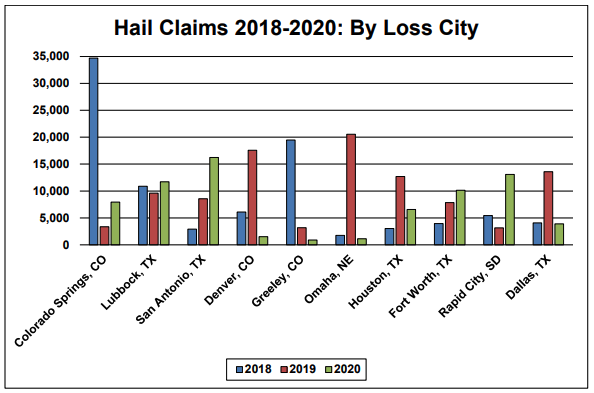
Between 2018 through 2020, the number of hail-related claims across the United States increased 2% from 832,377 to 849,033, with questionable claim submissions increasing 34%, according to the RMIIA.
A new study published in the journal Nature this week warns that rising temperatures will fuel bigger, more destructive hailstorms across the globe, adding urgency to those efforts.
"We need to make sure that we are adapting and that our programs at the state are adapting, so that our homeowners insurance market, which is essential for making sure that people can afford and can live in their homes, that that doesn't collapse," Brown said.
Williams said his HOA has worked to keep premium hikes at a minimum by taking steps to protect their properties from both hail and fire — including replacing a roof on one of their duplexes with Class 4 shingles and clearing out nearly all of the juniper from the property.
He hopes Senate Bill 155 will eventually mean lower rates.
"That's the key. Make sure they know that you are committed to this, you're committed to reducing their risk in handling your property," Williams said.
If signed by Gov. Jared Polis, the bill would go into effect on Aug. 12.
This story was reported on-air by a journalist and has been converted to this platform with the assistance of AI. Our editorial team verifies all reporting on all platforms for fairness and accuracy.

