

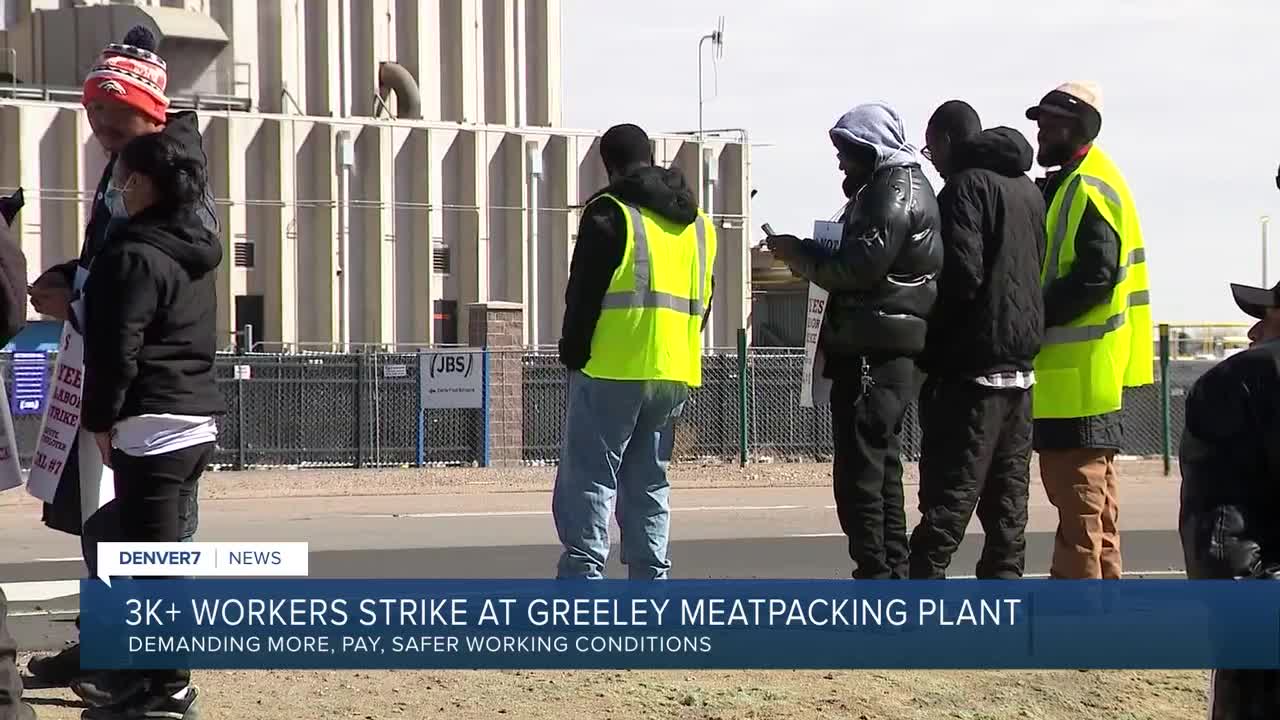


GREELEY, Colo. — JBS says many employees reported for work Monday even as 3,800 union members at its Greeley beef plant walked off the job, launching a strike over pay, safety, and labor practices.
Meanwhile, the company said it is shifting production to other facilities to maintain supply while negotiations continue.
United Food and Commercial Workers Local 7, which represents 22,000 union workers across Colorado and Wyoming, including those at JBS, says the strike is in response to “illegal conduct at the bargaining table and inside the plant.”
Ninety-nine percent of unionized workers at the plant voted in favor of the strike when it was authorized in early February.
“I know we're willing to stand and stay strong and united,” said Leticia Avalos, a six-year employee at the JBS Greeley plant who was on the picket line Monday. “We feel like we are a big value, a big part of the company, and we help them get their profit.”
Avalos is a single mother to a six-month-old baby and says that, while she supports the strike, she worries about how long it may last, as she will not be paid while she is off the job site.
“I don't feel like [workers] get paid enough for the job that they're doing, especially because I know they're putting their life at risk,” she said. “It can be a finger that gets cut off, because they don't have the proper PPE.”
The strike has also put considerable pressure on the company. According to Pro Farmer, an agriculture industry publication, JBS’ Greeley plant can slaughter around 6,000 cattle per day and accounts for roughly 5% of America’s beef-processing capacity.
The publication notes that if lower processing capacity takes hold because of the strike, both cash negotiations and live cattle futures are likely to see immediate pressure, with feeders following closely behind.
Further contributing to the situation, the strike comes as beef prices continue to notch record-highs across the country.
According to numbers from the U.S. Department of Agriculture, boxed beef prices have increased 10.7% since the start of 2026.
The dramatic rise has been due, in part, to the record drought across the West, which has led producers to sell off their herds.
In October, Denver7 spoke with Dallas Vaughn, a cattle rancher in Flagler, who said the lack of water is forcing him and others to sell off their herd, making supply smaller and demand higher.
President Donald Trump’s tariffs on Brazil, a major beef exporter, have also slowed imports.


