

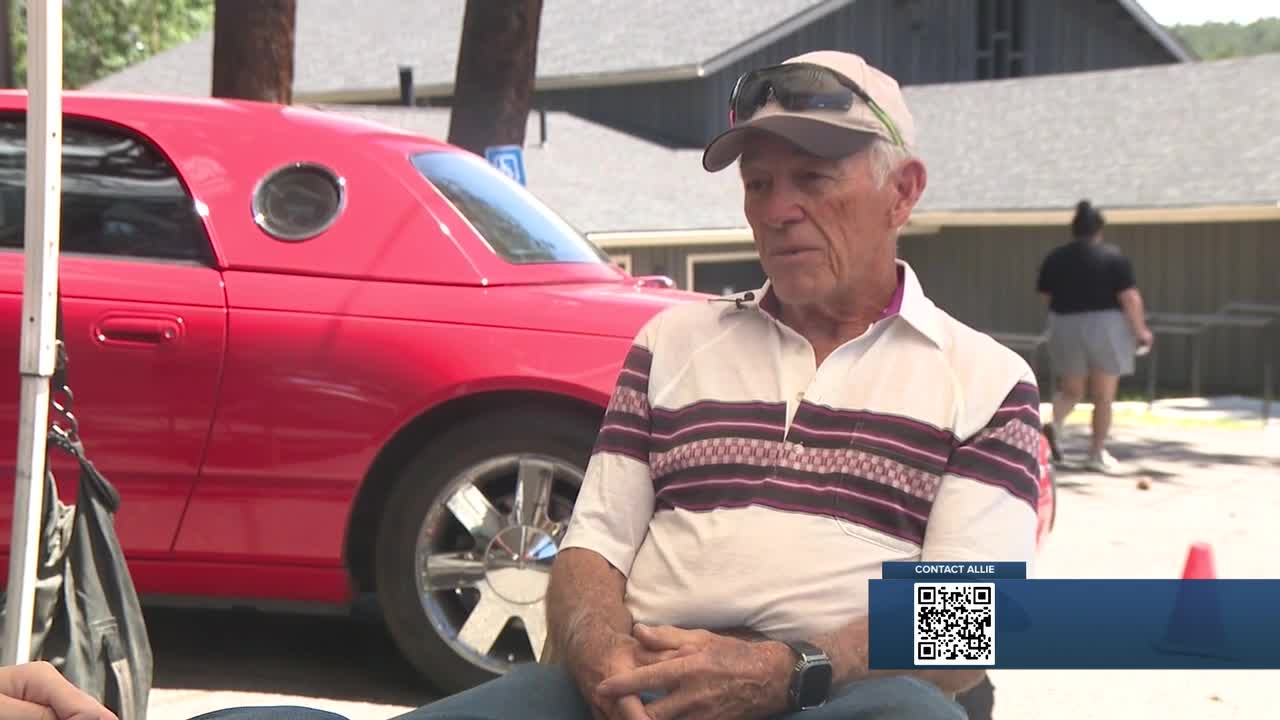


EVERGREEN, Colo. — Orville Strain has lived in Evergreen for 50 years. He knows the wildfire danger that comes with 90-degree heat and mountain living in Jefferson County — and he knows his insurance may not fully protect him if the worst happens.
"Probably not. Not 100%, no," Strain said when asked if he felt well-covered if his home were to burn down.
▶️ WATCH: Denver7's Allie Jennerjahn digs into what — if anything — homeowners can do to lower their rates
Strain said the risk is something people accept when they move to Jefferson County, but insurance companies appear to be wary of it.
"Some people are going in and doing mitigation now to kind of bring, hopefully bring their insurance rates down, but some insurance companies don't really recognize that," Strain said.
Denver7 took those concerns to Carole Walker, executive director of Rocky Mountain Insurance Association, who said Evergreen is at the center of what she describes as an insurance storm.
"Unfortunately Colorado is a dual catastrophe state, ranked second in the nation for hail insurance claims and second for the number of homes in wildfire prone areas," Walker said. "So we know people are scared. We know they're seeing double and even triple-digit insurance increases."
Walker said addressing those increases requires focusing on what she calls risk reduction solutions — steps like replacing a roof to make it hail resistant and clearing defensible space around a home.
"So really be thinking about, I don't want to spend the extra money to do all of the mitigation steps, but they are an investment both if I'm in the path of a wildfire and saving my home, but also for insurance," Walker said.
Walker also mentioned House Bill 1182 as a potential upcoming solution, which goes into effect July 1.
"Some insurance companies are going to give discounts for a wildfire prepared home mitigation certificate and standards across the state," Walker said. "This new law will allow [homeowners] to, A, know what mitigation their company considers when it's looking at that wildfire risk score, and then there's an appeals process too where they can say, 'I've done A, B, C, D, and E mitigation. Will this affect my score?'"
Strain said he has been working on mitigation efforts for years, and while it has made a difference on his insurance bill, the impact has been limited.
"Mine has dropped a little bit, but not that much," Strain said.
He said he wants insurance companies to sit down directly with homeowners like him to better understand the needs.
This story was reported on-air by a journalist and has been converted to this platform with the assistance of AI. Our editorial team verifies all reporting on all platforms for fairness and accuracy.


