

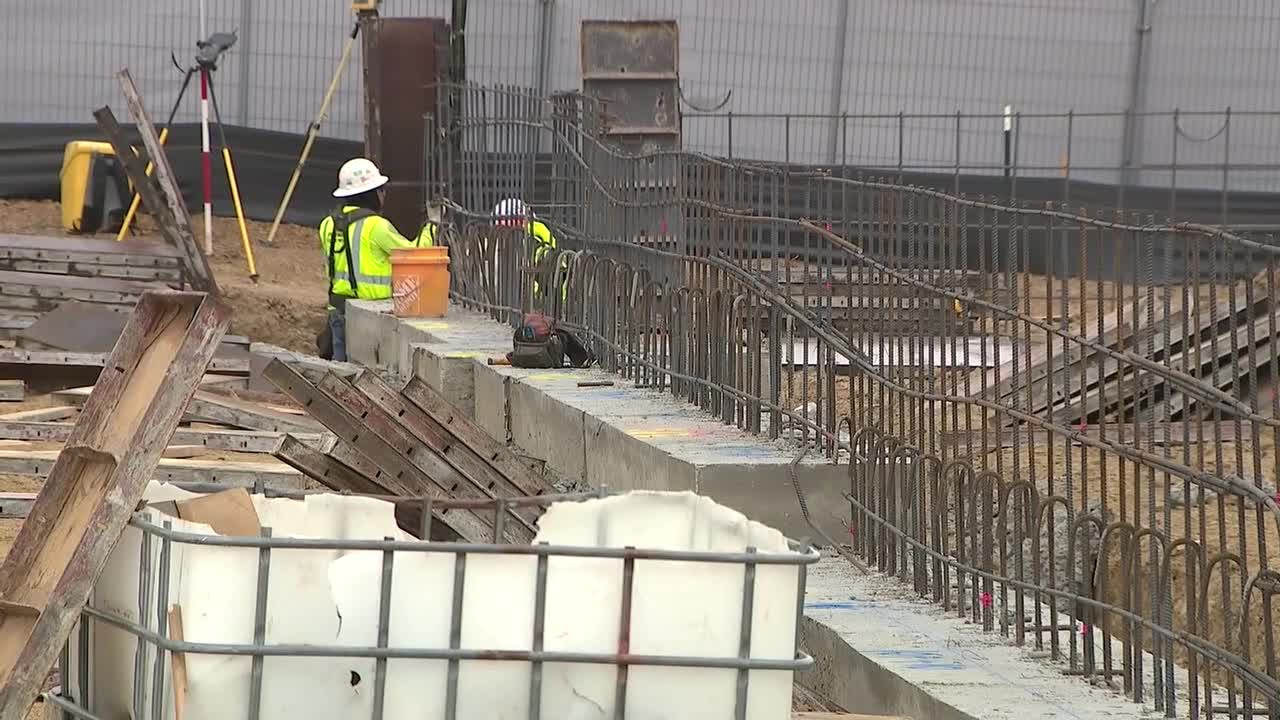


AURORA, Colo. — A new affordable housing community is coming to Aurora, aimed at breaking the cycle of incarceration and homelessness for people leaving the justice system.
On Tuesday, local and state leaders broke ground on Wagoner on the Creek, a 60-unit affordable housing development in Aurora where formerly incarcerated individuals can rebuild their lives.
For people transitioning out of the justice system, finding a place to live can be one of the biggest obstacles they face.
Karen Rodriguez experienced that struggle firsthand as she started her new life.
"We come out wanting to succeed, but because of felonies or our age or our mobility issues, it's hard to get a job, and it's hard to find housing," Rodriguez said. "If it wasn't for my support and where I live, then I would probably be homeless, so every day I wake up just grateful for [my] place.”
A four-year Arapahoe County study found that people experiencing homelessness re-enter jail at a 46% higher rate and serve 44% longer sentences than those with stable housing.
Jeff Martinez, president of affordable housing nonprofit Brothers Redevelopment, said the development is designed to do more than provide a roof over residents' heads.
"This is something that will help prevent recidivism, and certainly that we want to help people transition into the community, and you know, just be able to live and dream like everybody else," Martinez said.
Brothers Redevelopment is partnering with AllHealth Network, an Englewood-based mental health nonprofit, to offer on-site behavioral health and support services for residents.
“We'll be providing case management, so a lot of connection to whatever they need in the community for their health services – that could be therapy as well, which we will provide onsite, and then peer support as well as supportive employment, helping people find and maintain jobs, explained AllHealth Network chief clinical officer Jennifer Bock.
Rodriguez told Denver7 the reintegration process can often be long and challenging, especially for those who’ve served long sentences – akin to stepping into a time machine.
“Like you have to learn cell phones, and you have to learn just technology in general,” she said. “having it on-site, people will be able to go to their sponsor that's on-site when they're having the frustrating days of not understanding the bus system, or just the little things that normal people that have never experienced incarceration will be able to help them.”
Additional support and justice system navigation will be provided through partnerships with several county and state agencies like Arapahoe County Human Services and the Colorado 18th Judicial District’s Bridges Program.
Bock said the impact will be felt throughout the community.
"I think this is going to change lives. 60 people at a time, 60 units at a time. It's a drop in the bucket, but anything that we can do to really help people thrive is the goal," Bock said.
The development is the first of its kind in Arapahoe County.
Case workers will collaborate with the Arapahoe County Sheriff's Office and different community service agencies to find resident referrals when they start the leasing process next spring, with a targeted opening date sometime in fall of 2027.
"It just touches my heart because I know that a lot of my fellow ladies that I did prison time with will have an opportunity like I do," Rodriguez said.


