



AURORA, Colo. — Homeowners in Aurora's Windler community and Denver's The Reserve community in the Green Valley Ranch neighborhood say they were kept in the dark about plans for what could become one of Colorado's largest data centers.
"I was shocked that we hadn't been informed," said Tara Miller, a homeowner at The Reserve.
The project, called Project Trident, would span nearly 900,000 square feet near East 48th Avenue and E-470 in Aurora, according to the city's active development website.
A formal development application was submitted to the city in August 2025 and subsequently accepted for review. Since then, city officials told Denver7 the application has been through two formal reviews, with the third submittal currently in progress. The city's response is due back to the applicant at the end of September.
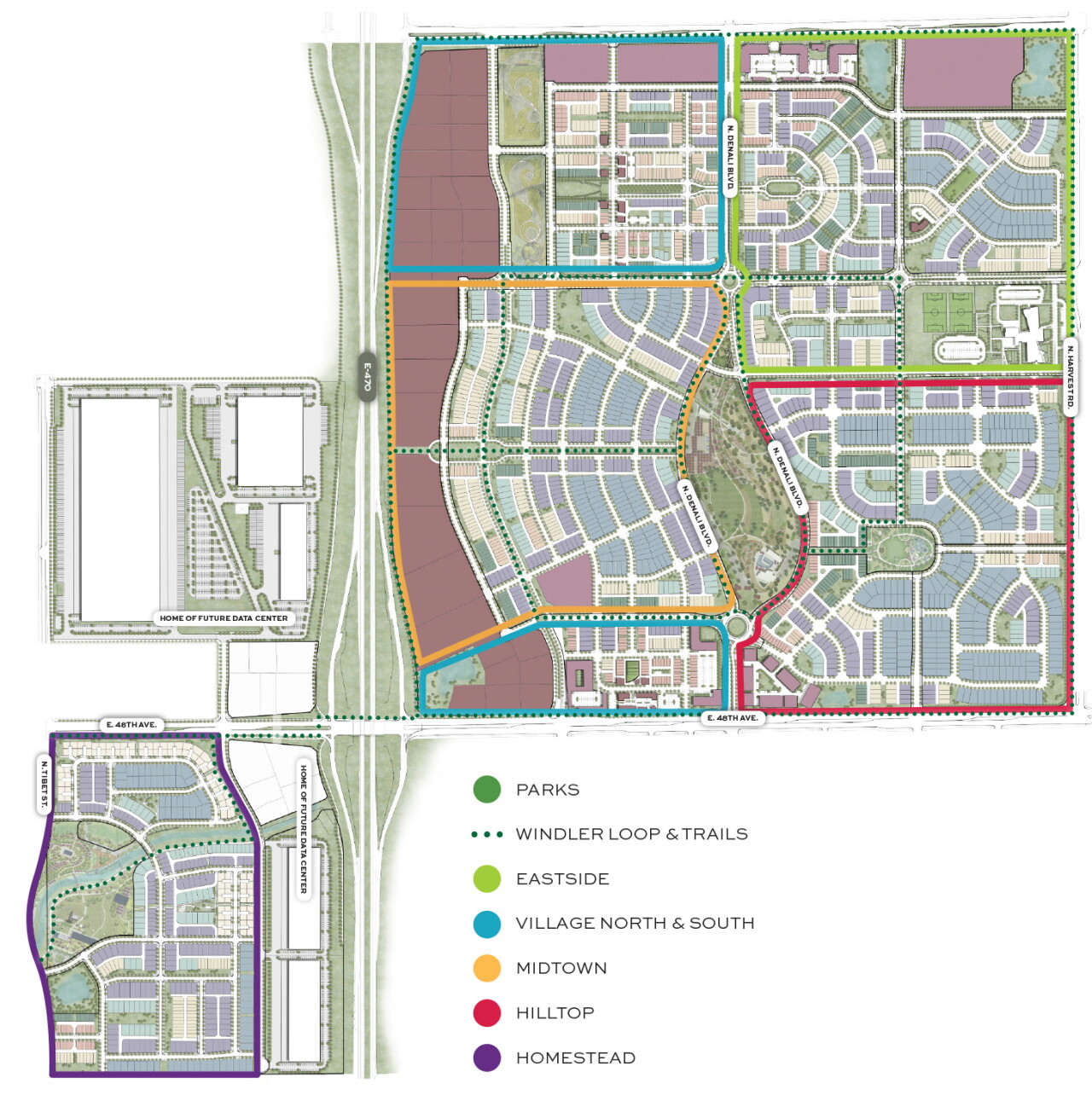
Some new homes in the Windler community sit just a stone's throw away from the proposed data center site.
"We moved in on August 10th. We have not even made our first house payment yet," said Windler resident Laura Belcher. "You know, we planned on living there for a long time, and now we have to deal with how is that life going to look with a huge data center next to us."
► Watch Adria Iraheta's report in the video below:
Residents say they were never given a chance to weigh in on the project.
"We're trying to see if we can get [Aurora] City Council to review and have another review, a fourth review of the whole process before they sign the final paperwork to open up the state or get the data center started to be built," said Dan Bergander, a resident of The Reserve.
The City of Aurora told Denver7 the Trident proposal is in the AD zone district, an industrial zone district, where data centers are permitted and can be approved administratively — thus, the project does not meet the criteria for a neighborhood meeting.

Aurora City Councilmember Amy Wiles says the previous council was able to move the project forward without community input because of these zoning rules.
"There doesn't have to be a community hearing. It doesn't go to planning commission. It is essentially administratively approved because it's by right," Aurora City Councilmember Amy Wiles explained.
Concerns extend beyond Aurora's borders. Denver City Councilmember Stacie Gilmore, who represents Green Valley Ranch residents, expressed frustration over the lack of communication from Aurora and what this could mean for the regional corridor.
"Denver has not heard anything from, you know, Aurora. I've received no correspondence, no meeting invitations," Gilmore said. "What if [the data centers] catch fire? Do we even know that the fire department could put those out, and would it just be Aurora? Would it be Denver? Would it be other municipalities that would need to help?"
MSU Denver Real Estate Program Director Jeff Peshut says land-use regulation and zoning traditionally fall under counties and local municipalities rather than the state — and that many existing codes were written before large-scale data centers became common.
Legally, he said, there's no requirement for advance notices or hearings in cases like this.
"It's a work in progress. The laws are trying to catch up with the technology," Peshut said.
Peshut says that's why so many cities and counties are imposing moratoriums on data centers.
"We're going to be looking to the to the county and the municipalities, you know, those jurisdictions to address this issue," he said.
Back in August, Aurora's City Council voted against a temporary ban on data center construction — instead opting to establish development standards for data centers without the moratorium.
Aurora City Council members are set to have a final vote on those regulations on September 28.
Wiles, who initially proposed the moratorium, says she hopes the process will include community voices going forward.
"I hope that as we move forward with regulations, we can incorporate their input and also make sure we're addressing their concerns," Wiles said.
Meanwhile, Gilmore is calling for broader collaboration and action at higher levels of government.
"We've got to face what's coming forward and create some laws around it — that the state, we need federal, state laws, and then the city will follow that," Gilmore said.
Homeowners say they want a seat at the table.
"We really need to have a say in it for what comes into our neighborhood and what we are going to live next to for a very long time," one resident said.


