

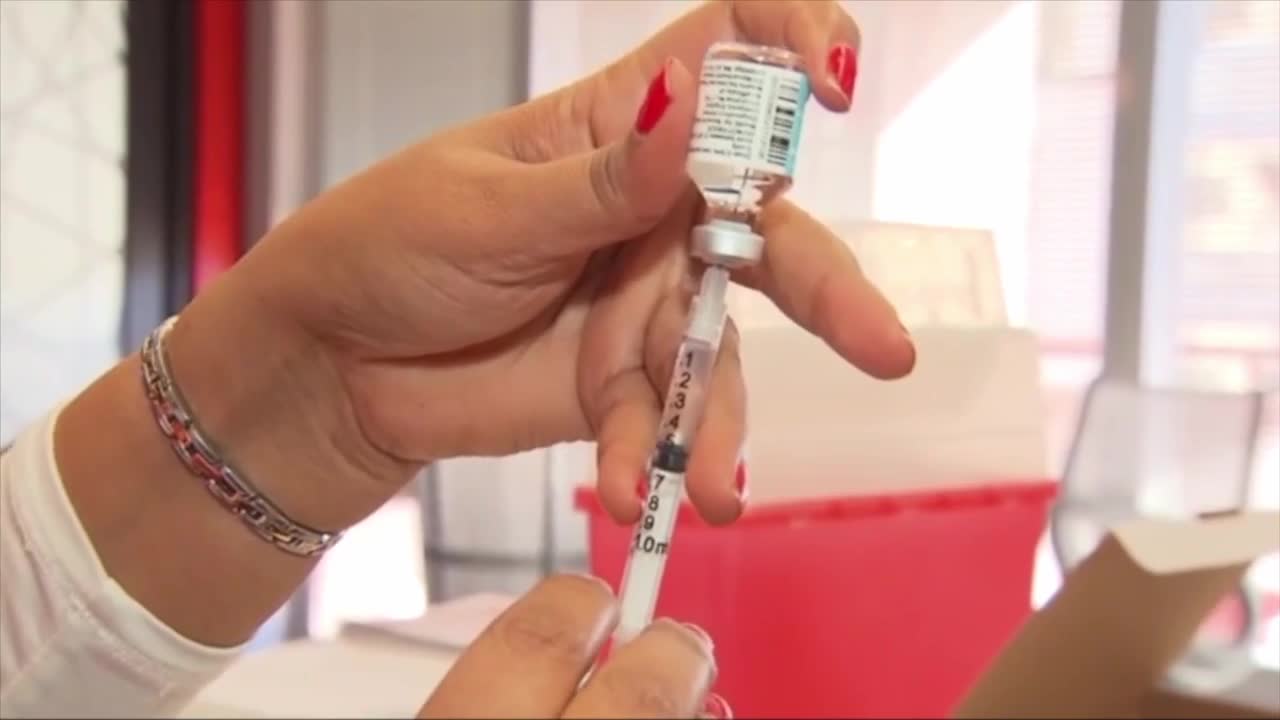


DENVER — Gov. Jared Polis on Friday signed a bill expanding vaccine access and protecting state vaccine policy from federal changes under the Trump administration.
The new law allows the state's board of health to consider vaccine recommendations beyond those of the Advisory Committee on Immunization Practices, a CDC committee that provides vaccine guidance.
Under the law, the state may now also consider recommendations from the American Academy of Pediatrics, the American Academy of Family Physicians, the American College of Obstetricians and Gynecologists, and the American College of Physicians.
Vaccine advocates, including Immunize Colorado, are applauding the legislation.
"The professional medical associations are a stable and reliable source," said Immunize Colorado Executive Director Susan Lontine. "We know that they're not going to change based on, frankly, the whims of what's going on at HHS with the Secretary of HHS there."
In January, the CDC made significant changes to its childhood vaccine schedule, dropping six vaccines from its previous list of 17 recommended immunizations. Vaccines for hepatitis A, hepatitis B, meningitis, rotavirus, influenza, and COVID-19 are now recommended for high-risk groups or for those who consult with a medical provider.
"It just really confuses people as to what people should be doing and what they need to protect themselves and their kids," said Lontine.
Immediately after the change in childhood vaccination guidelines, Denver7 spoke with Dr. Bob Belknap, the executive director of the Public Health Institute at Denver Health.
"People are coming in with more questions. I think those questions are often about how people get information. So it probably has more to do with what folks see on social media than necessarily announcements that come out from CDC or HHS," said Belknap.
The new state legislation also codifies pharmacists' authority to continue prescribing and administering vaccines. Additionally, it allows the state to use general fund money to pay for childhood vaccines if federal funding for the Vaccines for Children program is cut.
"We are very concerned that somehow that program may be defunded," said Lontine. "This allows the state to be able to purchase [vaccines] if we can. We had the word 'can' there, so it's not required, since we are facing a pretty big budget crunch right now. I'm not really sure how that will all shake out, but if we are in a position where we can, then we have the ability to do that."
State Rep. Brandi Bradley, a Republican representing Douglas County, voted against the bill. She said she trusts the changes to vaccine recommendations at the federal level and is worried publicly sidestepping federal guidance could put Colorado at risk of losing vaccine funding.
"I think the Trump Administration is really honing in on the state of Colorado, and I think they're looking for an excuse to pull funding, and for us to just say we're just going to usurp federal law regarding vaccination schedule is going to shine the light on Colorado," said Bradley.
State health department data shows 13 confirmed measles cases in Colorado this year: 12 in unvaccinated people and one breakthrough case in someone vaccinated with a single dose.
Last year, state data show 24 of 36 measles cases were in unvaccinated people. Of the remaining cases, one person had received one dose, seven had two or more doses, and four had unknown vaccination status.


