

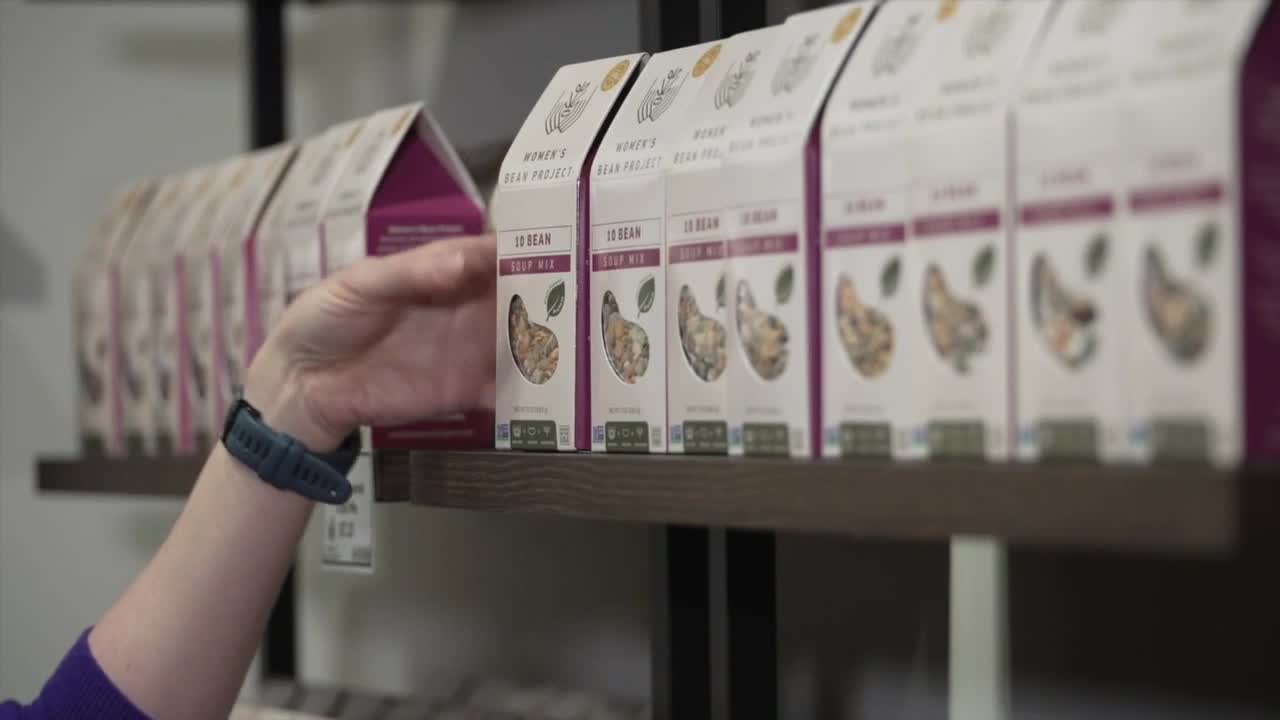


DENVER — Women’s Bean Project, a Denver nonprofit that blends social services with food manufacturing, is looking to grow so it can hire and train more women facing chronic barriers to employment.
Since selling its first package of soup in 1989, the program has hired thousands of women into a transitional employment course that combines paid production work with classroom time and comprehensive support. The program runs between six and nine months.
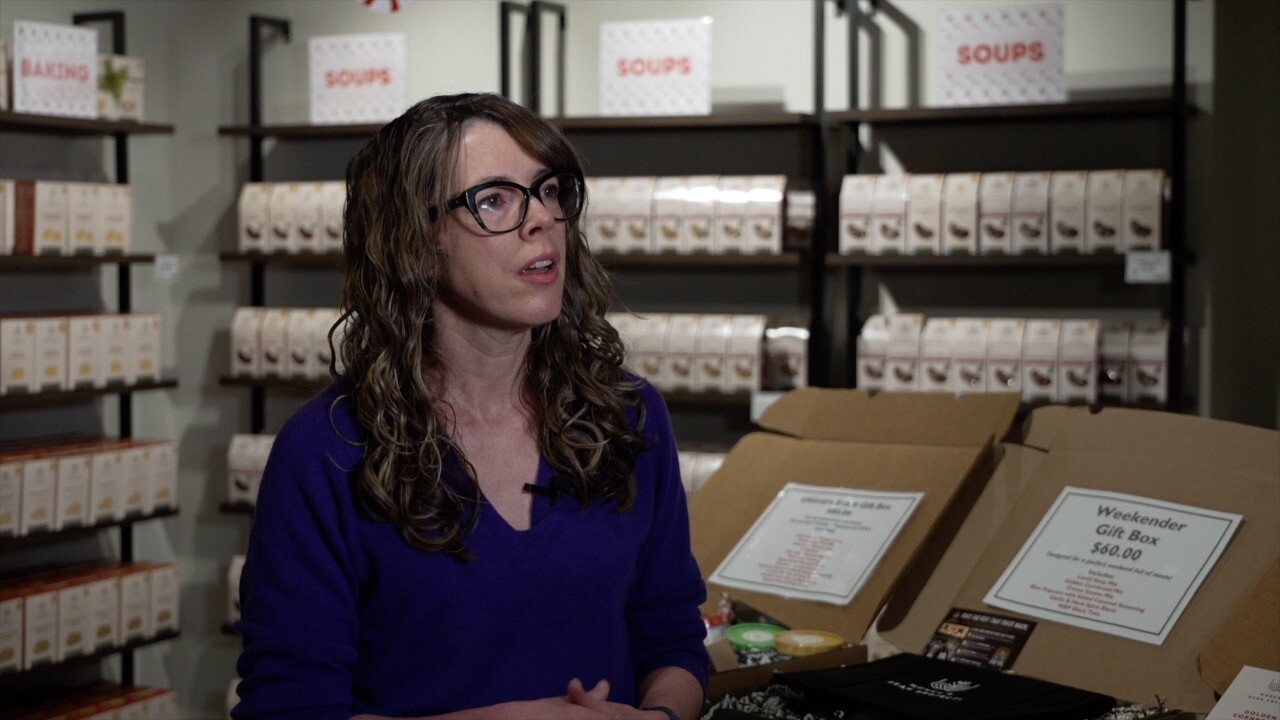
“We hire women who have chronic barriers to employment,” Shelby Mattingly, CEO of the nonprofit, said. “That can include a wide variety of things like poverty, addiction, recovery, incarceration, domestic violence, and housing insecurity.”
Participants work on making and packaging food products, while receiving coaching and job-readiness training.
The organization runs production lines that package soups, baking mixes, snacks, candies and even dog treats. The original product and namesake of the organization, a ten-bean soup, remains a staple.
The Women's Bean Project receives hundreds of applications per cohort, but they can only hire 60 at a time. They’re looking to scale up operations so that they can bring in more people in need of employment assistance.
“There is nothing more valuable I could be doing with my time than what I do here to support women in being able to set a foundation for themselves, for their families, and for their future,” Mattingly said.
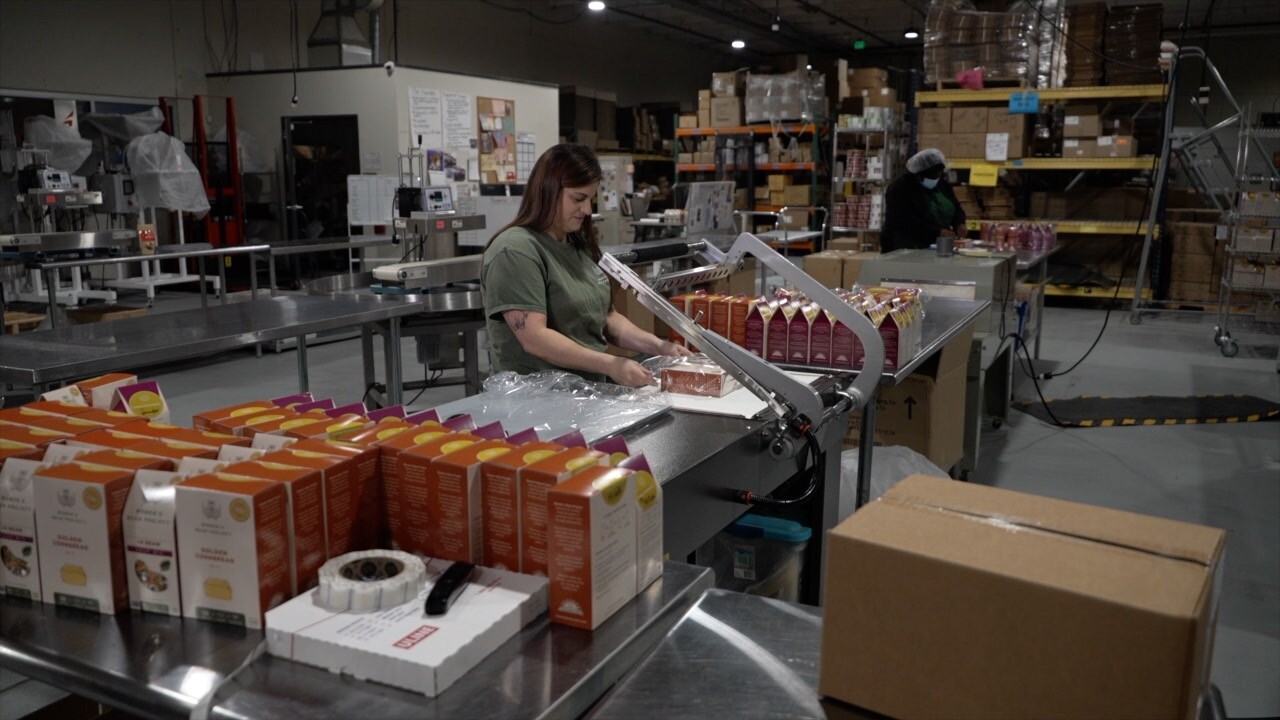
Production and Training Manager Brittany Persichitte oversees training for new participants during their first 60 days and conducts monthly job-readiness assessments covering communication, teamwork and task completion. A 2023 program graduate, Persichitte said she experienced addiction, incarceration and homelessness before entering sober living and joining Women’s Bean Project.
“They show me that I am deserving and capable of success, just like anybody else is,” Persichitte said. “People aren’t always defined by their past.”
Participants are paid both for manufacturing shifts and classroom sessions, where they learn food safety, workplace safety, production-line setup and other manufacturing skills. Program staff also conduct job search assistance, interview practice and one-on-one support intended to make women ready for mainstream employment.
