



DENVER — A person in Jefferson County has the first case of West Nile Virus in the state in 2026. JeffCo health officials confirmed the case on Tuesday.
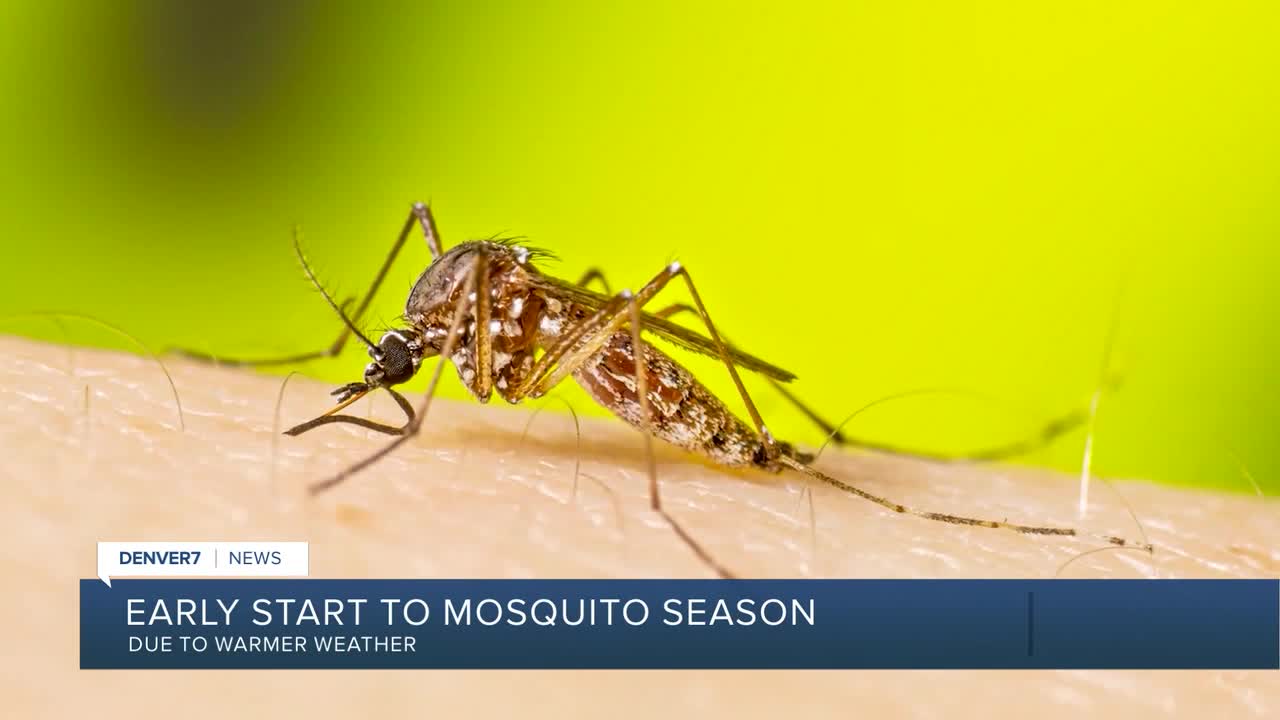
It comes as Colorado’s mosquito season got an earlier start this year due to this year's warmer winter, which could mean an increased health risks for both people and pets.
- Watch the full story in teh video player below.
Experts said there are different types of mosquitoes in Colorado, but the ones that are of most concern are the Culex mosquitoes which can spread West Nile Virus.
“Those mosquitoes are active in two big peaks. One of them is at dusk, that's the big one, and then there's even a smaller peak at dawn,” MSU Denver professor Robert J. Hancock said.

Symptoms of West Nile Virus include headaches, fevers, and lethargy and at its worst the virus can break down into your nervous system at which point you will have to be under intensive care in a hospital.
According to MSU Denver professor Robert J. Hancock, most cases are subclinical meaning most people won’t even know they have it. He also adds that Colorado is always in the top 10 for per capita cases of West Nile.
“They are coming out a little bit earlier. We would like to think that it has to do with mild climate, but the key factor is the rain or the snow melt. They won't hatch unless those eggs are submerged,” said Professor Hancock.
Mosquitoes can also pose a threat to pets.
“For dogs and cats, the biggest risk posed by mosquitoes is heartworm disease,” Veterinary Emergency Group Medical Director Evan Lehman said.

Veterinarians are warning about rising heartworm disease cases in dogs and cats, while health officials are reminding people to protect themselves from mosquito bites this summer.
“We're starting to see a lot more heartworm disease than we used to in Colorado, certainly more so than when I moved here about 15 years ago. We really didn't have much,” Goodheart Animal Health Center in Cherry Creek Medical Director Dr. Alex Robb said.

Dr. Robb told Denver7 some of that increase is driven by weather and more mosquitoes that we have as a consequence.
“It's also probably affected by the number of dogs that have moved to Colorado in the last number of years as well, just bringing the disease with them,” Dr. Robb said.
For people, mosquitoes can carry illnesses like the West Nile virus, which returns to Colorado every year during mosquito season.
The state said West Nile virus season usually peaks between June and early September. Data from the Colorado Department of Public Health and Environment (CDPHE) shows the state has had cases of the West Nile virus every year since 2002. The most cases have been reported in northern Colorado, including Larimer, Weld and Boulder counties.

In 2025, 286 people in the state had the virus, but the CDPHE said most people with mosquito-borne viruses don't actually get sick.
State health officials recommend wearing long sleeves and pants, using insect repellent, avoiding outdoor activity around dusk and dawn, and removing standing water which is where mosquitoes breed.
For pets, vets said mosquitoes can spread heartworm disease which affects the heart and lungs and may not even show symptoms for months.
“With heartworm disease, once a patient's infected, it's usually going to be at least six months before we actually see any clinical signs associated with heartworm disease. That's why it's so important to get routine testing at least once a year with your primary veterinarian, so it could be possibly detected before clinical signs emerge,” Lehman said.
Doctors said warning signs in pets include coughing, lethargy, exercise intolerance, and breathing problems and in severe cases, the disease can become deadly.
“Speak to your primary veterinarian, but the general recommendation is to keep all dogs on year-round monthly heartworm preventative,” Lehman said.
Because mosquitoes can easily make their way indoors, prevention is important for the entire household.
“We do see high mosquito populations here in the front range, so even indoor dogs are certainly at risk for heartworm disease in the summer. That’s why it's so important to keep all pets on yearly heartworm preventative,” Lehman said.
Health officials said Coloradans should start taking precautions now as we head into what could be a longer season this year.

