

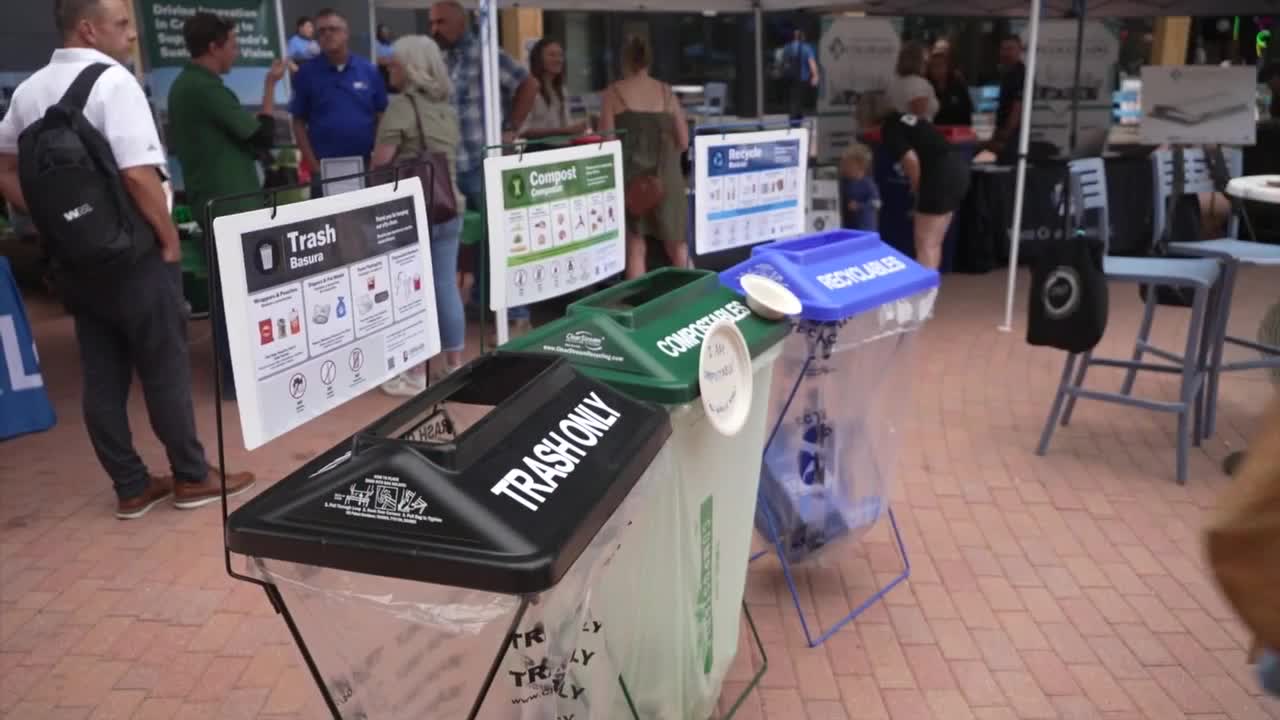


DENVER –Denver restaurant owners and other businesses are preparing for new recycling and composting requirements that take effect Sept. 1 under the city's Universal Recycling and Composting Ordinance.
The ordinance requires restaurants to provide recycling services front of house and back of house, and composting services in the back of house, as well. Multifamily residential buildings, permanent events, and construction and demolition projects are also covered under the new rules.
The City and County of Denver hosted a resource fair Tuesday at McGregor Square to answer questions from business owners concerned about what it takes to comply with the ordinance.
Kelsie DeFrancia, a senior administrator with Denver's Office of Climate Action, Sustainability, and Resiliency, said the ordinance is focused on keeping valuable materials out of landfills.
"Restaurants, for example, are going to be required to provide recycling, front of house, back of house, and then back of house also have to have composting services," DeFrancia said.
Watch Ethan's report on the new recycling program:
Businesses will be responsible for partnering with a waste service company of their choice to pay for and implement the new programs. DeFrancia said the city is not planning to immediately issue fines for non-compliance.
"We're just really asking people to make progress, explore what types of recycling and composting options they have, and just show us that they are making a good faith effort towards compliance. We're not starting with any fines or fees or anything like that," DeFrancia said.

Michelle McGlone, owner of Lucy's Burger Bar on Tennyson Street in Denver's Berkeley neighborhood, said she has mixed feelings about the new requirements.
"I'm still in process of figuring out how I feel about it because it’s great for the environment, but increases costs," McGlone said.
Lucy's Burger Bar, which celebrated its fifth anniversary this year, is known for the Juicy Lucy — a Minnesota-style burger with cheese stuffed inside the patty.
McGlone said Denver restaurant owners are already navigating increased minimum wage and rising food costs, and the new mandate adds to that pressure.
"As a restaurant owner, you know that it does increase costs that are already high, and everyone's already feeling the costs when they go out to their favorite restaurants," McGlone said.
Still, McGlone said she recognizes the environmental stakes.
"If there's not a recycling program of some kind, then there's just a lot of waste going to the landfill, and that does hurt. It hurts the environment, and it hurts me personally to think about," McGlone said.
The ordinance originated as a community-written and community-led ballot measure in 2022 and passed with more than 70% of the vote in Denver.
Businesses looking for guidance can visit denvergov.org/universalrecycling, where the city has posted compliance guides, checklists, best practices, and signage templates.
This story was reported on-air by a journalist and has been converted to this platform with the assistance of AI. Our editorial team verifies all reporting on all platforms for fairness and accuracy.




Denver7 is committed to making a difference in our community by standing up for what's right, listening, lending a helping hand and following through on promises. See that work in action, in the videos above.