



There are 1,091,000 people living in conditions of modern slavery in the U.S. This equates to 3.3 victims for every 1,000 people in the U.S., according to Hope for Justice.
The U.S. government offers no independent confirmation, but the Department of Homeland Security says human trafficking has been reported in all 50 states and the District of Columbia, on tribal land, and within U.S. territories.
January is human trafficking awareness month.
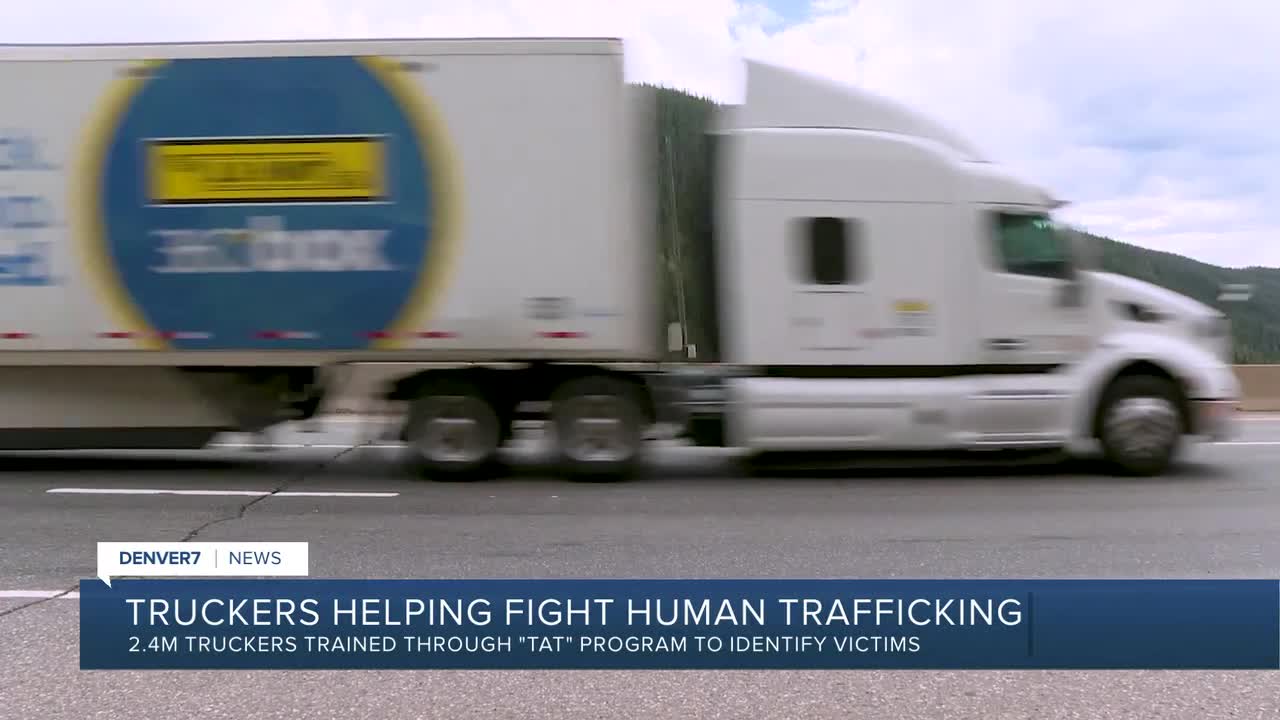
Denver7 is highlighting the sometimes-overlooked role truck drivers play in combating human trafficking.
Traffickers keep their victims on the move and are traveling the same highways, using the same truck stops, rest stops, hotels and motels that truckers do.

Denver7 anchor Shannon Ogden spoke with Jacob Kirkman about TAT, formerly "Truckers Against Trafficking."
Kirkman works for Inland Kenworth, one of the country's largest big rig dealers.
All Inland Kenworth employees go through TAT's training to learn how to identify trafficking victims.
To date, 2.4 million people who work in the trucking industry have taken that free training, according to Kirkman. And he says it has made a difference.
Kirkman recalls an incident just three months ago.
"An RV pulled up to a truck stop. A trucker saw a hand kind of pop out of a window and then immediately get pulled back. And the curtain closed again. Thought it was a little suspicious. Noticed one male driver. Multiple female passengers. Made the call. They busted 'em down the road and they saved six people," said Kirkman.
Kirkman says truckers who go through TAT training are taught to make trafficking awareness part of their daily routine.
"Drivers need to take a step back and just slow down when they go to those truck stops. When they go to these motels and hotels and just take a peek around. Make it part of your trip. Make it part of your coffee break. Make it part of your bathroom break. Just take a peek around. It doesn't take any time out of your day to just be vigilant and try to be the voice of somebody who's voiceless," said Kirkman.
TAT's training is offered for free to anyone, even those who don't work in trucking,
"The biggest thing you can do is get trained to recognize the signs. Then make the call to save lives. That national hotline number is there to help you," said Kirkman.
If you suspect trafficking, the hotline is 888-373-7888. You can learn about the training at tatnonprofit.org.
