

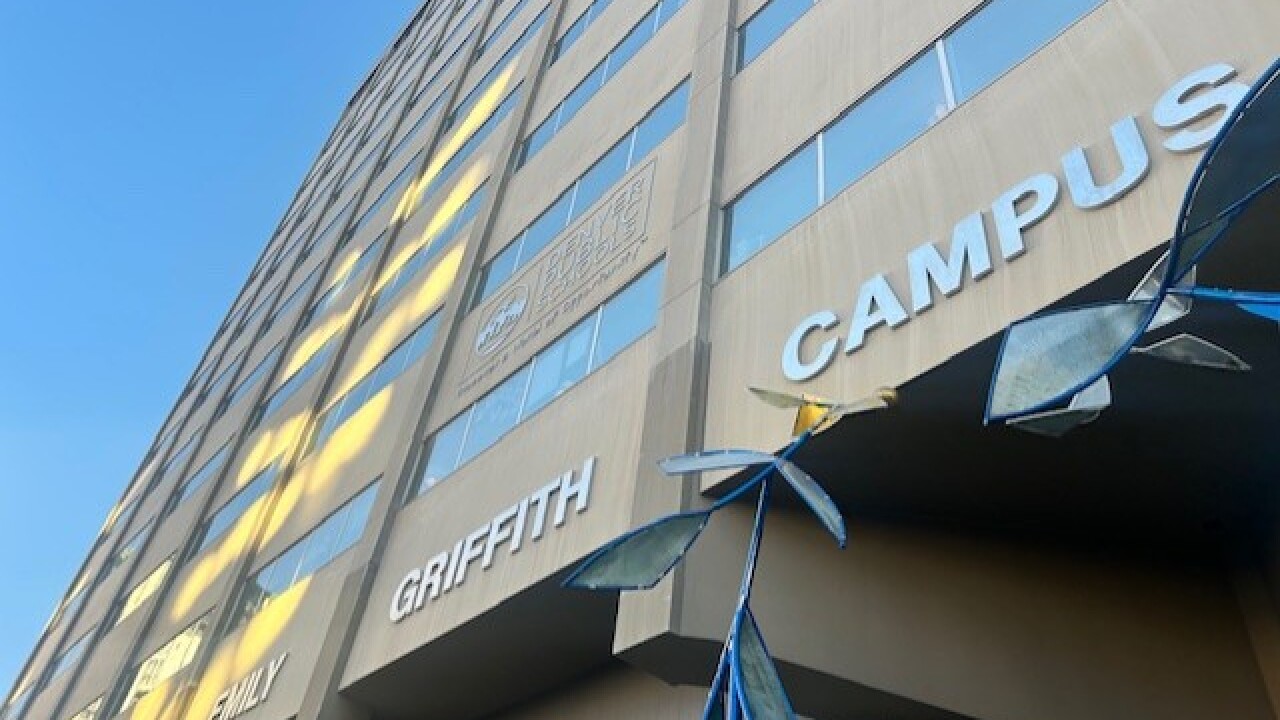


DENVER, Colo. — Denver Public Schools voters will decide this November whether to approve a $44 million mill levy override that would raise property taxes to fund teacher salaries and key student programs.
The DPS Board of Education voted unanimously to place the measure on the ballot on Thursday night.
If approved, the average median household would pay about $72 more per year in property taxes.
In the video player below, Denver7's Adria Iraheta breaks down where the money would go.
Of the $44 million, $25.8 million would go toward staff raises, $8.9 million would fund career and technical education, mental health support, and special education programs, and $9.3 million would be set aside for charter shares as required by state law.
Teachers would see a $1,750 salary increase if the measure passes.
Erica Atchison, a special education teacher at Park Hill Elementary, said she hopes the funding will allow educators to focus solely on their students.
"You know, teachers deserve a living wage. We deserve to live in the area that we serve in," Atchison said.
Atchison said high turnover has been a persistent problem in the district.
"Some schools I've been at have been a 50% turnover some years, and a lot of people I know have left teaching altogether, which is sad," Atchison said.
For Atchison, the issue is personal.
“I'm a parent as well as an educator, and my son, who is on an individual education plan, has to have mental health supports,” she said. “Every single year we are getting a new provider and he never gets that opportunity to have consistency, and so this would give that opportunity to put more people in the classrooms, more people in the schools, support the mental health and provide the services that students really need.”
Mill levy overrides can only be used for operational needs such as salary increases and educational programming, while bond measures are one-time investments in capitol projects.
Interim Deputy Superintendent Chuck Carpenter said the district's funding is directly tied to enrollment, which has been declining.
"It's about $525 per kid, and so if the enrollment grows, that would grow. If enrollment shrinks, that would shrink the overall funding amount," Carpenter said.
Carpenter said community input shaped how the funding would be allocated.
"We talked to the community about what we thought were needs in DPS, and then we'd have an opportunity for them to sit in groups and talk, and then a poll so we could actually get real data on what people in the community thought was important," Carpenter said.
Students also spoke in support of the measure at the board meeting.
"Like many students in DPS, I have experienced challenges with my mental health without getting the support I needed," Abraham Lincoln High School student Josh Cardenas told board members. “When students have the support they need, they have a better chance to learn, participate, and thrive.”
A mill levy override was part of teachers' collective bargaining agreement reached a few years back, according to the Denver Classroom Teachers Association.
In the last 38 years, the district has placed a mill levy on the ballot 7 times — and voters have approved all of them.
Atchison said passing the mill levy would make a meaningful difference.
"We're putting our students first at this point, and as an educator myself, it will help me be able to continue to live and serve the communities that I live, be part of in the Denver area, and hopefully support teachers so they only have to have one job," she said.
This story was reported on-air by a journalist and has been converted to this platform with the assistance of AI. Our editorial team verifies all reporting on all platforms for fairness and accuracy.

