



DENVER — It’s not just adults who are thinking about what the future will look like as artificial intelligence’s influence continues to grow. Kids are thinking about it, too.
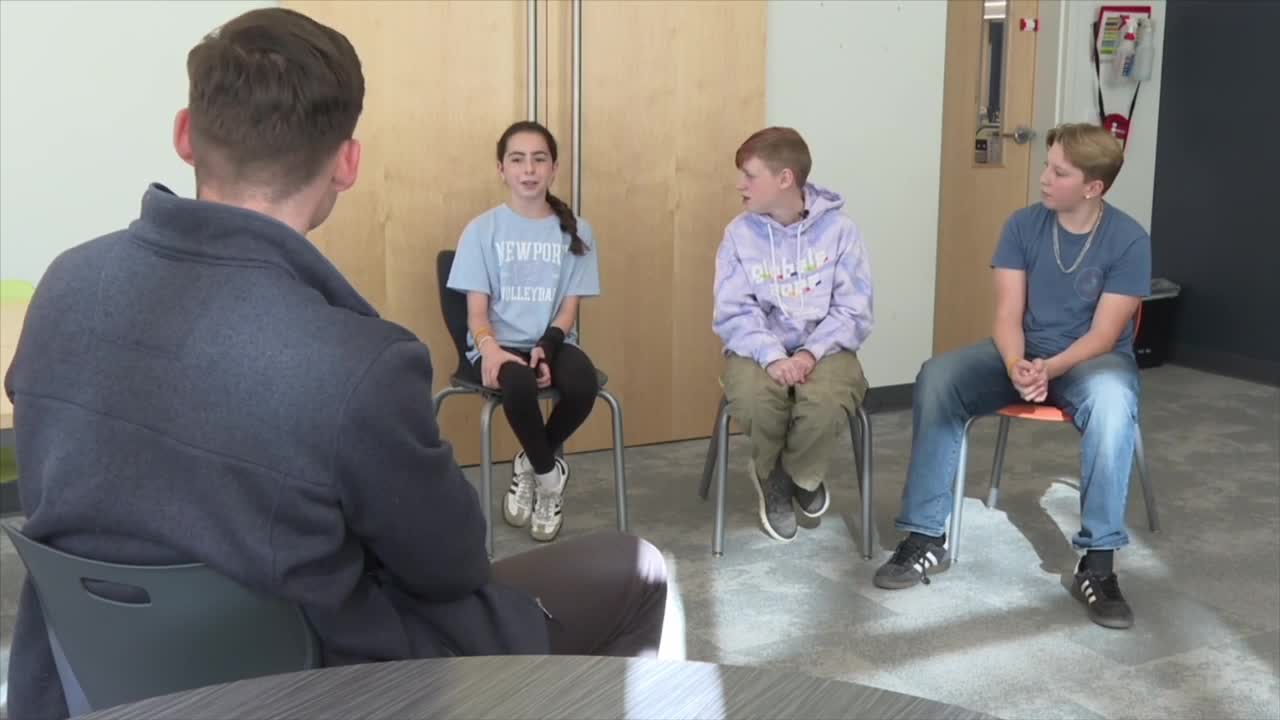
Denver7 spoke with middle schoolers at the International School of Denver to get their views on AI, both in and outside the classroom.
“It’s a really present part of our lives here,” said Ellis Senter, an eighth grader at ISD. “There's no denying it.”
Recently, about 80 students at ISD completed an anonymous survey about AI. According to the school, about 63% of respondents said they use AI at least a few times a week.
But the survey also found 82% of students would not use AI to write an apology to a friend, or that it would feel weird. Respondents also brought up concerns about privacy, cheating and the environment.
Those concerns were echoed by Senter, fellow eighth grader Ari Forgey and seventh grader Sydney Barocas.
“I try not to use AI, and sometimes I really want to because I just feel lazy, and that's like the easiest way to do [schoolwork],” Barocas said. “But like you have to stop yourself, and think about like all like the bad things that it's doing to everyone. Like it's just making people like not want to do anything.”
The students said they all would use AI to help them study for a test, often by creating a quiz to test themselves on the material, adding that the rules around the technology depend on the teacher.
“The rules are really just like, you can't have it do the work for you,” said Forgey.
“I definitely know kids who kind of abuse that and will just like absolutely cheat on their tests, if they don't really understand,” Senter said.
“It's doing a lot more to like our communities and like our environment than people initially notice,” Forgey added. “If you don't deep dive into what it's doing, it's really hard to actually understand what's happening.”
Academic integrity is only one worry. Teachers and parents around the country have become more aware of young students using AI as a therapist or friend, rather than connecting with other people.
“I’ve had friends who's like used AI as like a therapist,” Barocas said. “In a way like asked it problems, asked it how to make decisions for themselves. And I mean I guess AI can like answer that, but you really need like a real human voice to answer that because AI is not like processing all that in its brain and thinking about emotions.”
These students also worry about data centers’ water consumption and the overall environmental impact AI’s growth could have on the planet.
They’re also thinking ahead to what will happen to them after they leave school, likely five to ten years from now.
“We're thinking about like, what job could I do that like that AI could never do?” Senter said. “I’m thinking about getting into like a trade job or something, because like, it's going to be hard.”
“At our age, we shouldn't have to worry about like the future or like how we'll make money or like what it will look like,” said Forgey. “But we do, because how fast things are changing.”
“It's like nerve-wracking thinking what AI is capable of,” said Barocas. “It hasn't been going this strong for that long, but it's already done so much.”
“I think it can provide incredible things, you know, for our society,” said Senter. “But I think we need to be cautious… The younger generations are going to have to deal with this, like really big time.”





Denver7 is committed to making a difference in our community by standing up for what's right, listening, lending a helping hand and following through on promises. See that work in action, in the videos above.